

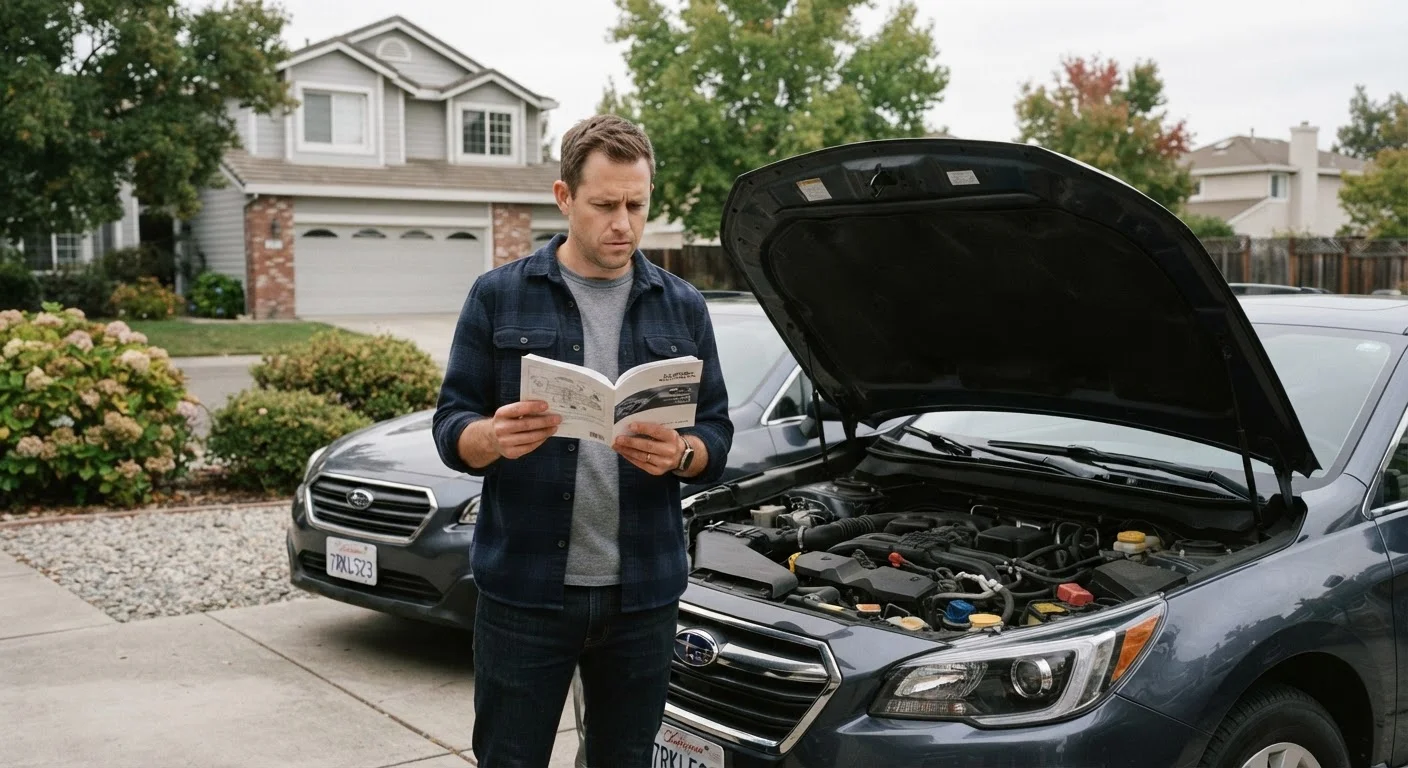
Why Car Myths Are So Expensive
Outdated advice, word-of-mouth habits, and clever marketing have kept a surprising number of car care myths alive for decades. The problem isn't just misinformation - it's the money those myths drain out of drivers' wallets year after year. Unnecessary oil changes, premium gas purchases, and unneeded services add up to real costs that most drivers never question.
Understanding what your vehicle actually needs - versus what habit or assumption says it needs - is one of the most practical ways to reduce ownership expenses. For a broader look at where car costs tend to accumulate, see the full financial picture of car ownership.
Myth
You need to change your oil every 3,000 miles, no exceptions.
Fact
Most modern vehicles can go 5,000 to 10,000 miles - or more - between oil changes, depending on the engine and oil type.
The 3,000-mile rule was reasonable for older engines using conventional oil, but today's full-synthetic formulations and tighter engine tolerances have made it obsolete for most vehicles. Many manufacturers now specify intervals of 7,500 to 10,000 miles, and some engines running full-synthetic oil are rated for up to 15,000 miles between changes. Following a shorter interval than your manufacturer recommends isn't protective - it's just expensive. Check your owner's manual and use the oil life monitor if your vehicle has one.
Myth
Premium fuel makes any car run better and last longer.
Fact
Premium fuel only provides a benefit in engines specifically engineered to require or recommend it - using it in a standard engine offers no measurable advantage.
Higher-octane fuel resists engine knock (pre-ignition) better than regular grade, which matters for high-compression or turbocharged engines designed around it. If your vehicle's manufacturer specifies regular-grade fuel, filling up with premium produces no performance gain and no longevity benefit - it just costs more per gallon. Only use premium if your owner's manual says your engine requires it; if it merely recommends it, regular is typically acceptable with a minor, often imperceptible trade-off in performance.
Myth
You should warm up your car for several minutes before driving in cold weather.
Fact
Modern fuel-injected engines reach operating temperature faster by being driven gently than by idling stationary.
Extended idling to warm up an engine made sense in the era of carbureted engines, which needed time to stabilize fuel delivery. Today's electronically managed fuel-injection systems adjust instantly to cold conditions. Idling for five or ten minutes wastes fuel, contributes to oil dilution in some engine types, and still leaves drivetrain components - transmission, wheel bearings, and differential - cold until the vehicle moves. A better approach: start the engine, give it 30 to 60 seconds, and drive gently until the temperature gauge rises.
Myth
Red cars cost more to insure because insurers charge more for them.
Fact
Auto insurers do not factor vehicle color into premium calculations - color has no effect on your rate.
This myth is remarkably persistent, but there is no credible evidence that insurers track or price by vehicle color. Premiums are determined by factors such as the vehicle's make, model, trim level, age, safety ratings, your driving record, location, and - in most states - credit history. The Vehicle Identification Number (VIN) that insurers use to look up your car does not encode color. Believing this myth can distract drivers from the factors that actually move the needle on their premiums.
Myth
New tires should always go on the front axle of any vehicle.
Fact
Tire industry guidance generally recommends placing the two best-condition tires on the rear axle, regardless of which wheels are driven.
Rear tire blowouts or loss of traction at the rear are harder to control than front-end issues, which is why most tire manufacturers and the Tire Industry Association recommend mounting the highest-tread tires at the rear. For rear-wheel-drive vehicles, this also aligns with drive performance. Placing worn tires at the rear - especially on wet roads - increases the risk of oversteer and loss of vehicle control. This applies even to front-wheel-drive vehicles, where the instinct to put new tires up front is especially common but can work against safety.
How These Myths Persist - and How to Break the Cycle
Many of these misconceptions originated when cars were genuinely less reliable. Older engines, carbureted fuel systems, and thinner motor oils made frequent service intervals and lengthy warm-up periods legitimate recommendations. Today's vehicles operate under fundamentally different engineering standards, but the old advice stuck.
Up to $150+
Wasted annually on unnecessary 3,000-mile oil changes
Industry estimates suggest drivers following outdated 3,000-mile intervals on modern vehicles can spend significantly more per year than manufacturer schedules require.
~$0
Performance benefit of premium fuel in regular-grade engines
The U.S. Department of Energy notes that using premium fuel in a vehicle designed for regular provides no measurable fuel economy or performance advantage.
Your owner's manual is the most authoritative source for your specific vehicle - not a quick-lube shop's reminder sticker, a neighbor's habit, or a myth passed down from a previous generation of car owners. Ignoring that guidance doesn't just cost money; some habits can quietly shorten a vehicle's lifespan over time. The overlooked habits that shorten a car's lifespan are worth reviewing alongside the myths covered here.
Insurance-related car myths carry their own financial sting. Misconceptions about what affects your premium - from vehicle color to marital status - can leave drivers confused about where their money actually goes. For a detailed breakdown, auto insurance myths that cost American drivers money addresses those specifically.
Don't Skip Dashboard Warnings to Save Money
One of the costliest myths is the idea that warning lights can be safely ignored if the car seems to drive fine. Dashboard indicators exist to flag issues before they escalate into major repairs. Understanding what those lights mean - and when to act - can prevent hundreds or thousands of dollars in damage. See what your car's dashboard warning lights are actually telling you for a clear breakdown.
Ultimately, responsible car ownership means separating inherited assumptions from current evidence. The complete guide to owning a car responsibly covers what verified, up-to-date maintenance practices actually look like across a vehicle's full ownership lifecycle.
This article is for general informational purposes only and does not constitute professional mechanical or financial advice. Consult your vehicle's owner's manual and a qualified mechanic for guidance specific to your car.
The content on this site is for informational purposes only and is not a substitute for professional advice. Always consult a qualified professional for guidance specific to your situation.