

Our Verdict
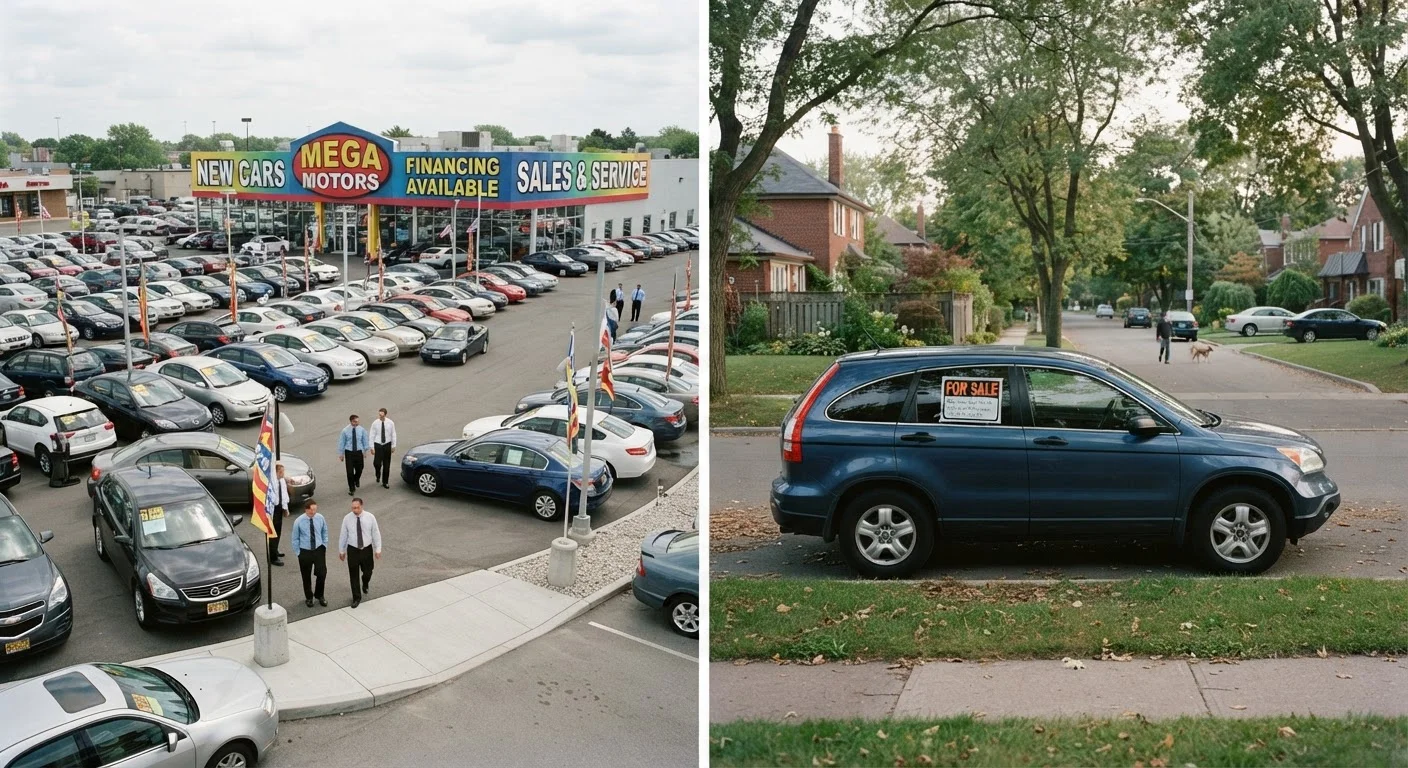
Neither a dealership nor a private seller is universally the better choice - the right answer depends on your priorities, risk tolerance, and financial situation. Dealerships offer structure, financing, and legal protections at a higher price. Private sellers can offer genuine value but require more due diligence from the buyer.
| Best for | Recommended |
|---|---|
| Buyers who want financing options and legal protections | Dealership |
| Experienced buyers comfortable doing their own research and inspections | Private Seller |
| First-time used car buyers with limited mechanical knowledge | Dealership |
| Budget-conscious buyers seeking the lowest possible purchase price | Private Seller |
How Each Channel Works
When buying a used car, you have two primary routes: purchasing from a licensed dealership or buying directly from a private individual. Understanding how each transaction works is the first step toward making a confident decision.
A dealership is a business licensed under state law to sell vehicles. Dealers must comply with the Federal Trade Commission's Used Car Rule, which requires them to display a Buyers Guide on every used vehicle disclosing warranty information and key disclaimers. Many dealers also offer certified pre-owned programs, in-house financing, and some form of limited warranty or return window - though terms vary widely and are not guaranteed.
A private seller is simply an individual selling a vehicle they own. This transaction is governed by far fewer consumer protections. Most private sales are conducted as-is, meaning once money changes hands, the buyer assumes full responsibility for whatever condition the car is in. There's no Buyers Guide requirement, no mandated disclosure of known defects in most states, and no financing desk to help you structure a loan.
For a broader look at how vehicle ownership works financially from day one, see our comprehensive car ownership guide.
Price, Negotiation, and Hidden Costs
Private sellers often list vehicles below dealer asking prices because they have none of the overhead - no reconditioning costs, no lot fees, no sales staff commissions. This can create real savings, but the sticker price rarely tells the full story.
Dealers typically roll additional costs into the transaction: documentation fees, dealer preparation charges, and extended warranty upsells are common. Some states cap these fees; others do not. Always ask for a full out-the-door price before comparing offers.
With a private seller, negotiation is often more direct but also less predictable. Sellers set prices based on personal motivation - a quick relocation may mean a steep discount, while an emotionally attached seller may hold firm at an inflated number. Sites like Kelley Blue Book and the NADA Guides publish market-value ranges that can anchor your negotiation regardless of channel.
Keep depreciation in mind throughout this process. How depreciation affects a vehicle's value is critical context when evaluating whether any asking price is reasonable.
| Private Seller | Dealership | |
|---|---|---|
| Typical price | Often below market average | At or above market average |
| Consumer protections | Minimal; buyer beware | FTC Buyers Guide required; state laws apply |
| Financing options | Cash or pre-arranged loan only | On-site financing through multiple lenders |
| Warranty availability | Rarely offered; almost always as-is | Limited warranties or CPO programs available |
| Title & registration handling | Buyer handles DMV process | Dealer typically files on buyer's behalf |
| Fraud / defect risk | Higher; less regulatory oversight | Lower; though as-is sales still carry risk |
| Negotiation dynamic | Direct, personal, less predictable | Structured, but multiple add-on fees common |
Financing, Title, and Paperwork
One of the clearest practical differences between the two channels is access to financing. Dealerships typically work with multiple lenders and can arrange an auto loan on-site, which is convenient - though convenience can come at a cost if you don't compare rates independently first. If you're planning to finance, understanding how auto loans are structured as secured debt is worthwhile background; the distinction between secured and unsecured debt helps clarify what's at stake if you miss payments.
Private sales typically require cash, a personal check, or a cashier's check at the time of purchase. Some credit unions and banks offer personal auto loans for private sales, but the process takes more planning.
On the paperwork side, dealers handle most of the title transfer and registration filing on your behalf. In a private sale, this responsibility falls to the buyer. You'll need to verify the seller holds a clean title (free of liens), complete the title transfer at your state's DMV, and pay any applicable sales tax directly - rules vary by state, so confirm local requirements before you finalize anything.
Get Pre-Approved for Financing First
Before visiting a dealer or meeting a private seller, get pre-approved for an auto loan through your bank or credit union. This gives you a clear budget ceiling, helps you spot whether dealer-arranged financing is competitive, and puts you in a stronger negotiating position regardless of who you're buying from.
Risk, Protections, and What to Do Before You Buy
The risk profile of each channel is meaningfully different. Dealers face regulatory oversight and reputational consequences; fraudulent or deceptive practices can trigger state attorney general actions or FTC enforcement. That said, dealer protections are not unlimited - "as-is" sales at dealerships are legal in most states, and a Buyers Guide disclosure is not the same as a guarantee.
Private sellers have fewer legal obligations and, in most states, are not required to disclose known defects - though deliberately hiding a material defect can still constitute fraud under general contract law. Enforcement, however, is on you as the buyer, often requiring civil litigation that is rarely cost-effective.
Never Skip a Title Check
Before completing any private sale, run the vehicle identification number (VIN) through your state's DMV or a third-party title search to confirm there are no outstanding liens, salvage designations, or theft flags. Purchasing a car with an undisclosed lien means the lienholder may have a legal claim to the vehicle even after you've paid for it - leaving you with both the debt and the potential loss of the car.
Regardless of channel, a pre-purchase inspection (PPI) by an independent, ASE-certified mechanic is one of the most effective risk-mitigation steps available to any used car buyer. A typical PPI costs between $100 and $200 and can surface mechanical issues, frame damage, or deferred maintenance that no Carfax report will catch. If a seller - private or dealer - refuses to allow a third-party inspection, treat that as a significant red flag.
If this is your first vehicle purchase, what first-time owners often discover after the sale is essential reading before you sign anything. And if you're still weighing whether to buy at all versus lease, how buying and leasing compare structurally can help you confirm you're in the right conversation.
This article is for general informational purposes only and does not constitute legal, financial, or professional advice. Coverage terms, state regulations, and consumer protections vary. Consult a licensed professional for guidance specific to your situation.
The content on this site is for informational purposes only and is not a substitute for professional advice. Always consult a qualified professional for guidance specific to your situation.