

Our Verdict
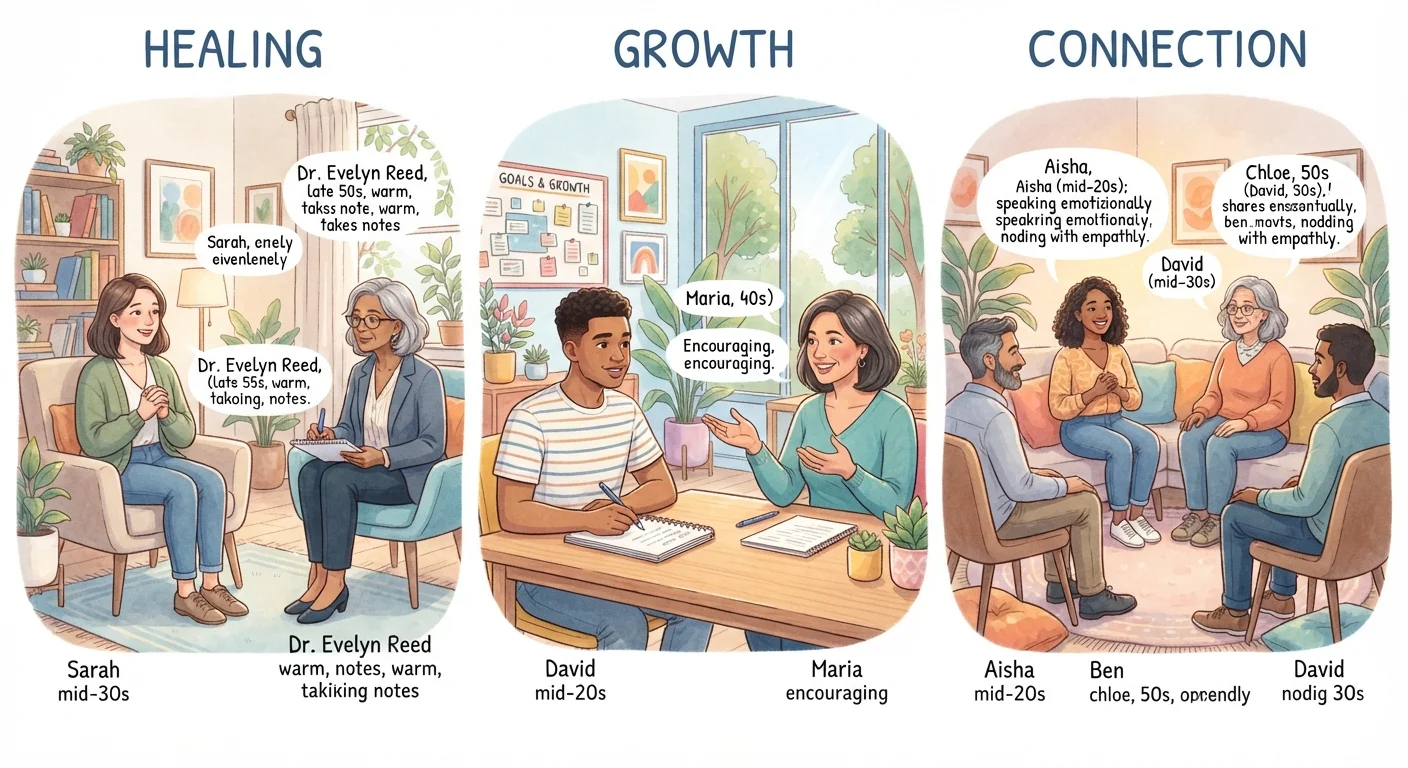
Therapy, coaching, and peer support all have meaningful roles in mental wellness, but they serve different needs. Therapy is the appropriate path when mental health conditions, trauma, or significant distress are involved. Coaching suits those seeking structured goal guidance without a clinical need. Peer support can be a powerful complement to either - or a valuable resource on its own for community and shared understanding.
| Best for | Recommended |
|---|---|
| Those experiencing mental health symptoms, trauma, or clinical distress | Therapy |
| Those seeking structured personal or professional goal-setting support | Life Coaching |
| Those wanting community, shared experience, and mutual encouragement | Peer Support |
| Those in ongoing professional treatment who want additional community | Peer Support alongside Therapy |
Why These Terms Get Confused
The language around mental wellness can be genuinely confusing. "Therapy," "coaching," and "peer support" are sometimes used interchangeably in casual conversation - but they describe meaningfully different relationships, qualifications, and purposes. Conflating them can lead people toward the wrong kind of help, or away from help they actually need.
It's worth noting upfront: this article is general information, not a substitute for professional guidance. If you are experiencing distress, mental health symptoms, or a crisis, please reach out to a qualified healthcare professional or crisis line. Common myths about mental wellness - like the idea that therapy is only for serious crises - can also make it harder to seek appropriate care.
Therapy: Clinical Care from Licensed Professionals
Psychotherapy - commonly called therapy - is provided by licensed mental health professionals, such as licensed clinical social workers (LCSWs), psychologists, licensed professional counselors (LPCs), or psychiatrists. These practitioners complete graduate-level training, supervised clinical hours, and must meet state licensing requirements.
Therapy is designed to assess, diagnose, and treat mental health conditions including depression, anxiety disorders, trauma, and more. Therapeutic approaches - such as cognitive behavioral therapy (CBT), dialectical behavior therapy (DBT), or psychodynamic therapy - are grounded in clinical research and adapted to each client's needs.
Crucially, only licensed professionals can provide a clinical diagnosis or treatment plan. If you're dealing with persistent symptoms, significant distress, or a history of trauma, therapy is typically the appropriate first step. The relationship is also governed by professional ethics codes and legal protections, including confidentiality.
| Therapy | Life Coaching | Peer Support | |
|---|---|---|---|
| Provider qualifications | Licensed clinician (state-regulated) | Certified or self-designated (unregulated) | Trained specialist or lived-experience peer |
| Primary focus | Mental health treatment and diagnosis | Goal-setting and personal growth | Shared experience and mutual support |
| Can diagnose conditions? | Yes (licensed providers) | No | No |
| Best suited for | Symptoms, trauma, clinical distress | Life transitions, ambition, accountability | Community, belonging, recovery support |
| Regulatory oversight | State licensure required | No universal standard | Varies by program or setting |
| Can complement therapy? | N/A (is the clinical option) | Sometimes, with appropriate boundaries | Yes, widely recommended |
Life Coaching: Goal-Focused and Forward-Looking
Life coaching is a distinct practice from therapy. A life coach works with clients to identify goals, clarify values, build accountability structures, and develop action plans - typically in areas like career transitions, relationships, productivity, or personal development.
Coaching is not a licensed profession in the United States in the way therapy is. While reputable coaches often hold certifications from bodies such as the International Coaching Federation (ICF), there is no universal regulatory standard. This matters: a coach cannot diagnose or treat a mental health condition, and attempting to do so would fall outside ethical practice.
Coaching tends to be most useful when someone is generally mentally well and seeking structured support for growth or change - not when they are navigating active mental health symptoms. If a coach encounters a client whose needs appear clinical, responsible practice calls for a referral to a licensed professional.
Ask About Credentials Before You Begin
Before starting with any practitioner, it's reasonable to ask about their qualifications, training, and approach. A licensed therapist can confirm their license type and state registration. A coach should be able to describe their training or certification. Transparency about credentials helps you make an informed choice and ensures you receive the type of support that matches your actual needs.
Peer Support: Shared Experience as a Resource
Peer support refers to emotional and practical assistance offered by people with lived experience of a shared challenge - whether that's mental illness, grief, addiction recovery, chronic illness, or another life experience. This can take place in structured group programs (sometimes run by healthcare organizations or nonprofits), online communities, or informal networks.
Peer support specialists in formal settings may receive specific training and certification, but even informal peer communities can offer real value: reduced isolation, a sense of being understood, and practical coping strategies from people who have navigated similar terrain. Research, including work published by the Substance Abuse and Mental Health Services Administration (SAMHSA), suggests peer support can improve engagement with treatment and overall wellbeing.
Peer support is not a clinical intervention and does not replace therapy when therapy is needed. However, it can be a meaningful complement to professional care - or an accessible resource for those who face barriers to formal services. For those curious about how to be a supportive presence for others, see how to offer support without overstepping.
Choosing the Right Fit
These three approaches are not mutually exclusive. Someone might work with a therapist for clinical care, participate in a peer support group for community, and - once symptoms are stable - engage a coach to work on professional goals. The key is understanding what each offers and what falls outside its scope.
Some practical questions to guide thinking:
- Are you experiencing symptoms of a mental health condition? A licensed therapist is the appropriate starting point.
- Are you generally well and seeking structured support for a life goal? Coaching may be a good fit.
- Are you looking for community with people who understand your experience? Peer support groups - formal or informal - are worth exploring.
Building mental wellness habits is rarely a single-track process. Practices like reflective journaling can complement any of these approaches. Always consult a qualified mental health professional before making decisions about your care, particularly if symptoms or distress are present.
This article is for general informational and educational purposes only and does not constitute medical or mental health advice. If you are experiencing a mental health crisis or persistent symptoms, please contact a licensed healthcare provider or a crisis line such as the 988 Suicide and Crisis Lifeline.
The content on this site is for informational purposes only and is not a substitute for professional advice. Always consult a qualified professional for guidance specific to your situation.