

What 'Anti-Inflammatory' Actually Means
Inflammation is a normal, necessary immune response. When you cut your finger or catch a cold, acute inflammation is your body doing its job. The concern in nutrition science centers on chronic low-grade inflammation - a persistent, low-level immune activation that doesn't resolve and has been associated over time with conditions including cardiovascular disease, type 2 diabetes, and certain cancers.
Diet can influence markers of inflammation - such as C-reactive protein (CRP) and interleukin-6 - measurable through blood tests. Research consistently shows that certain dietary patterns are associated with lower levels of these markers, while others are associated with higher levels. That's the legitimate scientific foundation behind anti-inflammatory eating. What's less settled is how directly and powerfully dietary changes translate into clinical disease outcomes for any given individual.
This distinction matters: association is not the same as causation, and population-level trends don't guarantee individual results.
Common Myths - and What the Evidence Actually Shows
Anti-inflammatory eating has attracted significant marketing attention, which has generated a fair share of misconceptions. Below are some of the most widely held myths, corrected with what research currently supports.
Myth
Certain superfoods can actively 'fight' or 'cure' inflammation on their own.
Fact
No single food eliminates chronic inflammation. Dietary patterns over time - not individual ingredients - are what research consistently measures and supports.
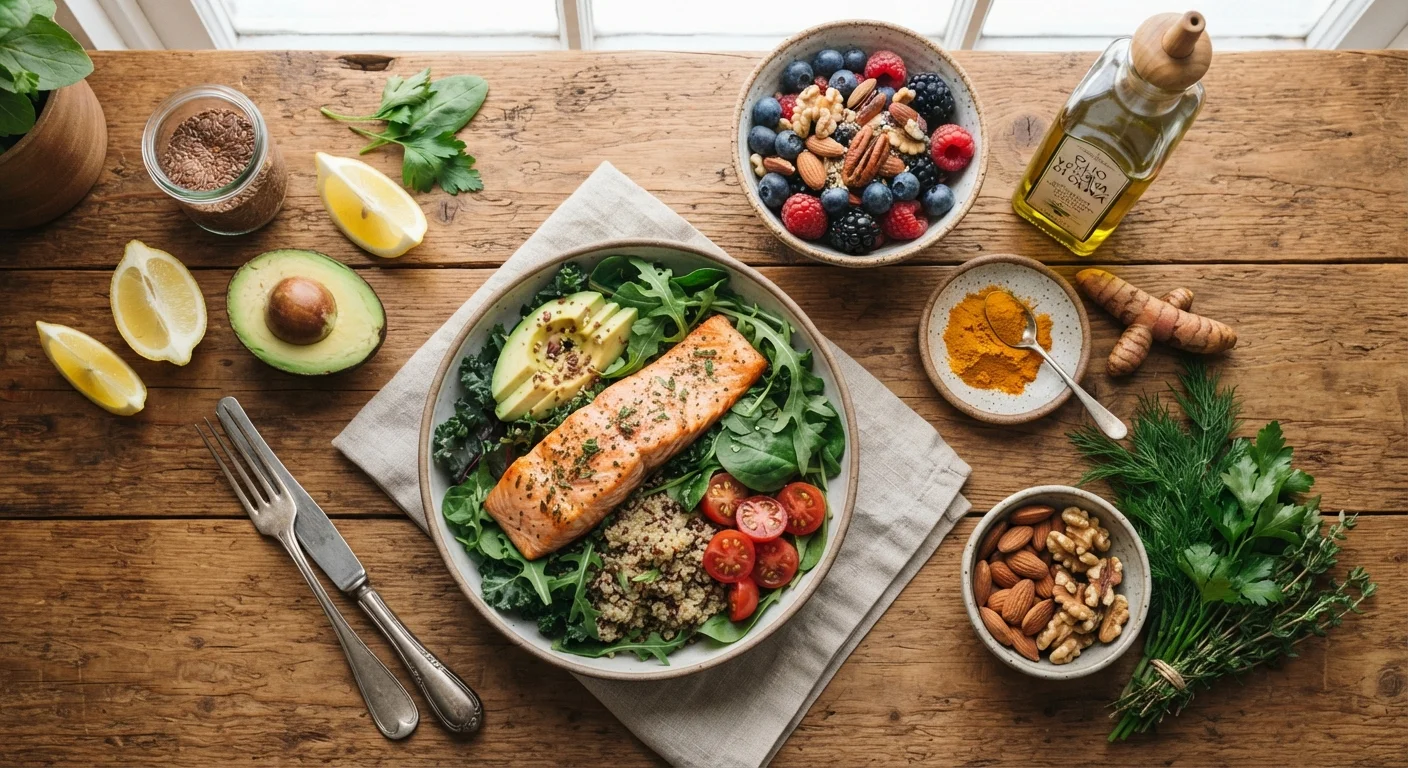
Terms like "superfood" are marketing language, not clinical classifications. While foods such as blueberries, fatty fish, and turmeric contain compounds (anthocyanins, omega-3s, curcumin) studied for their effects on inflammatory markers, the evidence for meaningful clinical benefit from any single food in isolation is limited. Studies showing effects from curcumin, for example, often use concentrated supplement doses - far beyond what you'd get from adding turmeric to a meal. What reliably shows up in the research is that overall dietary quality, sustained over months and years, correlates with inflammation markers.
Myth
An anti-inflammatory diet means cutting out all grains.
Fact
Whole grains are associated with lower inflammatory markers in multiple studies. It's refined grains, not whole grains, that are linked to pro-inflammatory effects.
Grain-free diets have become popular partly due to claims about inflammation, but the evidence doesn't support eliminating whole grains. Research published in journals including The American Journal of Clinical Nutrition has found that higher whole-grain intake is associated with lower levels of CRP and other inflammatory markers. Refined grains - white bread, pastries, sugary cereals - are a different story, as their rapid digestion can trigger blood sugar spikes that contribute to inflammatory signaling. The distinction between whole and refined grains matters enormously here.
Myth
Anti-inflammatory eating requires expensive specialty supplements.
Fact
The foods most supported by evidence - vegetables, fruits, legumes, olive oil, and fish - are whole foods, not proprietary supplements.
The supplement industry has heavily leveraged anti-inflammatory language, but most of what the research supports is achievable through ordinary groceries. Omega-3 supplements, for instance, are widely sold for inflammation, yet the evidence is stronger for consuming fatty fish (salmon, sardines, mackerel) two to three times per week than for isolated fish oil pills in generally healthy adults. Supplements are not regulated with the same rigor as medications in the U.S., and product quality varies considerably. Anyone considering supplements should discuss them with a healthcare provider rather than self-prescribing based on label claims.
Myth
If a food is 'natural' or 'whole,' it can't be pro-inflammatory.
Fact
Naturalness does not determine inflammatory effect. Caloric excess from any food source - including whole foods - and individual metabolic responses both matter.
Context shapes how any food affects the body. Red meat, for example, is a whole food, yet high consumption has been associated with elevated inflammatory markers in several large cohort studies. Coconut oil is natural but is high in saturated fat, and current evidence does not support characterizing it as anti-inflammatory. Individual responses to foods also vary based on genetics, gut microbiome composition, and metabolic health. This is why oversimplified lists of "good" and "bad" foods have limited clinical utility - a registered dietitian can help translate general principles into guidance that fits an individual's actual health context.
Myth
An anti-inflammatory diet will produce noticeable results within days.
Fact
Measurable changes in inflammatory biomarkers from dietary shifts typically take weeks to months of consistent eating patterns, not days.
Chronic inflammation develops over years; dietary patterns that influence it work on a similar timescale. Short-term studies do sometimes show rapid changes in blood glucose or triglycerides, but sustained reduction in inflammatory markers like CRP generally requires consistent dietary patterns over several weeks at minimum. Claims that a "detox" or short dietary reset will meaningfully address chronic inflammation are not well-supported by clinical research. Sustainable, long-term changes to overall food quality are what the evidence supports - not quick-fix protocols.
The Dietary Patterns With the Strongest Evidence
Rather than focusing on individual "superfoods," researchers study dietary patterns - the overall combination of foods eaten regularly. The Mediterranean diet has the most robust body of evidence. It emphasizes vegetables, fruits, legumes, whole grains, fish, and olive oil, with limited red meat and ultra-processed foods. Multiple large observational studies and randomized controlled trials have linked it to lower CRP levels and reduced cardiovascular risk.
~30%
Reduction in cardiovascular events
The PREDIMED trial, a large randomized study, found roughly 30% lower risk of major cardiovascular events among participants following a Mediterranean diet supplemented with olive oil or nuts compared to a control low-fat diet.
~25%
Lower CRP in Mediterranean diet followers
A meta-analysis in the European Journal of Clinical Nutrition found Mediterranean diet adherence was associated with significantly lower C-reactive protein levels, a key marker of systemic inflammation.
The MIND diet (a hybrid of Mediterranean and DASH approaches) and traditional Japanese diets also show promising associations with reduced inflammatory markers and lower rates of chronic disease. The common thread across these patterns: abundant plants, healthy fats, and minimal ultra-processed foods - not exotic ingredients or expensive supplements.
It's also worth recognizing that exercise habits and rest play a meaningful role in the inflammation picture. Research suggests that chronic sleep deprivation elevates inflammatory markers, meaning diet alone is only part of the equation. For a deeper look at recovery and restoration, see our piece on what science says about genuine rest.
Diet Alone Is Not the Full Picture
Inflammation is influenced by multiple factors beyond food - including physical activity, sleep quality, stress levels, smoking, and body weight. Focusing exclusively on dietary changes while ignoring these factors is unlikely to produce the outcomes suggested by population-level research. A healthcare provider or registered dietitian can help you assess your individual risk factors and develop a realistic, evidence-based approach.
This article is for general informational purposes only and is not a substitute for personalized medical or nutritional advice. Consult a qualified healthcare provider or registered dietitian before making significant changes to your diet, especially if you have an existing health condition.
The content on this site is for informational purposes only and is not a substitute for professional advice. Always consult a qualified professional for guidance specific to your situation.