

Why Laundry Piles Up in the First Place
Laundry rarely becomes a problem at the wash cycle — it becomes a problem at the folding and putting-away stage. Most households can get clothes through the machine efficiently enough. What stalls the system is the clean pile that lands on a chair, a bed corner, or a laundry basket and stays there for days. Understanding this breakdown is the first step toward fixing it.
The other common culprit is irregular scheduling. When laundry happens only when you run out of something, you're already behind. The pile then feels overwhelming, which delays action further — a cycle that compounds quickly in homes with multiple people or active lifestyles.
If you're building household systems from the ground up, the core principles of home routines provide a useful foundation before tackling any specific task like laundry.
The Pile Is Usually a Folding Problem
If your laundry consistently stalls as a clean heap, focus your habit-building energy on the folding and putting-away step rather than the washing. Try folding clothes directly from the dryer while they're still warm — it reduces wrinkles and takes less time than tackling a cold, crumpled pile later.
Scheduling Approaches That Actually Work
There is no single perfect laundry schedule — the right one depends on your household size, work week, and how much clothing you have in rotation. That said, a few proven frameworks help most people stay ahead.
Run one load per day on weekdays rather than saving everything for the weekend.
A single daily load takes less than ten minutes of active effort and prevents the intimidating mountain that builds up over a week. Smaller, frequent loads are also easier to fold and put away promptly before they cool and wrinkle.
Assign laundry to a fixed day or days that anchor it in your weekly schedule.
Habitual scheduling removes the decision fatigue of figuring out 'when' to do laundry — it simply happens on Monday and Thursday, for instance, like any other standing appointment. Predictability keeps the task from slipping.
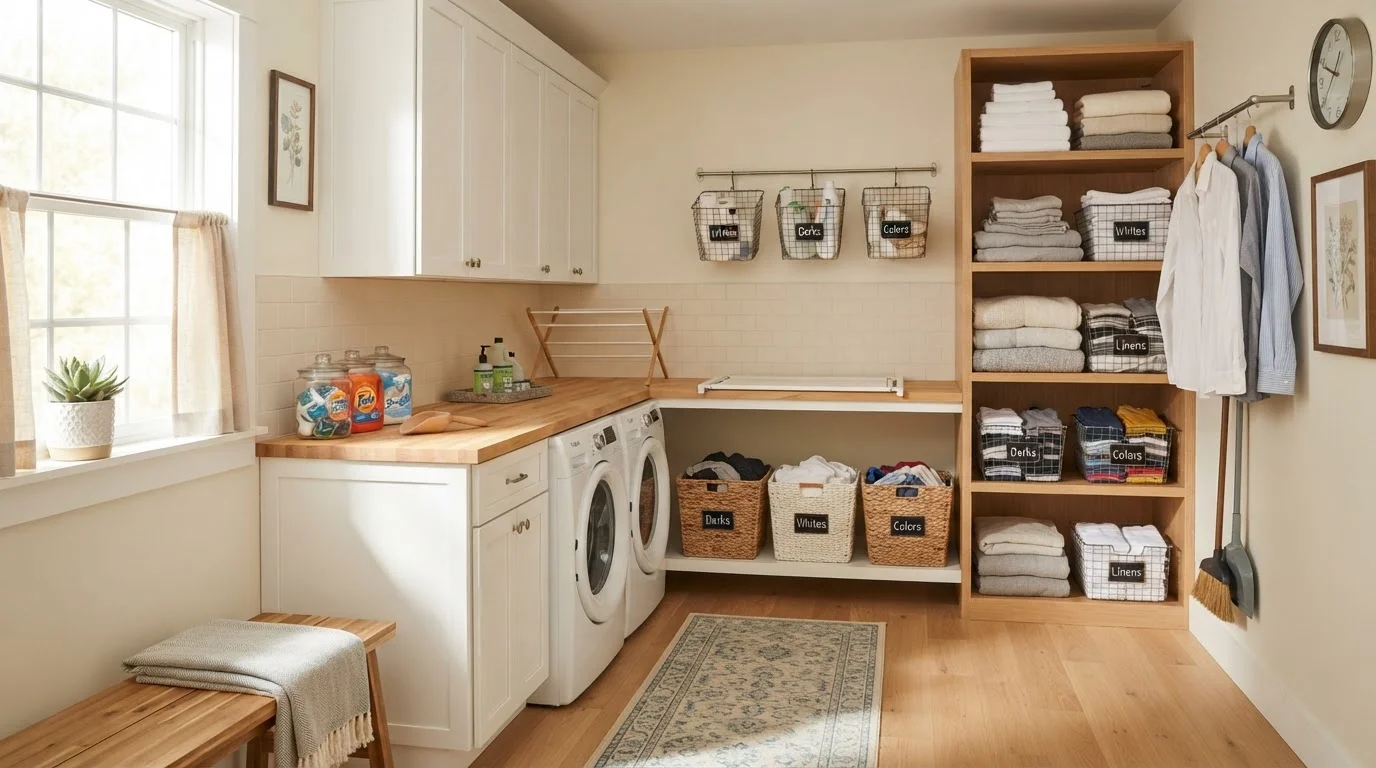
Sort clothes into designated bins at the point of undressing, not before washing.
Pre-sorting at laundry time adds friction and time to an already-delayed task. Placing a two- or three-compartment hamper in the bedroom or bathroom means sorting happens automatically and continuously throughout the week.
Fold and put away each load before starting the next one.
The pile-up problem almost always originates with clean, unfolded laundry. Establishing a rule that the previous load must be put away before the machine runs again breaks the accumulation habit at its source.
Keep laundry supplies stocked and accessible so there's no excuse to delay.
Running out of detergent or dryer sheets is a surprisingly common reason people skip a laundry day and never quite catch up. Treating supplies like pantry staples — restocked before they run out — removes a low-level but real barrier.
For households that are part of a broader weekly reset, laundry fits naturally into that rhythm. The weekly household reset approach offers a structured way to anchor laundry alongside other recurring tasks so nothing gets skipped.
Quick Wins You Can Start Today
You don't need to overhaul your entire home system to stop laundry from piling up. A few targeted habit changes — implemented right now — can interrupt the accumulation pattern within a week.
How much you're washing also depends on how many wears you're getting out of each garment before it goes in the basket. Many items, particularly outerwear and denim, can be worn multiple times before laundering. The everyday habits that keep clothing looking good can actually reduce how often you need to run a load.
8–10 hrs
Average weekly laundry time per U.S. household
Surveys on household labor consistently place laundry among the most time-consuming recurring domestic tasks for American families.
~2x
Faster folding when clothes are warm from the dryer
Garment care experts note that warm, freshly dried clothing is significantly easier to smooth and fold than cooled, wrinkled items left sitting.
Making the Routine Stick Long-Term
Consistency matters more than perfection. A laundry routine that you follow 80% of the time is vastly more effective than an elaborate system that collapses under any pressure. The goal is a sustainable baseline, not a flawless performance.
Distribute the work across the household wherever possible. Even young children can sort socks or carry items to drawers. Assigning specific family members ownership of their own laundry — washing, folding, and putting away — reduces both the physical burden and the mental load of tracking everyone's clothing.
Finally, consider whether your wardrobe size is working for or against your laundry routine. A larger wardrobe may feel like freedom, but it often means more items cycling through the wash. Restyling and rewearing what you already own can actually shrink your laundry volume while making your closet feel more useful.
Routines Need Adjustment Over Time
Life changes — new jobs, kids, travel, seasonal shifts — will periodically disrupt even well-established laundry habits. That's normal. Rather than abandoning the system entirely during disrupted weeks, try scaling back to one non-negotiable load to maintain the habit's momentum. Revisit and adjust your schedule every few months to make sure it still fits your household's actual rhythm.
The content on this site is for informational purposes only and is not a substitute for professional advice. Always consult a qualified professional for guidance specific to your situation.