

The Core Idea: A Plan, Not a Prison
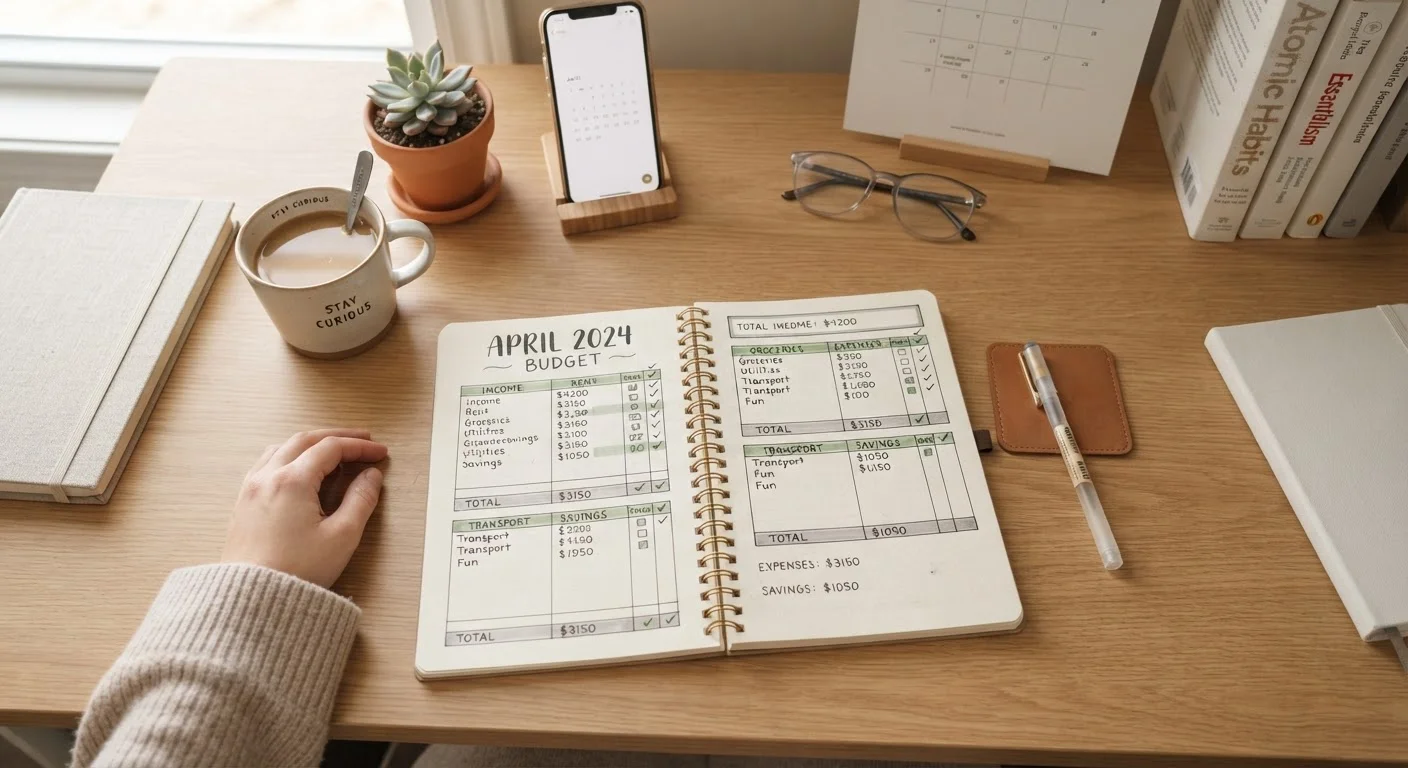
A monthly budget is, at its most basic, a written agreement you make with yourself about how to use your income for a given month. You look at what money is coming in — wages, freelance pay, benefits, any other source — and you decide in advance how to distribute it across your expenses, savings, and discretionary spending.
That's it. No complex formulas, no financial background required.
What a budget is not is an all-or-nothing rulebook that brands you a failure the moment you buy a coffee you hadn't planned for. That misunderstanding stops many people from starting. If you've felt that way, you're in good company — and you'll find the reality far more forgiving. For a closer look at the misconceptions that hold people back, see common budgeting myths that keep people from starting.
Start Simple, Then Refine
If building a full detailed budget feels overwhelming, begin with just three categories: essentials (rent, food, utilities), financial goals (savings, debt), and everything else. Even this rough framework gives you meaningful control. You can add more granularity over time as you get comfortable.
How a Monthly Budget Actually Works
The mechanics are straightforward. You start with your total expected take-home income for the month. Then you list every category you expect to spend money in — rent or mortgage, groceries, utilities, transportation, subscriptions, savings contributions, and so on. You assign a dollar amount to each category until your income is fully allocated.
Some popular frameworks to guide this allocation:
- 50/30/20: Roughly 50% toward needs, 30% toward wants, 20% toward savings and debt repayment.
- Zero-based budgeting: Every dollar of income is assigned a job, so income minus all allocations equals zero.
- Envelope method: Cash (or digital equivalents) is divided into category-specific pools, and spending stops when a pool is empty.
No single method is universally correct. The right system is the one that fits your income pattern, spending habits, and tolerance for detail.
~33%
Americans who follow a detailed household budget
According to Gallup polling, roughly one in three American adults reports keeping a detailed budget — meaning most people manage money without a formal plan.
78%
Workers living paycheck to paycheck at some point
Research from various workforce surveys consistently finds that a large share of American workers have experienced living paycheck to paycheck, underscoring the practical value of intentional spending plans.
What a Budget Doesn't Do
Understanding the limits of a budget is just as important as understanding what it does. A budget cannot:
- Predict every expense. Irregular costs — car repairs, medical copays, annual insurance premiums — are easy to forget. Spending categories that most budgets underestimate walks through the hidden costs that quietly derail careful plans.
- Run itself. A budget written once and never revisited drifts out of alignment with real life. A regular check-in keeps it accurate and useful. Learn why in the case for a monthly budget review.
- Replace income. A budget organizes the money you have — it doesn't create more of it. If income is genuinely insufficient to cover necessities, a budget clarifies the gap but can't close it alone.
Knowing these limits helps you use a budget as the tool it is, rather than expecting it to solve every financial problem.
Budgets Are Estimates, Not Guarantees
Every budget is built on assumptions about what you'll earn and spend. Those assumptions will sometimes be wrong, and that's normal. The value of a budget isn't in its accuracy at the start — it's in the clarity it creates over time as you adjust it to reflect reality. Treat early budget drafts as working hypotheses, not final answers.
Ready to Build One?
Once you understand what a monthly budget actually is, building one becomes far less intimidating. The process involves gathering your income figures, listing your expenses honestly, and making intentional allocation decisions — a skill that improves quickly with practice.
If you've never made a budget before, Your First Budget: A Plain-English Starting Point offers a beginner-friendly walkthrough with no financial jargon. And if you've tried before and run into trouble partway through the month, why budgets fall apart mid-month explains the structural patterns — not personal failures — that usually cause it.
A budget isn't about achieving perfection. It's about making deliberate choices with your money instead of reactive ones.
This article is for general informational and educational purposes only and does not constitute personalized financial advice. Consider consulting a qualified financial professional for guidance specific to your situation.
Frequently Asked Questions
Yes. A budget is useful at any financial stage. Even people with comfortable incomes benefit from tracking where their money goes, ensuring they're saving toward goals, and avoiding unconscious overspending. It's a planning tool, not a crisis response.
Spending tracking is backward-looking — it records what already happened. A budget is forward-looking — it plans what you intend to happen. Both are useful, and many people use them together for a complete financial picture.
Variable-income budgeting typically starts with your lowest expected monthly income as the baseline, then prioritizes essential expenses first. Any additional income above that baseline can be allocated to savings or discretionary spending. It requires more active management but is entirely workable.
Only as detailed as it needs to be for you to feel in control. Some people benefit from tracking every spending category; others do fine with three or four broad buckets. The right level of detail is whichever you'll actually maintain.
No — a budget is one component of a broader financial plan. A financial plan also covers longer-term goals like retirement, insurance, investments, and estate planning. A monthly budget handles the day-to-day execution of that larger strategy.
The content on this site is for informational purposes only and is not a substitute for professional advice. Always consult a qualified professional for guidance specific to your situation.