

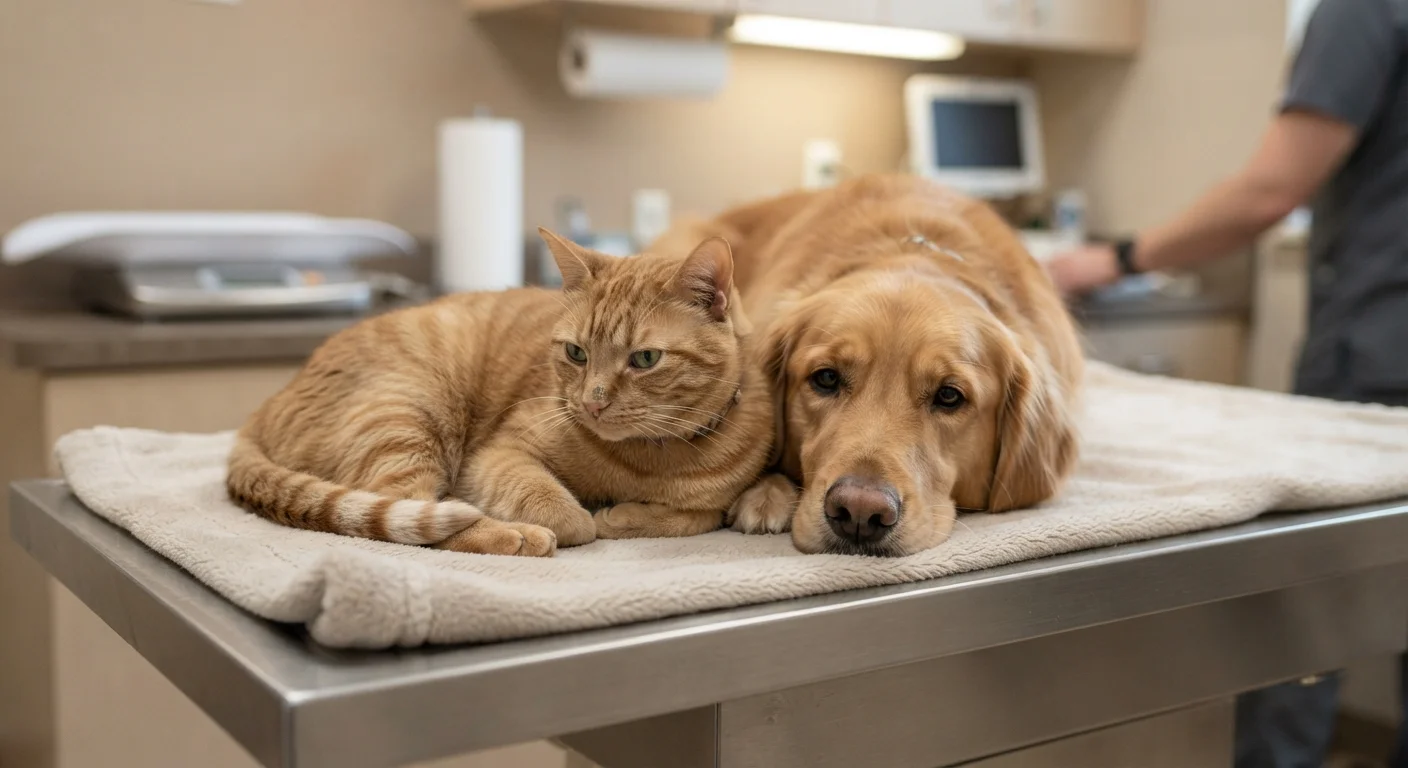
Same Diagnosis, Different Animal
When a pet is diagnosed with diabetes, kidney disease, or arthritis, many owners understandably draw on what they know — from a previous pet, a neighbor's experience, or general reading. But veterinary medicine increasingly recognizes that cats and dogs are not interchangeable patients. Their physiology, stress responses, and even the way diseases progress can diverge in clinically meaningful ways.
Cats in particular are notorious for masking discomfort. Because feline body language is often subtle, conditions that would produce obvious signs in a dog may go undetected in a cat until they are well advanced. Understanding these species-level differences helps owners know what to watch for — and when to call the vet. See also signs your pet may be in pain for a broader look at behavioral and physical cues across both species.
Diabetes Mellitus
Both species can develop diabetes, but the underlying mechanisms differ. Dogs almost exclusively develop Type 1-like diabetes, in which the pancreas fails to produce sufficient insulin — meaning lifelong insulin therapy is typically required. Cats more commonly develop Type 2-like diabetes, in which cells become resistant to insulin, often driven by obesity and high-carbohydrate diets.
In cats, this distinction is clinically significant: with aggressive early management — including a low-carbohydrate diet, weight loss, and appropriate insulin dosing — diabetic remission is achievable in a meaningful proportion of feline patients. In dogs, remission is rare. Signs in both species include increased thirst, frequent urination, and weight loss despite a good appetite, but cats may also develop a characteristic plantigrade stance (walking on their hocks) due to diabetic neuropathy — a presentation not typically seen in dogs. Diet plays a major supporting role in feline diabetes; feline nutritional basics provides relevant context on why cats have distinct dietary needs.
Diabetic cats can achieve remission with early, aggressive management — an outcome rarely seen in dogs.
Chronic Kidney Disease
Chronic kidney disease (CKD) is extremely common in older cats — some estimates suggest it affects the majority of cats over 15 — and is also frequently diagnosed in senior dogs. The condition involves gradual loss of kidney function, but it tends to progress more slowly in cats, sometimes over years, whereas dogs may decline more rapidly once diagnosed.
Cats often show few overt symptoms until a substantial portion of kidney function is already lost. Subtle early signs include mild weight loss, slightly increased water intake, and occasional vomiting — easy to miss or attribute to aging. Dogs are more likely to present with pronounced lethargy, vomiting, and reduced appetite at diagnosis. Dietary phosphorus restriction is a cornerstone of management in both species, but the specific targets and formulations differ. Regular bloodwork is the most reliable tool for early detection in both cats and dogs.
Cats can lose the majority of kidney function before showing noticeable symptoms — early detection depends on bloodwork.
Arthritis (Osteoarthritis)
Arthritis is widely underdiagnosed in cats. Studies suggest it is at least as prevalent in cats as in dogs, yet it is identified far less often in clinical settings — largely because cats rarely limp. Instead, arthritic cats typically become less willing to jump, stop using high surfaces like cat trees or beds, groom less effectively (leading to a matted or unkempt coat), and may use the litter box less reliably if entry requires too much physical effort.
Dogs with arthritis are more likely to display visible lameness, reluctance to use stairs, and vocalizing during movement — signs owners more readily recognize as pain. Because feline arthritis is so frequently missed, knowing how cats signal pain is particularly valuable for owners of older cats. Treatment approaches also differ: several anti-inflammatory medications safe in dogs are toxic to cats, making veterinary guidance on pain management non-negotiable.
Arthritic cats rarely limp — reduced jumping and poor grooming are more typical warning signs.
Hyperthyroidism vs. Hypothyroidism
Thyroid disease is common in both species, but the direction of dysfunction tends to run opposite. Cats overwhelmingly develop hyperthyroidism — an overactive thyroid — particularly in middle to old age. The classic presentation includes weight loss despite an increased appetite, hyperactivity or restlessness, and an unkempt coat. It is one of the most frequently diagnosed endocrine conditions in cats.
Dogs, by contrast, are far more prone to hypothyroidism — an underactive thyroid — which presents almost inversely: weight gain without increased appetite, lethargy, exercise intolerance, and skin or coat changes such as thinning fur and thickened skin. Confusing these conditions — or assuming a dog's thyroid disease experience applies to a cat — can delay appropriate diagnosis. Both conditions are manageable when identified, but the treatment approaches are entirely different.
Cats typically develop an overactive thyroid; dogs more commonly develop an underactive one — nearly opposite presentations.
Hypertension (High Blood Pressure)
High blood pressure in dogs is almost always secondary to another condition — most commonly kidney disease, Cushing's disease, or hypothyroidism — and tends to be identified as part of managing that underlying problem. In cats, hypertension is also frequently secondary, particularly to CKD or hyperthyroidism, but it can occasionally appear without an obvious primary cause (idiopathic hypertension).
The consequences of uncontrolled hypertension differ subtly between species. In cats, sudden blindness caused by retinal detachment is a dramatic and unfortunately common presenting sign of severe hypertension — owners may notice their cat suddenly walking into objects or displaying enlarged, fixed pupils. In dogs, acute blindness from hypertension occurs but is comparatively less common as an initial presentation. Routine blood pressure screening is increasingly recommended for senior cats at annual checkups, in part because the signs of feline hypertension can be abrupt and severe.
Sudden blindness caused by retinal detachment can be the first sign of uncontrolled high blood pressure in cats.
Inflammatory Bowel Disease
Inflammatory bowel disease (IBD) in both species involves chronic inflammation of the gastrointestinal tract, but the clinical picture and associated risks diverge. In dogs, IBD commonly causes chronic diarrhea as the dominant symptom, along with vomiting and weight loss. In cats, chronic vomiting is often the more prominent feature, with diarrhea present but sometimes less obvious — particularly in cats with small intestinal involvement.
A clinically important distinction is that cats with long-standing, poorly controlled IBD face a substantially elevated risk of developing small cell lymphoma, a cancer of the GI tract. Differentiating between IBD and low-grade lymphoma in cats can be challenging and often requires biopsy. Dogs also face increased cancer risk with chronic GI inflammation, but the specific IBD-to-lymphoma progression is particularly well-documented in cats. Nutrition management — including hydrolyzed or novel protein diets — plays a role in both species; explore pet nutrition and diet for foundational information on feeding approaches.
In cats, chronic IBD carries a notable risk of progressing to small cell lymphoma — a risk less prominently linked in dogs.
Why These Differences Matter in Practice
The conditions above are among the most commonly diagnosed in companion animals, and in each case, species-specific knowledge changes how owners should observe and respond. A cat with advanced kidney disease may still appear active and eat reasonably well, while a dog with the same diagnosis may show more overt lethargy and appetite loss much earlier. A diabetic dog typically requires lifelong insulin; a diabetic cat may achieve full remission if body weight and diet are optimized promptly — something worth discussing with your vet from the outset.
Track Changes Over Time
Because cats mask illness so effectively, keeping a simple log of your cat's daily habits — appetite, water intake, litter box use, grooming, and activity level — can help you spot gradual changes that are easy to overlook visit to visit. A photo or brief note once a week takes little time and gives your veterinarian valuable context. Even minor deviations from a cat's normal baseline are worth mentioning at checkups.
Senior pets of both species face elevated risk for all of these conditions. Managing a senior pet's health covers the monitoring adjustments that become important after age seven. And because excess weight accelerates or worsens nearly every condition on this list, understanding how pet obesity affects the body is relevant background for any owner managing a chronic diagnosis.
This article is for general informational purposes only and does not constitute veterinary medical advice. Always consult a licensed veterinarian for guidance specific to your pet's health.
The content on this site is for informational purposes only and is not a substitute for professional advice. Always consult a qualified professional for guidance specific to your situation.