

Summary
18 items · 30–60 minutes
Why the First Class Sets the Tone
Puppy training classes are one of the most effective investments you can make in your dog's long-term wellbeing. But many owners arrive underprepared — unfamiliar with what the class format involves, what their puppy needs beforehand, or how to reinforce learning once they're back home. The result is a stressful experience for both ends of the leash.
A well-run group class does more than teach sit and stay. It exposes your puppy to unfamiliar people, other dogs, new smells, and unpredictable sounds — all in a controlled, supervised setting. This structured socialization during the critical developmental window (generally considered to close around 12–16 weeks) can meaningfully shape how your dog responds to the world throughout its life.
If you're still in the early stages of bringing a puppy home, our home preparation checklist covers the foundational setup before training even begins. Once that groundwork is in place, this checklist helps you arrive at class ready to make every minute count.
Before Enrollment
The Day Before Class
Arriving at Class
During and After Each Session
What Actually Happens in a Puppy Class
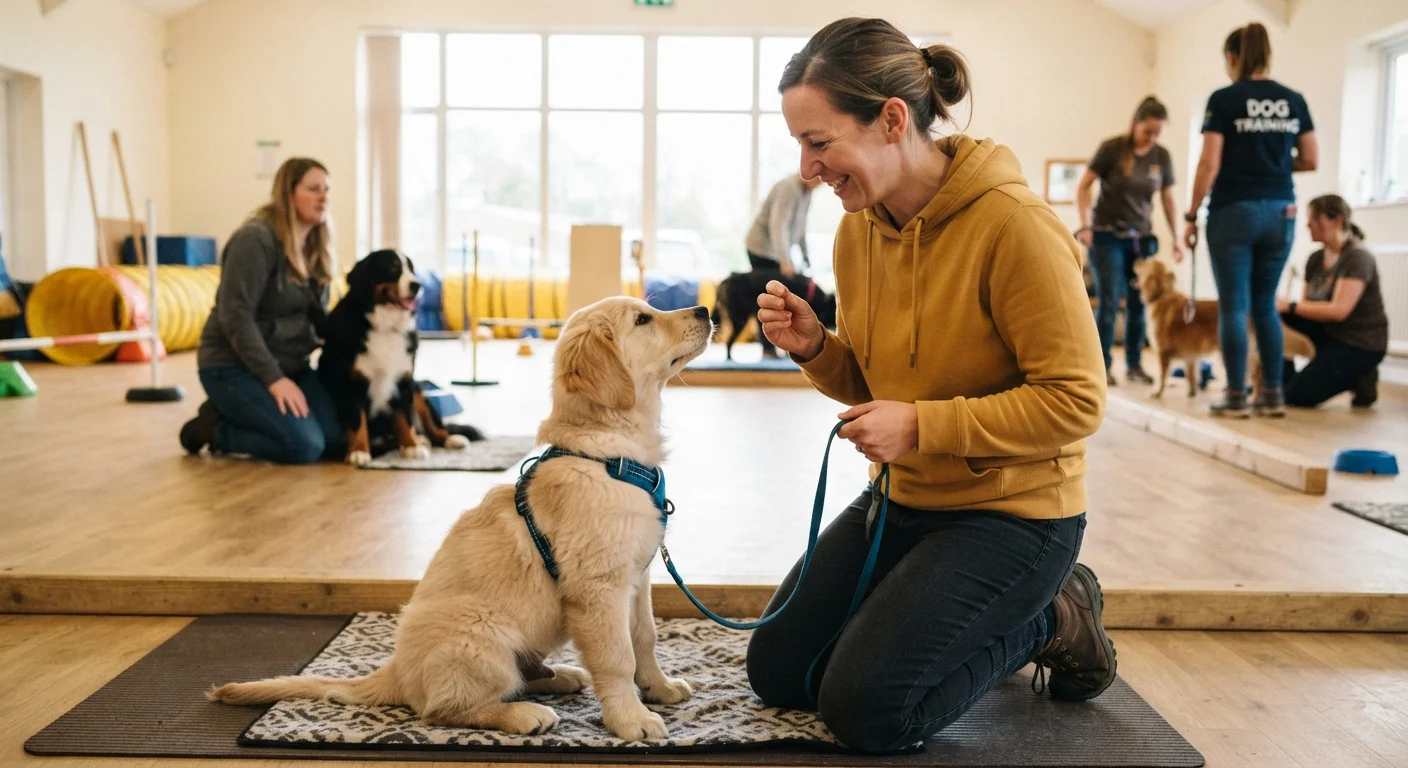
Most group puppy classes run 45–60 minutes, once a week, for four to six weeks. Sessions typically open with off-leash playtime — a deliberate choice that lets puppies burn off excitement before structured work begins. The trainer then introduces one or two foundational cues per session, such as name recognition, sit, or loose-leash walking.
Expect your puppy to be distracted. That's normal. Young dogs have limited attention spans, and a room full of other puppies is genuinely overwhelming at first. Trainers who use evidence-based methods will rely on short repetitions, high-value food rewards, and careful management of the environment rather than corrections or physical pressure.
Watch for Signs Your Puppy Is Overwhelmed
Lip-licking, yawning, whale eye (showing whites of the eyes), a tucked tail, or sudden disinterest in treats are all signs that your puppy may be approaching their stress threshold. These are communication signals, not stubbornness. If you notice them, calmly step away from the group and give your puppy a moment to decompress before re-engaging. Forcing a fearful puppy to continue can make negative associations with training environments harder to overcome later.
Between sessions, you'll typically be asked to practice five to ten minutes of short training repetitions daily. Owners who skip home practice see significantly slower progress. The class itself is where you learn the technique; your living room is where your puppy actually learns the behavior.
As your dog grows, training needs evolve considerably. Our article on how behavioral needs shift with age is a useful next read once you've completed your puppy foundation course.
Tools and Supplies to Bring
Coming to class with the right gear removes friction and lets you focus on your puppy. Check with your specific trainer before the first session, as requirements vary, but most programs share a common list.
Flat buckle collar or well-fitted harness
Provides a secure, humane attachment point for the leash without putting pressure on the trachea during class.
Standard 4–6 foot leash
Gives you enough control for close-range training exercises while allowing some freedom of movement.
Treat pouch or bait bag
Keeps high-value rewards easily accessible so you can deliver reinforcement within one to two seconds of the desired behavior.
High-value soft treats
Motivates your puppy in a distracting group environment — more effective than kibble for early training sessions.
Clicker
Provides a precise, consistent marker signal that communicates the exact moment your puppy performed the correct behavior.
Portable water bowl and water
Keeps your puppy hydrated, especially during warmer months or in heated indoor spaces.
One note on treats: use small, soft pieces — roughly pea-sized. Large or crunchy treats slow down training repetitions and can fill a puppy up quickly. Many trainers recommend reserving your puppy's most exciting treats exclusively for class so they remain highly motivating in that high-distraction environment.
It's also worth being cautious about supplementing class instruction with techniques you've seen online. Viral training advice can undermine professional guidance — especially methods that rely on dominance theory or physical correction, which are inconsistent with how dogs actually learn.
Never Use Punishment-Based Techniques
Choke chains, prong collars, physical corrections, and fear-based methods are not consistent with current behavioral science and can damage the trust between you and your puppy. Research in animal behavior consistently supports positive reinforcement as the most effective and humane method for training young dogs. If a trainer recommends techniques that cause pain or fear, it is appropriate to seek instruction elsewhere.
The content on this site is for informational purposes only and is not a substitute for professional advice. Always consult a qualified professional for guidance specific to your situation.