

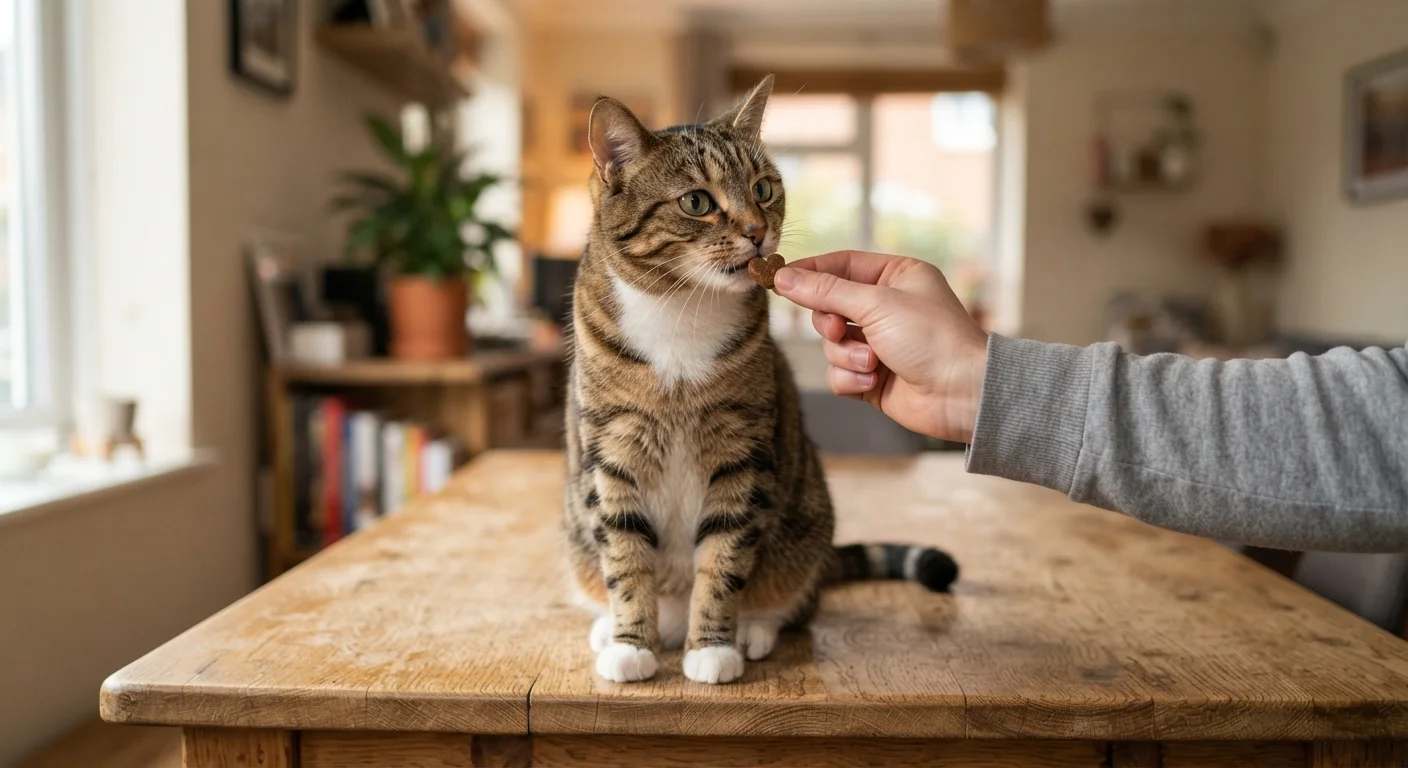
Why Cat Learning Doesn't Mirror Dog Training
The frustration many owners feel when trying to train a cat often comes from applying a dog-centric framework to a fundamentally different animal. Cats are solitary hunters by evolutionary design, not cooperative pack members. This means their social motivation — the desire to please a group leader — is simply absent in the way it manifests in domestic dogs.
That doesn't mean cats are untrainable. It means the leverage points are different. Where a dog may respond enthusiastically to praise and eye contact, a cat is weighing a far more transactional question: What's in this for me right now? Owners who understand this shift their approach from seeking compliance to building genuine incentive — and results follow.
It's also worth noting that online sources vary widely in quality. The common missteps owners make after following viral training tips can set back progress significantly, especially when methods designed for dogs are applied to cats without adjustment.
Classical and Operant Conditioning in Cats
Both major forms of associative learning apply to cats. Classical conditioning involves pairing a neutral stimulus with one that already produces a response. The classic example in cat ownership: the sound of a can opener or food packet rustling triggers an immediate, excited behavioral response — because the cat has learned that sound reliably predicts food. This learning happens automatically, without deliberate effort from the owner.
Operant conditioning is behavior shaped by its consequences. When a cat sits and receives a treat, the probability of sitting again in that context increases. This is the foundation of intentional cat training. The key variables are timing (the reward must follow the behavior within one to two seconds), consistency, and the value of the reinforcer to that individual cat.
2–5 min
Optimal length for a cat training session
Animal behaviorists generally recommend keeping feline training sessions very short to maintain focus and prevent disengagement.
1–2 sec
Window for effective reward delivery after behavior
Behavioral science indicates that reinforcement must follow the target behavior within one to two seconds for the cat to form a reliable association.
~8 weeks
Age when socialization and learning begins in kittens
Veterinary and behavioral consensus identifies the early kitten period as critical for shaping long-term temperament and responsiveness.
Negative reinforcement — removing an unpleasant stimulus when a desired behavior occurs — and positive punishment — adding something aversive after an unwanted behavior — are both theoretically applicable but practically problematic with cats. Cats do not reliably connect a punishment delivered even seconds after a behavior to that behavior itself. The result is anxiety, not learning.
For a broader look at how reward-based and correction-based methods compare across species, see what the research says about positive reinforcement vs. correction-based training.
The Underestimated Power of Routine
Routine is arguably the most underutilized training tool available to cat owners. Cats build strong internal models of their environment — they track patterns in time, space, and social interaction with remarkable precision. Feeding at the same times each day, using consistent verbal cues, and structuring play sessions predictably all contribute to a cat's sense of safety.
A cat in a secure, predictable environment is neurologically better positioned to learn. Chronic unpredictability activates stress responses that interfere with cognitive flexibility. This is one reason that abrupt changes in household routine — a new work schedule, a moved litter box, a new pet — can produce behavioral problems that look like stubbornness but are actually anxiety.
Use Meals Strategically for Training
Training just before a scheduled meal — rather than after — maximizes food motivation. A cat that is even slightly hungry will engage more readily with treat-based training. Avoid training immediately after feeding, when food reward value drops significantly. Keep treat portions tiny so hunger isn't satisfied within the first few repetitions.
Routine also reinforces behavior passively. A cat that is fed after a quiet approach to the bowl — rather than demanding meowing — learns over time that calm behavior produces results. This doesn't require formal training sessions; it requires consistent, thoughtful responses from the owner.
What 'Training' Realistically Looks Like for Cats
Effective cat training sessions are short — typically two to five minutes — and end before the cat loses interest. Using a clicker or a consistent verbal marker (a short, distinct sound made immediately when the desired behavior occurs, followed quickly by a treat) helps bridge the gap between action and reward. Many cats can learn to sit, come when called, touch a target with their nose, or enter a carrier on cue using these methods.
Goals matter too. Cats trained for practical reasons — comfortable veterinary handling, carrier acceptance, cooperative grooming — benefit their own welfare directly. Behavioral needs shift across a cat's life stages, and what motivates a kitten may differ substantially from what engages a senior cat.
Diet plays a role as well. A cat's overall health and nutritional status affects engagement and energy levels. Owners interested in the foundations of feline wellness should review the nutritional basics every cat owner should know — a well-nourished cat is simply a more responsive one.
This article is for general informational purposes only and does not constitute veterinary or behavioral advice. For concerns about your cat's behavior or health, consult a licensed veterinarian or certified animal behaviorist.
Frequently Asked Questions
Cats can be trained, but the process looks different. Dogs are motivated partly by social praise and pack dynamics; cats respond primarily to tangible rewards like high-value food. Training a cat requires shorter sessions, more patience, and acceptance that cats will disengage when they choose to.
Small, highly palatable food treats are the most reliable reinforcer for most cats. The treat should be tiny — a pea-sized piece — so the cat stays motivated without filling up. Some cats also respond to play with a favorite toy as a reward.
Cats disengage when they are not hungry, when sessions run too long, or when the reinforcement isn't compelling enough. Try training before a meal, keep sessions under five minutes, and experiment with different treat types to find what your cat finds motivating.
Behavioral science does not support punishment as an effective tool for cats. Cats do not connect punishment to a prior action the way some animals can, and physical or verbal corrections typically cause fear and anxiety rather than learning. Redirecting behavior and reinforcing desired alternatives is far more effective.
Cats are highly attuned to predictable patterns in their environment. Consistent feeding times, play schedules, and daily interactions help cats anticipate events and feel secure — a state in which they are far more receptive to new learning. Disrupting routine can cause stress that inhibits behavior change.
Kittens as young as eight weeks can begin learning through positive reinforcement and routine, and early socialization has lasting effects on adult temperament. Adult cats are also fully capable of learning new behaviors, though the process may require more patience if prior experiences have shaped existing habits.
The content on this site is for informational purposes only and is not a substitute for professional advice. Always consult a qualified professional for guidance specific to your situation.