

Why Curly Hair Needs a Different Approach
Curly and coily hair textures are structurally different from straight hair. The bends and spirals in each strand make it harder for natural scalp oils to travel down the hair shaft, which means curly hair tends to be drier and more prone to tangles, frizz, and breakage. A one-size-fits-all shampoo-and-rinse approach often strips what little moisture the hair does have.
That's why wash day for curly hair is less of a quick chore and more of a deliberate routine — one that addresses moisture, structure, and protection in a specific order. The good news? Once you've built the habit, it becomes second nature, and the payoff in curl definition and hair health is significant.
If you're also exploring whether traditional shampooing is even right for your curl pattern, our guide on co-washing vs. shampooing breaks down exactly which cleansing method suits different textures and lifestyles.
What you will need
Step-by-Step Wash Day Routine
Follow these steps in order for the best results. Allow yourself enough uninterrupted time — rushing through wash day is one of the most common causes of breakage and uneven results.
Pre-Detangle on Dry Hair
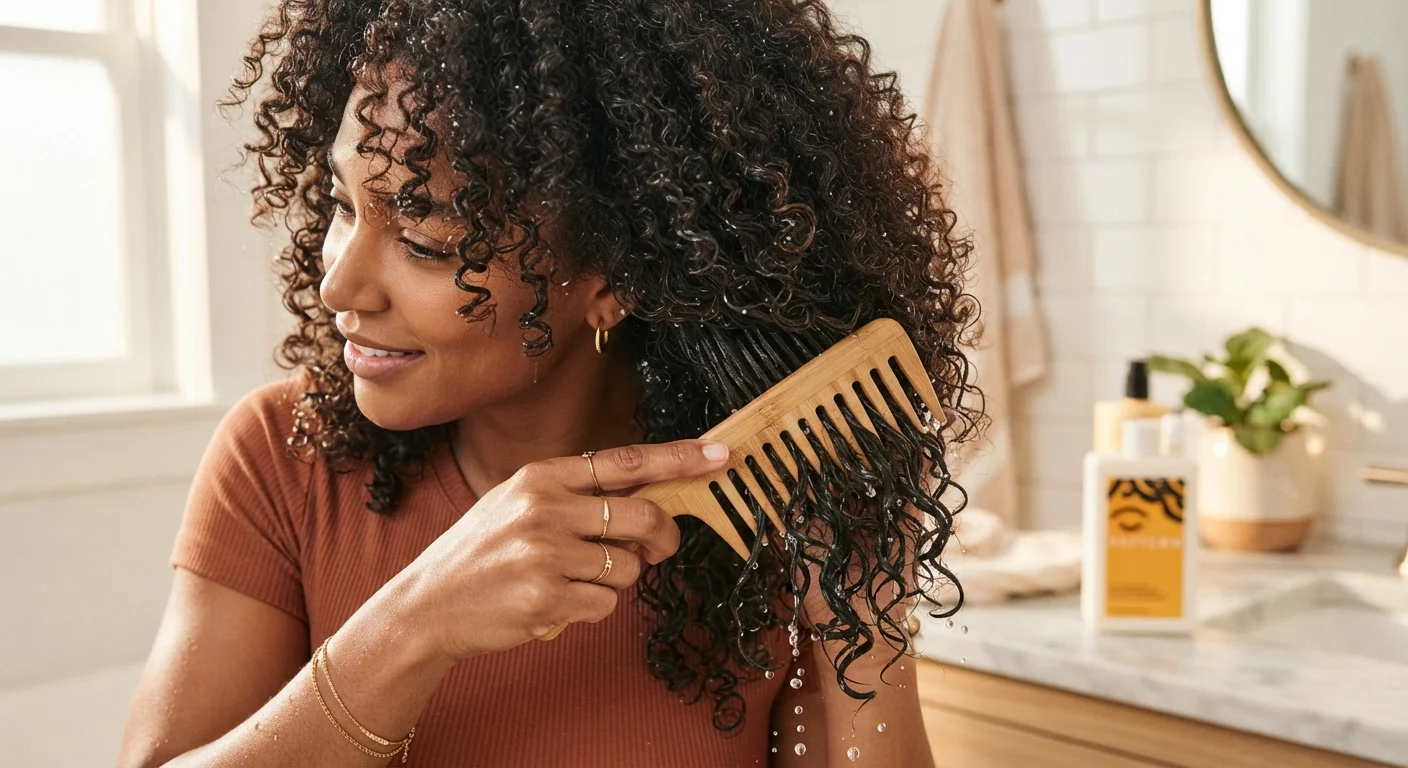
Before introducing any water, use a wide-tooth comb or your fingers to gently work through knots and tangles starting from the ends and working upward toward the roots. Dry detangling removes shed hairs and major knots without the added challenge of wet fragility.
Apply a Pre-Poo Treatment (Optional but Beneficial)
A pre-poo — short for pre-shampoo — is a conditioning treatment applied to dry hair before cleansing. Oils like coconut or olive oil, or a standard conditioner, coat the hair shaft and reduce the moisture loss that can happen during shampooing. Apply from mid-length to ends, cover with a shower cap, and leave on for 20 to 30 minutes.
Cleanse the Scalp Thoroughly
Rinse your hair fully with warm (not hot) water. Apply your cleanser directly to the scalp and use your fingertips — not nails — to massage in gentle circular motions. Focus cleansing on the scalp, where oil and product accumulate, and allow the rinse water to carry the cleanser through the lengths. One round of cleansing is usually sufficient; double-cleansing is reserved for heavy buildup situations.
Condition and Detangle Wet
Apply a generous amount of rinse-out conditioner to soaking-wet hair, focusing on the mid-lengths and ends. Use this slippery window to detangle again with a wide-tooth comb or detangling brush, working in sections from ends to roots. Leave the conditioner on for three to five minutes before rinsing with cool water to help seal the cuticle.
Deep Condition Weekly
At least once a week — or every wash day for very dry or high-porosity hair — swap the regular conditioner step for a deep conditioning treatment. Apply it generously after cleansing, cover with a shower cap, and leave on for 15 to 30 minutes. Adding gentle heat from a hooded dryer or warm towel can help the treatment penetrate the hair shaft more effectively.
Apply Leave-In and Style While Soaking Wet
Do not towel-dry before styling. Squeeze out excess water gently with a microfiber towel or T-shirt, then apply your leave-in conditioner immediately to soaking-wet hair. Follow with your chosen styling products — curl cream, gel, or mousse — in that order, from lightest to heaviest. This layering technique, sometimes called the LOC or LCO method, locks moisture into the hair shaft before sealing it in.
Scrunch products upward toward the scalp to encourage curl formation rather than disrupting the natural curl pattern by rubbing downward.
Dry Without Disturbing the Curl Pattern
Air drying is generally gentlest for curly hair. If you use a diffuser attachment on a blow dryer, use it on a low-heat, low-speed setting and hover it under sections of hair rather than scrunching aggressively. Avoid touching or separating curls until they are fully dry — handling wet curls causes frizz. Once dry, you can gently scrunch out any crunch left by styling gels.
Consistency Is the Secret Ingredient
Curly hair routines rarely deliver dramatic results after just one wash day. Most stylists suggest committing to the same routine for at least a month before making significant changes. Tracking what you used and how your hair responded — even in a simple notes app — makes troubleshooting much faster and more accurate.
Troubleshooting and Adjusting Over Time
No routine works perfectly right away. Give any new approach at least four to six wash days before judging the results — curly hair often needs time to adjust, especially if it has been accustomed to harsher cleansers or heat styling.
Common signs that something needs tweaking include excessive frizz (often a moisture or sealing issue), limp curls (usually product overload), or scalp buildup (may mean it's time to clarify). Our article on signs your hair routine needs a reset offers a practical checklist to pinpoint exactly what to change.
Wash frequency is highly individual. Those with finer curl patterns or oilier scalps may need to cleanse weekly, while tighter coils can often go one to two weeks between full wash days. Grooming habits that hold up over time explores how stylists and dermatologists recommend building sustainable personal care rhythms that don't burn you out.
Watch Out for Product Buildup
Heavy styling products, dry shampoos, and silicone-containing conditioners can accumulate on the scalp and hair shaft over time, dulling curls and blocking moisture absorption. Incorporate a clarifying cleanse — using a gentle sulfate-based or apple cider vinegar rinse — once a month or whenever your curls start feeling weighed down or coated.
The content on this site is for informational purposes only and is not a substitute for professional advice. Always consult a qualified professional for guidance specific to your situation.