

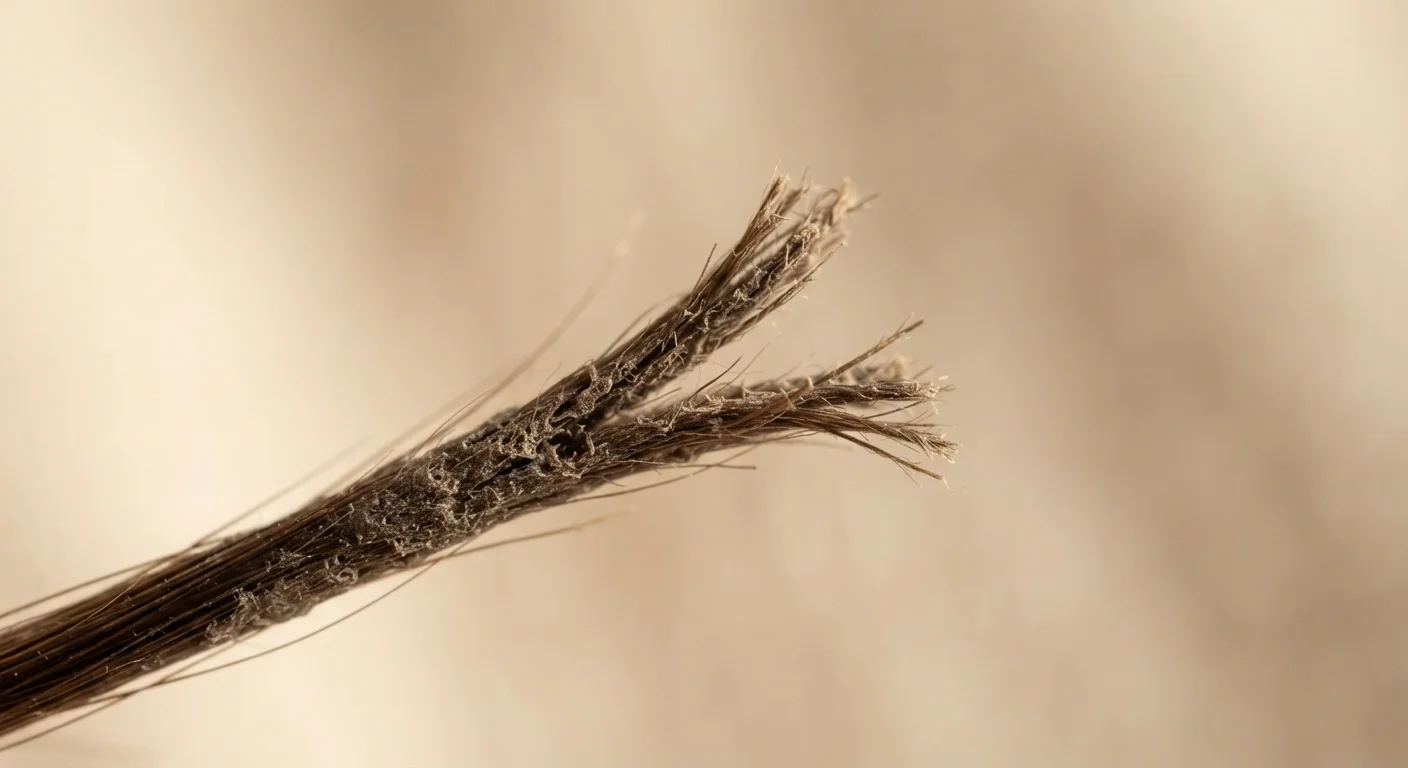
Why Your Ends Are Taking the Biggest Hit
Hair ends are the oldest part of every strand on your head. By the time they've grown to shoulder length or beyond, they've endured months — sometimes years — of washing, drying, styling, and environmental exposure. That cumulative wear is why ends break off first. Unlike skin, hair cannot repair itself once damaged; it can only be managed from the root forward. Understanding what's causing the damage is the first step toward stopping it. If you're noticing more breakage than usual, it may also be worth checking our Signs Your Hair Routine Needs a Reset guide to assess whether a broader routine overhaul is due.
The Mistakes That Are Breaking Your Ends
Most breakage isn't random — it traces back to specific, repeatable habits. Here are the most common culprits and what to do differently.
Using heat tools on wet or damp hair without any protective product.
Why it happens: Many people are in a rush and apply a flat iron or curling wand before hair is fully dry, or skip heat protectant because it feels like an extra step.
Washing hair too frequently with harsh or heavily sulfated shampoos.
Why it happens: Daily washing habits often carry over from adolescence, or readers assume clean hair is always healthier hair. Certain shampoo formulas strip the scalp's natural sebum more aggressively than others.
Brushing hair aggressively from root to tip, especially when wet.
Why it happens: Pulling a brush straight through tangled hair feels efficient, and many people underestimate how fragile wet strands are — they can stretch up to 30% before snapping.
Wearing tight ponytails or elastics with metal clasps in the same spot daily.
Why it happens: Convenience drives most people toward the same hairstyle every day, and it's easy to overlook how tension and friction at repeated stress points weaken strands over time.
Skipping regular trims because of a desire to retain length.
Why it happens: People trying to grow their hair out often avoid the scissors entirely, not realizing that a split end, if left uncut, travels up the shaft and causes more length loss later.
Skipping Trims Costs You More Length
Avoiding the scissors in hopes of growing longer hair often backfires. A split end that isn't removed continues to fray upward, meaning you'll eventually need a more significant cut to restore the hair's integrity. Small, regular trims protect the length you've already grown.
Building Habits That Protect Your Ends Long-Term
Addressing breakage isn't about buying a dozen new products — it's about removing the habits that cause damage in the first place. Consistency matters more than any single fix. Small adjustments to how you dry, detangle, and style your hair compound into real results over weeks and months. For a broader look at routines that hold up over time, the Grooming Habits That Hold Up Over Time article covers what stylists and dermatologists consistently recommend.
~30%
Stretch capacity of wet hair before breaking
Hair scientists note that wet strands are significantly more elastic and vulnerable to mechanical stress than dry hair, making aggressive wet brushing a leading cause of breakage.
8–12 weeks
Recommended trim interval for most hair types
Hairstylists and trichologists generally suggest trimming every eight to twelve weeks to prevent splits from traveling up the shaft and causing greater length loss.
This article is for general informational purposes only and does not constitute medical or professional beauty advice. For persistent scalp or hair health concerns, consult a qualified dermatologist or licensed cosmetologist.
The content on this site is for informational purposes only and is not a substitute for professional advice. Always consult a qualified professional for guidance specific to your situation.