

Summary
24 items · 30-60 minutes per seasonal check
Why Seasonal Checks Matter
Temperature swings, road conditions, and driving patterns change significantly between seasons - and your car's systems feel every degree of that shift. Tires lose pressure in the cold. Heat degrades coolant and accelerates battery strain. Salt and grit from winter roads corrode brake components and undercarriage surfaces. These aren't hypothetical risks; they're the root cause of a large share of roadside breakdowns and unplanned repair bills.
The good news is that most seasonal issues are predictable. Running through a structured checklist before each season gives you a reliable window to spot wear, top off fluids, and schedule professional service before a minor issue becomes a safety concern or a costly failure. This is especially important for older vehicles - if you drive a high-mileage car, see our guide to keeping a high-mileage car running well for additional considerations.
Below, the checklist is organized into two groups: items that apply at every seasonal transition, and items specific to the high-demand seasons of winter and summer.
Tire pressure gauge
Accurately measures tire PSI so you can adjust to the manufacturer's recommended level each season.
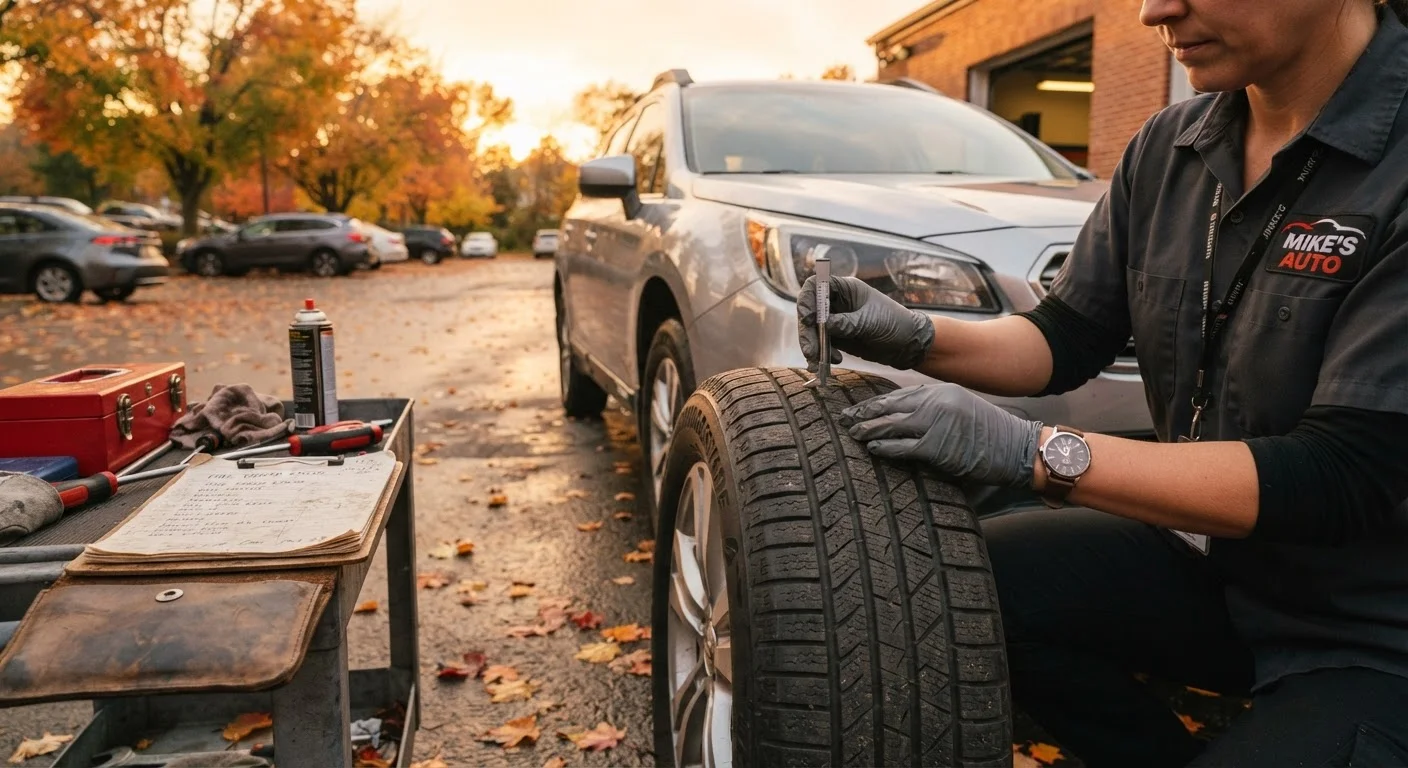
Tread depth gauge
Gives a precise reading of remaining tire tread depth - more reliable than the penny test alone.
Digital multimeter or battery tester
Tests battery voltage to identify a weak battery before cold or heat pushes it to failure.
Antifreeze test strips
Quickly checks the freeze-protection level of your coolant mixture without draining the system.
Mechanic's inspection (professional)
Required for brake repairs, AC recharging, belt replacement, and any system you cannot safely evaluate yourself.
Vehicle owner's manual
Provides manufacturer-specific service intervals, fluid specifications, and tire pressure recommendations.
The Seasonal Maintenance Checklist
Work through these items systematically. Items marked must are non-negotiable for safe operation; should items are strongly recommended; nice-to-have items offer meaningful protection but can be scheduled shortly after the transition if time is short.
Every Season - Universal Checks
Before Winter
Before Summer
Spring - Post-Winter Recovery
Don't Skip Professional Brake Inspections
Visual inspection through the wheel spokes gives only a partial picture. If your vehicle has drum brakes on the rear, internal components are not visible without removing the wheel. Any squealing, grinding, pulsating pedal, or increased stopping distance warrants a professional inspection before the next seasonal drive.
Seasonal car maintenance pairs well with a broader ownership mindset. Our guide on everything that goes into owning a car responsibly covers the full ownership picture, from registration to resale. And if you maintain a home as well, the approach mirrors what you'd do with a seasonal home maintenance checklist - systematic, preventive, and scheduled before problems appear.
Finally, some ownership habits quietly accelerate wear without any single obvious warning sign. Review our overlooked ownership habits that shorten a car's lifespan to make sure routine choices aren't working against the maintenance effort you're putting in.
AC Refrigerant Is Not a DIY Refill
Topping off automotive air conditioning refrigerant requires proper equipment and, in most states, EPA Section 609 certification to purchase certain refrigerant types. Adding refrigerant to a leaking system without diagnosing the leak first will not fix the problem and may worsen it. Take AC concerns to a certified automotive technician.
The content on this site is for informational purposes only and is not a substitute for professional advice. Always consult a qualified professional for guidance specific to your situation.