

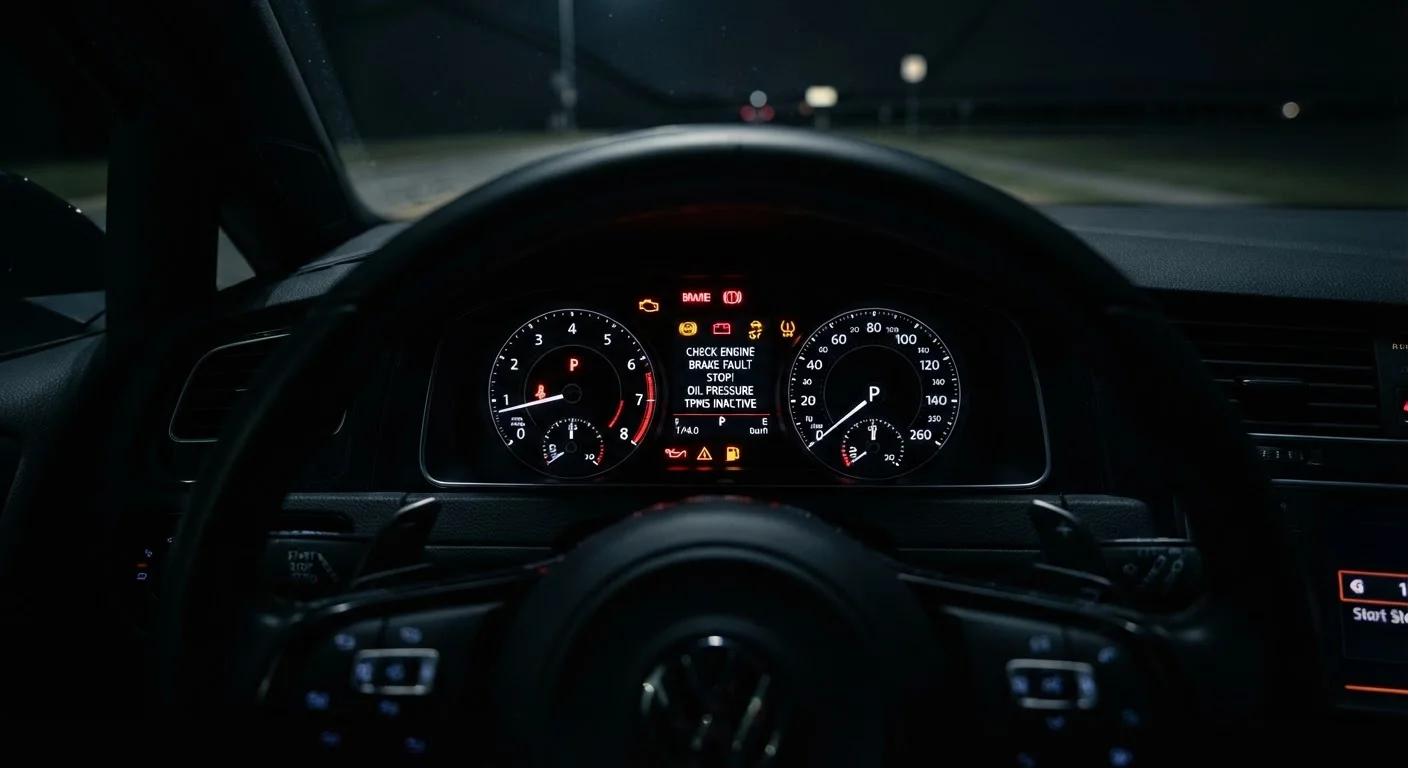
How the Warning Light System Works
Your car's onboard diagnostic system monitors dozens of sensors simultaneously - from engine temperature to tire pressure to emissions controls. When a sensor reading falls outside its acceptable range, it triggers a warning light on the instrument cluster. The color of the light is your first clue about urgency.
| Warning light colors | Red (stop now), Amber (service soon), Green/Blue (informational) |
| Vehicles with OBD-II | All US passenger cars and light trucks model year 1996 and newer (US EPA mandate) |
| TPMS required since | 2008 (all new US passenger vehicles) (TREAD Act, NHTSA) |
| Most common CEL trigger | Oxygen sensor failure (CarMD Vehicle Health Index, multiple years) |
| Engine damage risk | Driving with red oil pressure light can destroy an engine in minutes |
- Red lights signal immediate danger. Stop driving as soon as it is safe to do so.
- Amber or yellow lights indicate a problem that needs attention soon but may not require you to stop immediately.
- Green or blue lights are informational - confirming that a system (like high beams or a turn signal) is active.
Understanding this color hierarchy is the fastest way to judge whether a light demands a roadside stop or a scheduled service appointment. For a broader look at the costs and responsibilities of keeping a vehicle on the road, see what new car owners should expect.
The Lights You're Most Likely to See
OBD-II System
On-Board Diagnostics, second generation - the standardized system used in most vehicles sold in the US since 1996 to monitor engine and emissions performance. It stores fault codes that a mechanic or scan tool can read to identify the source of a warning light.
Fault Code (DTC)
A Diagnostic Trouble Code stored by the vehicle's computer when a sensor reading exceeds acceptable limits. Codes follow a standardized format (e.g., P0420) that technicians use to pinpoint the problem.
Catalytic Converter
An emissions control device in the exhaust system that converts harmful combustion byproducts into less harmful gases. Engine misfires can overheat and permanently damage it.
TPMS
Tire Pressure Monitoring System - a sensor-based system that alerts the driver when one or more tires drop significantly below the recommended inflation pressure. Mandatory on new US passenger vehicles since 2008.
Alternator
The engine-driven generator that recharges the battery while the vehicle is running. A failing alternator will eventually drain the battery and cause the vehicle to lose power.
ABS
Anti-lock Braking System - a safety system that prevents wheel lock-up during hard braking, helping the driver maintain steering control. An ABS warning light means this system may not function in an emergency stop.
The following are among the most frequently illuminated warning indicators and what they generally mean.
Check Engine Light (CEL)
Perhaps the most misunderstood light on any dashboard. A steady amber CEL means the engine control module has stored a fault code - anything from a loose gas cap to a failing oxygen sensor. A flashing CEL is more serious and typically indicates an engine misfire that can damage the catalytic converter. Pull over safely and have the vehicle diagnosed promptly if it flashes.
Oil Pressure Warning
A red oil can icon means your engine may not be receiving adequate lubrication. Continuing to drive risks catastrophic engine damage within minutes. Pull over, turn off the engine, and check the oil level only after the engine has cooled. This is one of the few lights that justifies an immediate stop even in inconvenient locations.
Temperature Warning
A red thermometer symbol means the engine is overheating. Turn off the air conditioning, pull over safely, and allow the engine to cool before opening the hood. Never open a pressurized radiator cap on a hot engine. Neglecting coolant levels is a common contributor to this problem.
Battery / Charging System
This amber or red battery icon indicates the vehicle's electrical system is not charging properly - often a failing alternator or a dying battery. The car may continue to run temporarily on reserve power, but electrical systems will begin failing. Drive directly to a service center if conditions allow.
Tire Pressure Monitoring System (TPMS)
An amber light showing a cross-section of a tire with an exclamation point means one or more tires are significantly under-inflated. Check pressures at the nearest gas station. Driving on severely underinflated tires increases blowout risk and reduces fuel economy. Note that TPMS does not replace manual pressure checks - it only alerts you when pressure drops below a threshold.
Brake System Warning
If this light appears while driving (not just at startup as part of the self-check), it may signal low brake fluid, worn brake pads, or an ABS fault. Do not ignore a brake warning. Have the system inspected before driving further when possible.
The Self-Check at Startup
When you first turn the ignition on, most warning lights will illuminate briefly - this is a normal bulb and system self-test, not an alert. If a light stays on after the engine starts, that is when you should take note. If a light that normally appears at startup never illuminates at all, the bulb itself may be burned out, which can mask a real problem.
When to Drive On vs. When to Stop Immediately
Not every warning light means you're stranded. As a general guideline:
1 in 4
Vehicles on US roads with an active check engine light
According to CarMD's ongoing Vehicle Health Index research, a significant share of vehicles in operation carry an unresolved fault code at any given time.
~$400
Average cost of a check engine light repair
CarMD has reported the average check engine repair cost in the US consistently falling in the $350-$450 range in recent years, varying by fault type.
- Stop immediately: Red oil pressure light, red temperature warning, brake failure warning, or any red light accompanied by unusual sounds, smells, or handling changes.
- Drive to a shop soon: Steady amber check engine light, TPMS alert, battery warning with no other symptoms.
- Schedule service: Maintenance reminders (oil life, service interval), stability control notifications after a single event on slippery roads.
Ignoring amber lights repeatedly can turn a minor repair into a major one. Common car ownership myths often lead drivers to underestimate how quickly deferred maintenance escalates in cost.
If a warning light illuminates after an accident or collision, your auto insurance policy may cover some related repairs depending on your coverage type. Reviewing your policy terms is worthwhile - understanding auto insurance terminology helps you know what to expect from a claim.
This article is for general informational purposes only and does not constitute professional mechanical or safety advice. Always consult a qualified mechanic for diagnosis and repair of vehicle warning systems.
The content on this site is for informational purposes only and is not a substitute for professional advice. Always consult a qualified professional for guidance specific to your situation.