

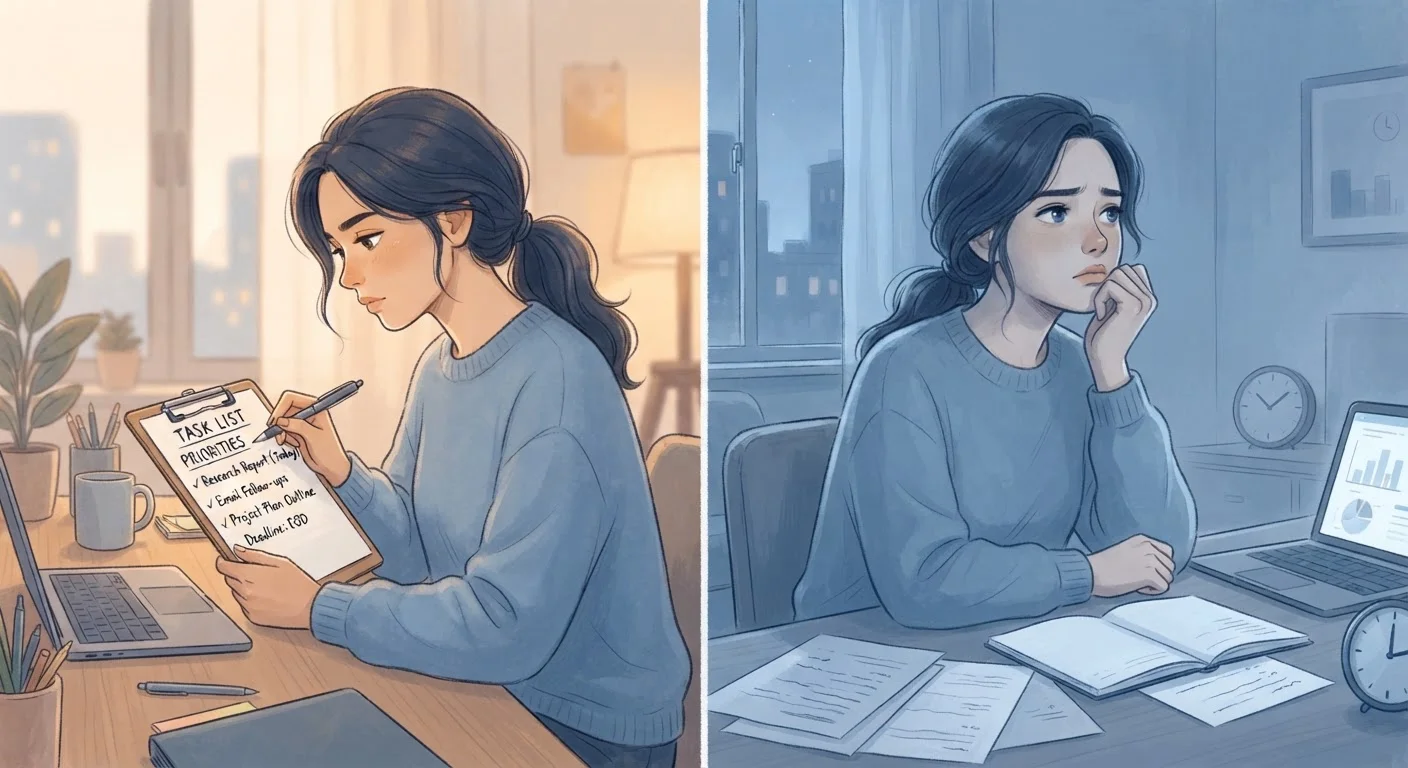
Option A
Stress
A normal, externally triggered response to a specific pressure or demand.
Best for: Understanding a temporary reaction tied to an identifiable cause you can act on.
Option B
Anxiety
A persistent internal state of worry that can arise without a clear external cause.
Best for: Recognising when worry feels disproportionate to circumstances and may need professional support.
What Makes Stress and Anxiety Different
Stress and anxiety are often used interchangeably in everyday conversation, but they describe meaningfully different experiences. Understanding the distinction can help you respond to what you're actually feeling-and know when to seek support.
Stress is the body and mind's response to an external demand or pressure. It has a recognisable source: an upcoming presentation, a financial crunch, a family conflict. Once the stressor resolves or you take action, stress typically diminishes. In this sense, stress can occasionally serve a useful function-mobilising focus and energy when you need it most.
Anxiety, on the other hand, is characterised by persistent worry or apprehension that may not be tied to any specific or immediate cause. It can surface even when circumstances are calm, and it often doesn't lift once a problem passes. Anxiety tends to be forward-looking-centred on what might go wrong-and can feel difficult to control. To learn more about how mental wellness frameworks understand these states, see our article on what mental wellness actually means.
| Criterion | Stress | Anxiety |
|---|---|---|
| Primary trigger | External, identifiable stressor | Internal; may lack a clear cause |
| Duration | Resolves when stressor passes | Persists beyond triggering event |
| Focus of worry | Present-moment demand | Future-oriented, often vague |
| Physical symptoms | Tension, fatigue, irritability | Racing heart, dread, restlessness |
| Proportionality | Generally proportional to situation | Often disproportionate to circumstances |
| Response to resolution | Relief when issue is addressed | Worry may persist or shift to new concern |
| When to seek help | If chronic or unmanageable | If persistent and disrupting daily life |
Overlapping Symptoms-and Why That Causes Confusion
Both stress and anxiety can produce strikingly similar physical and emotional signs. Rapid heartbeat, muscle tension, irritability, difficulty sleeping, and trouble concentrating appear in both experiences. This overlap is a key reason people conflate them.
The critical difference lies in duration and context. Stress symptoms tend to track the stressor-they ebb when the pressure lifts. Anxiety symptoms are more persistent and may intensify even in the absence of an obvious trigger. Anxiety can also involve physical sensations that seem disproportionate to any current situation.
~33%
U.S. adults reporting extreme stress
The American Psychological Association's Stress in America surveys have consistently found roughly one-third of American adults report experiencing extreme stress levels.
19.1%
U.S. adults with any anxiety disorder annually
According to the National Institute of Mental Health, anxiety disorders are among the most prevalent mental health conditions in the United States each year.
It's also worth noting that chronic, unmanaged stress can contribute to the development of anxiety over time. The two exist on a continuum rather than as entirely separate categories, which is another reason professional guidance matters when symptoms are severe or prolonged.
Coping Strategies That Support Both Experiences
While stress and anxiety call for different clinical approaches when symptoms are significant, several well-supported strategies can benefit both. These are general wellness habits-not substitutes for professional care when it's needed.
- Mindfulness and breathing practices: Slowing the breath activates the body's parasympathetic nervous system, reducing physiological arousal linked to both stress and anxiety.
- Regular physical movement: Exercise is consistently associated with improved mood and reduced tension. Even moderate-intensity activity-such as walking-can help regulate the stress response.
- Social connection: Talking through a stressor with a trusted person can reframe the problem. For anxiety, connection also counteracts the isolation that worry can create.
- Sleep hygiene: Both stress and anxiety disrupt sleep, and poor sleep amplifies both. Consistent sleep routines support emotional regulation.
- Limiting avoidance behaviours: Avoidance may temporarily reduce distress but tends to reinforce anxiety over time. Gradual engagement with feared situations-with professional guidance-is a cornerstone of evidence-based anxiety treatment.
When symptoms are persistent, disproportionate, or interfering with relationships, work, or self-care, it's important to consult a qualified mental health professional. Our article on therapy, coaching, and peer support explains what different types of professional help look like and how to choose. It's also worth revisiting common assumptions-our piece on mental wellness myths addresses several misconceptions that can prevent people from seeking the support they need.
This article is for general informational and educational purposes only and is not a substitute for professional medical or mental health advice, diagnosis, or treatment. Always consult a qualified healthcare provider with questions about your mental health or any symptoms you are experiencing.
The content on this site is for informational purposes only and is not a substitute for professional advice. Always consult a qualified professional for guidance specific to your situation.