

Start here
What Are Macronutrients?
Next
Protein: Building and Repairing the Body
Then
Carbohydrates: Your Body's Preferred Fuel
Then
Fat: More Than Just Stored Energy
When you're ready
How to Think About Balance
What Are Macronutrients?
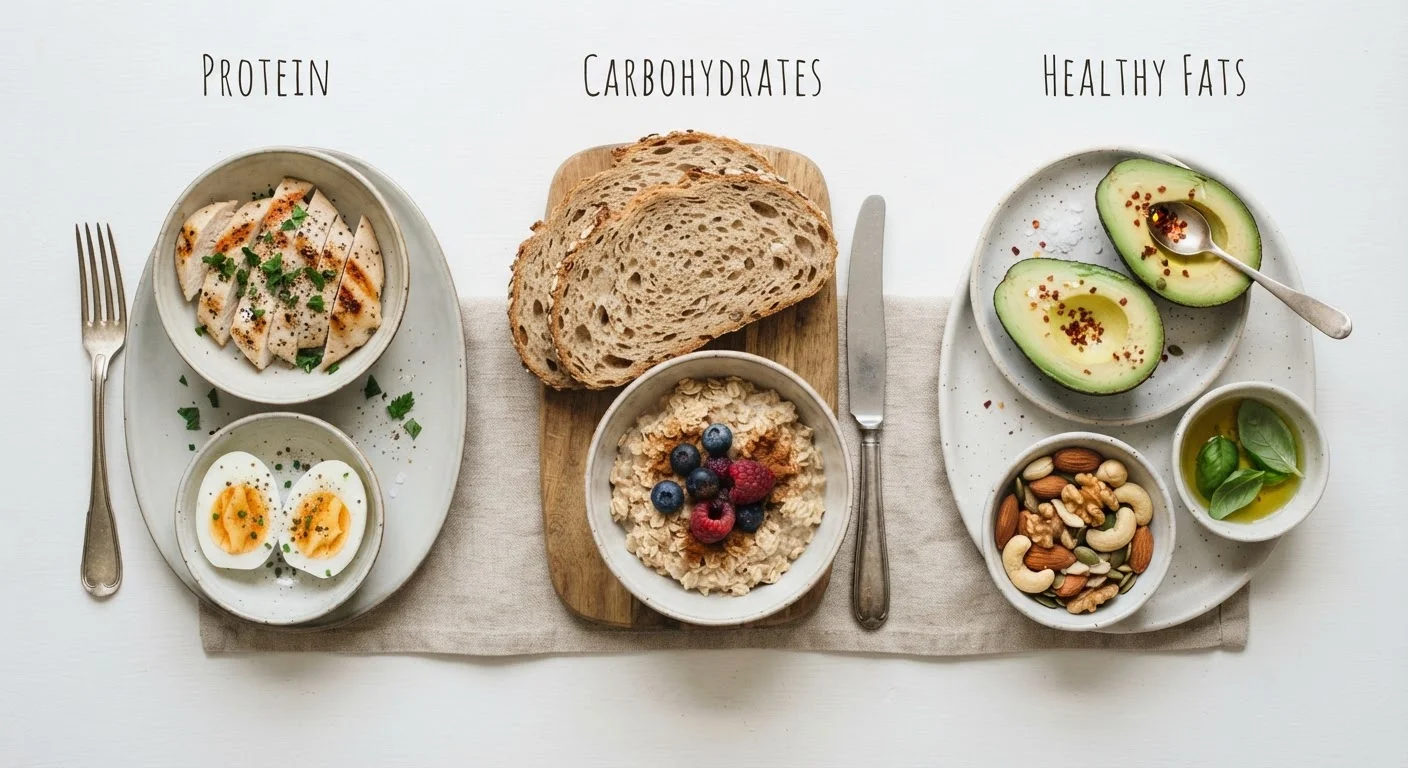
"Macronutrient" is a term you'll see on food packaging, in fitness apps, and in nutrition articles - but it's rarely explained simply. Macro just means large. Macronutrients are the three nutrient categories your body needs in large amounts every day: protein, carbohydrates, and fat.
All three supply calories (units of energy). Protein and carbohydrates each provide 4 calories per gram; fat provides 9 calories per gram. Beyond energy, each plays a distinct set of roles that the others cannot replace.
Macronutrient
One of three major nutrient categories - protein, carbohydrates, and fat - that the body needs in substantial quantities every day to function and provide energy.
Amino acids
The building blocks that make up protein. Nine of the 20 amino acids must come from food because the body cannot produce them on its own.
Glucose
A simple sugar that is the body's primary fuel source, produced when carbohydrates are broken down during digestion.
Fiber
A type of carbohydrate that the body cannot digest. It supports digestive health and helps slow the absorption of sugar into the bloodstream.
Complete protein
A food source that contains all nine essential amino acids in sufficient amounts. Most animal proteins are complete proteins.
Unsaturated fat
A type of dietary fat, found in foods like nuts, avocados, and olive oil, that is generally considered beneficial as part of a balanced diet.
Understanding what each macronutrient does helps you make sense of food choices without falling for oversimplified rules like "carbs are bad" or "fat makes you fat." This article is general nutrition information - not personal dietary advice. For guidance tailored to your health, consult a registered dietitian or your healthcare provider.
Protein: Building and Repairing the Body
Protein is made of chains of smaller molecules called amino acids. Your body uses these amino acids to build and repair muscle tissue, produce enzymes and hormones, support immune function, and transport oxygen through the blood. Protein also contributes to feelings of fullness after a meal.
There are 20 amino acids your body uses; nine of them are called essential amino acids because the body cannot make them on its own - they must come from food. Animal sources such as meat, poultry, fish, eggs, and dairy contain all nine essential amino acids and are often called complete proteins. Many plant sources - beans, lentils, tofu, nuts, seeds - provide protein too. While individual plant foods may not contain all nine essential amino acids, eating a varied plant-based diet across the day can meet your needs.
Getting Protein From Plants
If you eat little or no meat, you can still meet your protein needs through a variety of plant sources - legumes, tofu, tempeh, edamame, quinoa, nuts, and seeds all contribute meaningfully. Varying your plant protein choices throughout the day helps ensure you get a full range of amino acids. A registered dietitian can help you plan a plant-based approach that fits your specific needs.
Carbohydrates: Your Body's Preferred Fuel
Carbohydrates are the body's primary and most efficient energy source. When you eat carbs, your digestive system breaks them down into glucose - a simple sugar that cells use for fuel. Your brain, in particular, relies heavily on a steady supply of glucose.
Carbohydrates fall into two broad groups:
- Simple carbohydrates: Sugars that digest quickly. Found naturally in fruit and milk, and added to many processed foods and beverages.
- Complex carbohydrates: Longer chains of sugar molecules that digest more slowly. Found in whole grains, legumes, starchy vegetables, and oats. Complex carbs often come packaged with fiber, which supports digestive health and helps regulate blood sugar levels.
Fiber - technically a carbohydrate - deserves a special mention. Because it resists digestion, it doesn't raise blood sugar the way other carbs do. Most Americans fall short of recommended fiber intake. Understanding how carbohydrate content is reported can help; see our guide on decoding nutrition labels for a closer look.
"Net Carbs" Is Not a Regulated Term
You may see "net carbs" on food packaging, calculated by subtracting fiber and certain sugar alcohols from total carbohydrates. This term is not officially defined or regulated by the FDA. Nutrition labels use total carbohydrates as the standard measure. When comparing foods, referring to the total carbohydrate figure on the Nutrition Facts panel gives you a more consistent basis for comparison.
Fat: More Than Just Stored Energy
Dietary fat has a complicated reputation, but it is essential. Fat supports the production of hormones, forms the outer membrane of every cell in your body, insulates organs, and enables the absorption of vitamins A, D, E, and K - nutrients that dissolve only in fat, not water.
Not all fats behave the same way in the body:
- Unsaturated fats (found in olive oil, avocados, nuts, and fatty fish) are generally considered beneficial when consumed as part of an overall balanced diet.
- Saturated fats (found in butter, red meat, and full-fat dairy) are a subject of ongoing nutritional research; most dietary guidelines recommend keeping intake moderate.
- Trans fats, particularly industrially produced trans fats, are associated with adverse health effects and have largely been removed from the US food supply following regulatory action.
Fat is calorie-dense, which is why portion awareness matters - but that's different from saying fat itself is harmful.
Extremely Low-Fat Diets Carry Risks
Severely restricting dietary fat - particularly below levels your body needs - can impair absorption of fat-soluble vitamins and disrupt hormone production. Very low-fat eating patterns are sometimes used in specific medical contexts but should only be followed under professional supervision. Avoiding fat entirely is not a strategy supported by mainstream nutrition science for generally healthy adults.
How to Think About Balance
No single macronutrient is the villain. Nutrition science consistently points away from rigid elimination and toward eating patterns that include all three in proportions that suit your individual health, activity level, and goals.
General dietary guidance from bodies like the Dietary Guidelines for Americans suggests that most adults get roughly 45-65% of calories from carbohydrates, 20-35% from fat, and 10-35% from protein. These are broad ranges - not personal targets - and they reflect the wide variability in how individuals respond to different eating patterns.
Practical habits matter more than precise ratios for most people: prioritizing whole foods, including a variety of vegetables, and being mindful of heavily processed foods tend to support good nutrition across all three macronutrients.
USDA FoodData Central
A free, searchable database from the US Department of Agriculture that provides detailed nutrient information - including macronutrient content - for thousands of foods, including packaged and restaurant items.
Dietary Guidelines for Americans
Published jointly by the USDA and the Department of Health and Human Services, this evidence-based resource outlines recommended eating patterns for the general US population across life stages.
Nutrition Labels Decoded
Our companion article explains how to read every section of a Nutrition Facts panel - including the macronutrient rows - so you can use food labels with confidence. Read the guide.
If you have a specific health condition, are pregnant, or are managing your weight under medical supervision, proportions may need adjustment. Work with a qualified healthcare professional rather than applying population-level guidelines as personal prescriptions.
This article is for general informational purposes only and does not constitute medical or dietary advice. Always consult a qualified healthcare professional or registered dietitian for guidance specific to your health situation.
Frequently Asked Questions
A macronutrient is a category of nutrient the body requires in relatively large quantities to function. Protein, carbohydrates, and fat are the three macronutrients. Each provides calories - the energy your body uses to power everything from breathing to exercise.
Fat is not inherently bad. It is essential for many bodily processes, including hormone production, brain health, and absorbing fat-soluble vitamins like A, D, E, and K. The type of fat matters - unsaturated fats found in foods like nuts, seeds, and avocados are associated with better health outcomes than trans fats.
Carbohydrates alone don't cause weight gain. Weight changes are influenced by overall energy intake and expenditure. Carbohydrates are the body's primary fuel source and are an important part of most balanced eating patterns, particularly whole-food sources like vegetables, legumes, and whole grains.
General dietary guidelines suggest adults need roughly 0.8 grams of protein per kilogram of body weight per day, though needs vary based on age, activity level, and health status. Individual protein requirements can differ significantly - a registered dietitian can help you determine what's appropriate for you.
Yes. Each macronutrient plays roles the others cannot fully replace. Severely restricting any one of them over the long term can affect bodily functions. Specific medical situations may call for adjusted ratios, but such changes should be guided by a healthcare professional.
Nutrition labels on packaged foods list grams of protein, total carbohydrates, and total fat per serving. For whole or unpackaged foods, public databases such as the USDA FoodData Central provide reliable nutrient information. Our guide to <a href="/health-wellness/physical-health/nutrition-labels-decoded-what-each-number-on-the-package-means">reading nutrition labels</a> can also help.
The content on this site is for informational purposes only and is not a substitute for professional advice. Always consult a qualified professional for guidance specific to your situation.