

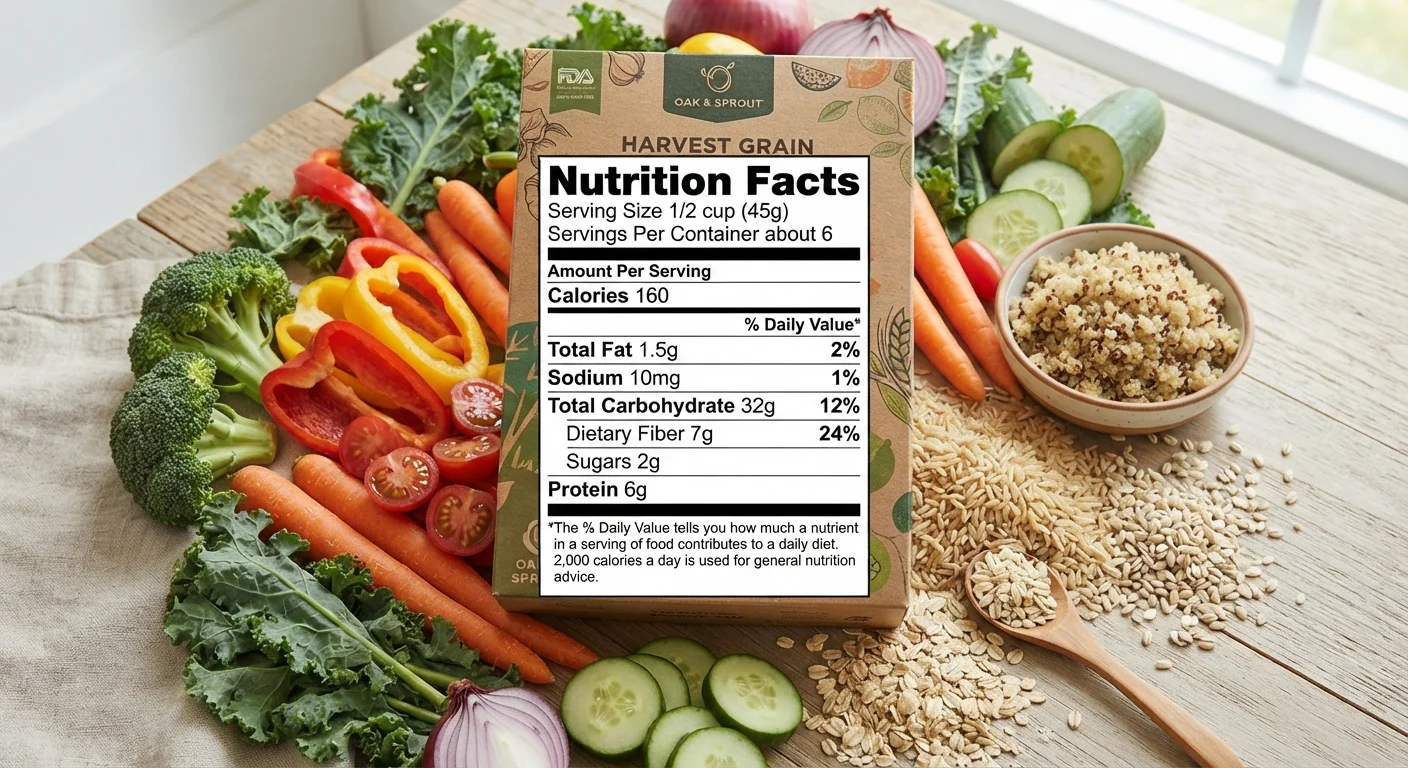
Why Nutrition Labels Matter
The Nutrition Facts panel appears on nearly every packaged food sold in the United States. Regulated by the Food and Drug Administration (FDA), it gives consumers standardized, at-a-glance information about what they're eating. But knowing where to look is only half the challenge - the other half is knowing what each number actually tells you.
Reading labels accurately isn't about obsessing over every gram; it's about building enough literacy to compare foods, spot hidden ingredients, and align your purchases with your health goals. This reference guide breaks down each section of a standard U.S. nutrition label in plain language.
| Regulated by | U.S. Food and Drug Administration (FDA) |
| Reference diet for %DV calculations | 2,000 calories per day (FDA standard) |
| Required nutrients on label | Total fat, saturated fat, trans fat, cholesterol, sodium, total carbohydrate, dietary fiber, total sugars, added sugars, protein, Vitamin D, calcium, iron, potassium (FDA Nutrition Facts label update, 2016) |
| "Low" nutrient threshold | 5% DV or less per serving (FDA guidance) |
| "High" nutrient threshold | 20% DV or more per serving (FDA guidance) |
| Added sugars daily limit (general guidance) | Less than 10% of total daily calories (2015-2020 Dietary Guidelines for Americans) |
Serving Size: The Anchor for Every Other Number
Every number on the Nutrition Facts panel is calculated based on a single serving - not the whole package. The serving size appears at the very top, expressed in a common household measure (such as cups or tablespoons) alongside a gram weight.
In 2016, the FDA updated serving size requirements so they more accurately reflect how much people actually eat. A 20-oz soda, for example, now counts as one serving rather than 2.5. Always check the serving size first, then look at the number of servings per container. If you eat two servings, every number on the label doubles.
When the Whole Package Is One Serving
If a package is labeled as containing a single serving (such as a snack bag), the calorie and nutrient amounts listed reflect everything inside. Some products list both per-serving and per-package nutrition information side by side - a dual-column format introduced under FDA's 2016 label rules. Always verify which column you're reading to avoid underestimating your intake.
Calories and the Big Three Macronutrients
Calories measure total energy per serving. The label also breaks down the three macronutrients - fat, carbohydrate, and protein - each contributing differently to your energy and overall health. For a deeper look at how these three nutrients function in the body, see our plain-language macronutrient guide.
- Total Fat includes all fat types. The label separately lists saturated fat and trans fat, both of which are linked to cardiovascular risk when consumed in excess. Unsaturated fats - though not always broken out - are generally considered more favorable.
- Total Carbohydrate encompasses dietary fiber, total sugars, and - critically - added sugars. Added sugars are sugars introduced during processing, separate from those naturally present in fruit or dairy. The 2015-2020 Dietary Guidelines for Americans recommended limiting added sugars to less than 10% of daily calories.
- Protein is listed in grams but has no established % Daily Value on the standard label. Use the gram amount to estimate your intake relative to your personal needs.
Serving Size
The standardized amount of a food used as the basis for all nutrient information on the label. It reflects typical consumption amounts as determined by the FDA, not a recommended portion.
% Daily Value (%DV)
A percentage showing how much of a nutrient one serving contributes toward a general daily intake target, based on a 2,000-calorie reference diet. It helps compare foods quickly without calculating exact grams.
Added Sugars
Sugars that are added during food processing or preparation, distinct from naturally occurring sugars in fruit or dairy. Consuming high amounts is associated with increased health risks.
Saturated Fat
A type of dietary fat found mainly in animal products and some plant oils. Health authorities generally recommend limiting saturated fat intake due to its association with elevated LDL cholesterol.
Trans Fat
An artificially produced fat formed when liquid oils are partially hydrogenated. The FDA has largely eliminated artificial trans fats from the U.S. food supply, but the label still requires disclosure.
Dietary Fiber
The indigestible portion of plant foods that supports digestive health, helps maintain steady blood sugar, and contributes to feelings of fullness. Most Americans consume less than recommended amounts.
% Daily Value: Your Benchmark at a Glance
The % Daily Value (%DV) column tells you how much of a nutrient one serving contributes toward a general daily target, based on a 2,000-calorie reference diet. Your actual needs may differ depending on age, sex, activity level, and health status - a licensed registered dietitian can help you determine what's appropriate for you personally.
A useful rule of thumb endorsed by the FDA: 5% DV or less is considered low for a nutrient; 20% DV or more is considered high. Use this to quickly identify foods high in nutrients you want more of (like fiber and vitamin D) and low in those you want to limit (like sodium and saturated fat).
77%
Americans who check nutrition labels
According to the International Food Information Council's Food and Health Survey, a majority of U.S. consumers report looking at nutrition information before purchasing food.
10%
Daily calorie limit recommended for added sugars
The 2015-2020 Dietary Guidelines for Americans recommend keeping added sugar intake below 10% of total daily calories.
2,300 mg
Daily sodium limit for most adults
The FDA and Dietary Guidelines for Americans recommend limiting sodium to no more than 2,300 mg per day for most adults.
Vitamins, Minerals, and the Ingredient List
Below the macronutrients, labels must declare Vitamin D, calcium, iron, and potassium - nutrients many Americans consume in insufficient amounts. Other vitamins and minerals are voluntarily listed. A high %DV for these is generally a positive sign.
The ingredient list, while separate from the Nutrition Facts panel, is equally important. Ingredients are listed in descending order by weight, so whatever appears first is present in the greatest amount. Short, recognizable ingredient lists aren't inherently better - but understanding the order helps contextualize what a product is primarily made of. If you're curious about how this same principle applies to other products, reading a skincare label uses a similar descending-weight convention.
This article is for general informational purposes only and does not constitute medical or dietary advice. Consult a qualified healthcare provider or registered dietitian for guidance tailored to your individual health needs.
The content on this site is for informational purposes only and is not a substitute for professional advice. Always consult a qualified professional for guidance specific to your situation.