

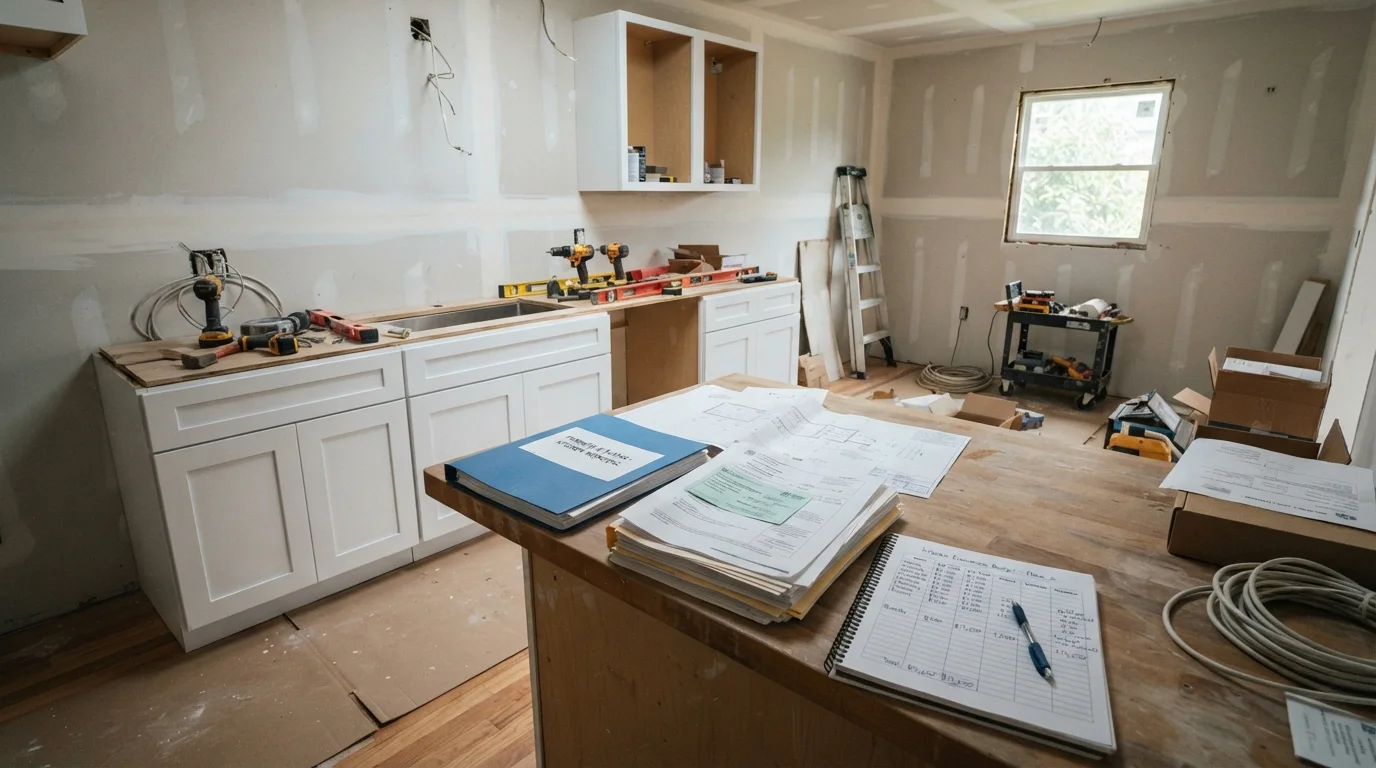
Why Renovation Budgets Fall Short
Renovation planning often starts with the exciting part — browsing materials, imagining the finished space, and gathering contractor quotes. The numbers add up, the project seems affordable, and work begins. Then reality intervenes. A wall comes down and reveals outdated wiring. The permit process takes longer and costs more than expected. The dumpster sitting in the driveway costs $400 that was never in the plan.
These aren't rare bad-luck scenarios. They're predictable patterns that catch homeowners off guard because they fall outside the scope of most initial quotes. Understanding them in advance is the difference between a renovation that stays on track and one that stalls mid-project. Before you start, it also pays to run through a room planning checklist to ensure no preparation step is skipped.
Forgetting to budget for building permits and inspections.
Why it happens: Homeowners focus on materials and labor quotes, assuming permits are a minor administrative formality. In reality, permit fees vary widely by project scope and municipality — sometimes reaching hundreds or even thousands of dollars.
Underestimating debris removal and disposal costs.
Why it happens: Dumpster rentals, haul-away services, and landfill tipping fees are invisible in most contractor quotes unless specifically itemized. Homeowners assume the crew handles cleanup as part of labor.
Ignoring what may be hidden inside walls, floors, or ceilings.
Why it happens: Before demolition begins, everything looks straightforward. Once walls open up, outdated wiring, substandard plumbing, mold, or pest damage can surface — none of which appeared in the original contractor estimate.
Failing to account for temporary living or storage costs.
Why it happens: Major renovations — particularly kitchen or bathroom remodels — can make parts of the home uninhabitable for weeks. Homeowners assume they'll manage in place and are caught off guard by hotel, short-term rental, or storage unit expenses.
Overlooking material price fluctuations and lead times.
Why it happens: Budgets are often built on initial quotes that don't lock in prices. Supply chain delays or price increases between quote and purchase can increase material costs significantly, especially for custom items like cabinetry or specialty tile.
Building a Budget That Accounts for the Full Picture
Once you understand the common gaps, you can close them systematically. Start by separating your project budget into distinct categories: labor, materials, permits and inspections, disposal and cleanup, temporary accommodation (if needed), and contingency. Treating these as separate line items — rather than a single lump sum — forces you to research each one and prevents any category from being silently absorbed by the overall figure.
Never Skip the Contingency Fund
Renovation professionals consistently recommend setting aside 15–20% of your total project budget for unforeseen costs. This isn't pessimism — it's standard practice. Homes, especially older ones, regularly reveal hidden problems once walls open up. Without a contingency, a single surprise can derail the entire project or force you into high-interest debt.
It's also worth recognizing that renovation costs are just one example of a broader budgeting challenge. Irregular, one-time expenses are consistently underestimated across household finances — a pattern explored in our overview of spending categories that most budgets underestimate.
Permits Are Not Optional
Many homeowners skip permits to save time or money, but unpermitted work can stall a future home sale, trigger fines, or force you to undo completed work. Local building codes exist to protect structural integrity and safety. Always verify which projects require permits in your municipality before breaking ground.
Finally, honest timing matters. Extending a contractor's schedule because materials arrive late costs money. Staying in a hotel two weeks longer than planned costs money. Build time buffers alongside financial buffers, and revisit your budget at each project milestone rather than only at the start. For a broader look at how common assumptions derail even careful planning, see our article on renovation myths that cost homeowners time and money.
This article is for general informational purposes only. Costs, permit requirements, and regulations vary by location and project scope. Always consult licensed professionals and verify local building codes before beginning any renovation work.
The content on this site is for informational purposes only and is not a substitute for professional advice. Always consult a qualified professional for guidance specific to your situation.