

Summary
22 items · 45-90 minutes
Why Planning Before Redecorating Matters
Most decorating regrets share a common origin: decisions made too quickly, before the room was fully understood. A sofa that looked perfect online but blocks the natural light. A bold paint color chosen without testing it in the room's actual light. A rug that shrinks the space instead of anchoring it. These are expensive, avoidable lessons.
This checklist is designed to slow you down in the best possible way - so that when you do spend money, you spend it confidently. Whether you're refreshing a single bedroom or rethinking an entire living area, working through these steps first means every decision you make is grounded in the actual room, not an idealized version of it.
If you're also looking at bigger changes that cross into renovation territory, our guide to hidden renovation costs is worth reading alongside this checklist. And if you're starting from scratch in a new place, see decorating your first apartment from a blank slate for a complementary framework.
Know Your Room
Clarify How the Room Is Used
Audit What You Already Own
Set Your Budget
Define Your Style Direction
Confirm Practical Constraints
Tools to Have Ready Before You Begin
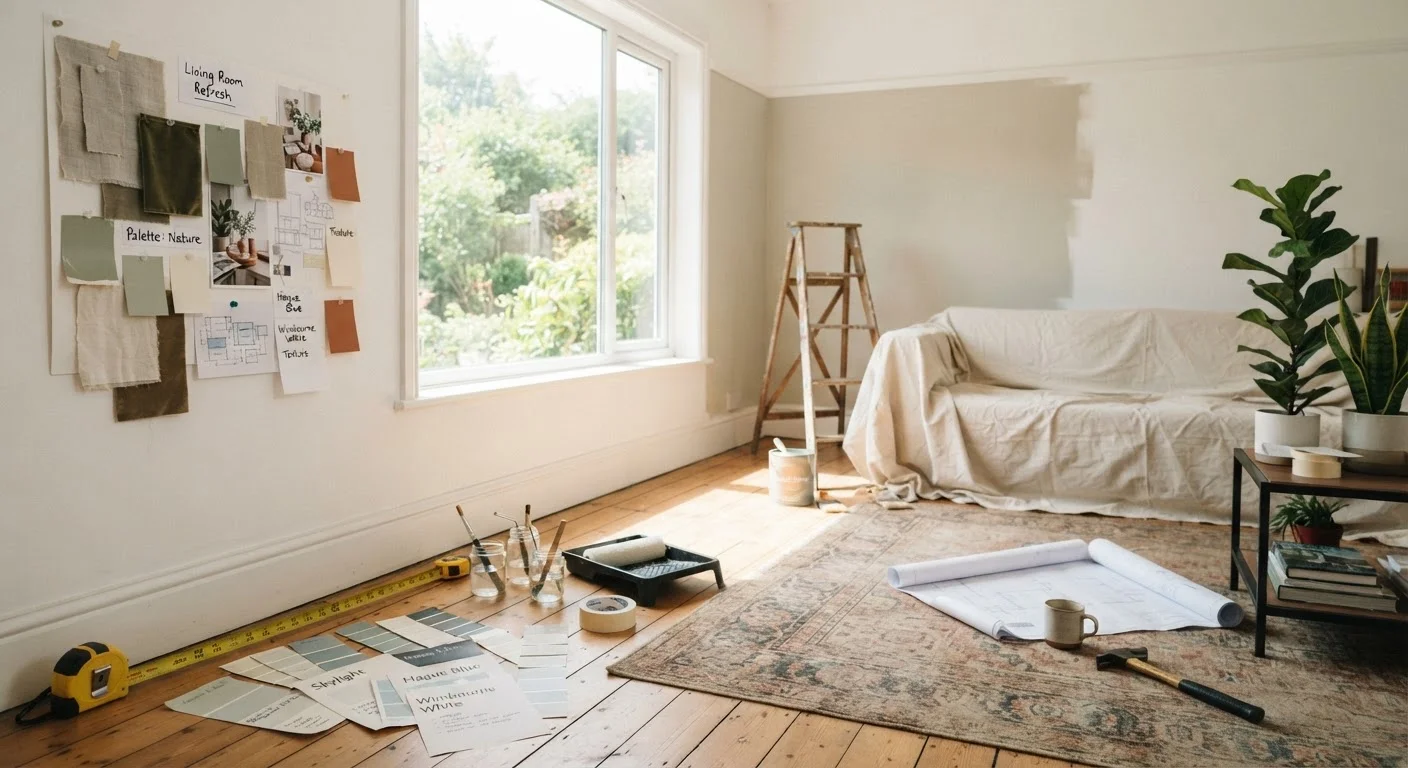
You don't need expensive software to plan a room well. The following tools help you gather the information this checklist calls for accurately and efficiently.
Tape measure
Accurately measure room dimensions and existing furniture so nothing is ordered or arranged based on guesswork.
Graph paper or free room-planning app
Create a scaled floor plan that lets you test furniture arrangements without physically moving heavy pieces.
Paint sample cards or peel-and-stick testers
Test colors directly on the wall in real light conditions before committing to a full gallon or more.
Digital mood board (or a physical pinboard)
Collect and organize visual references to identify consistent style patterns and avoid costly style drift mid-project.
Budget spreadsheet
Track allocated amounts, actual costs, and remaining funds across every decorating category in one place.
Painter's tape
Mark furniture footprints on the floor so you can walk around proposed layouts and assess traffic flow before buying anything.
Common Mistakes This Checklist Helps You Avoid
Even experienced decorators revisit these fundamentals - because skipping them is how rooms end up feeling off without anyone knowing quite why. A few of the most consequential pitfalls worth calling out explicitly:
Don't Skip the Measurements
Ordering furniture without confirmed room and doorway measurements is one of the most common - and most disruptive - decorating mistakes. A piece may fit the room but not clear the stairwell or front door during delivery. Always measure the room, the intended placement, and the delivery path before purchasing any large item.
Shopping Before Deciding Creates Costly Detours
Browsing before you've defined your color palette, layout, and priorities tends to generate impulse purchases that don't work together. Items bought in isolation rarely cohese into a room that feels intentional. Complete the planning steps in this checklist before opening a single product page or walking a showroom floor.
Renters have a specific layer of planning to add. Before committing to any changes, review your lease carefully. Our article on rental-friendly décor explains which modifications are typically safe and which risk your security deposit. It's also worth questioning any decorating "rules" you've absorbed over the years - many common decorating myths lead well-meaning decorators in the wrong direction and cost real money in the process.
Finally, before you add anything new to the room, work through what you already own. Decluttering before redecorating consistently produces better results than decorating around existing clutter. Our room-by-room decluttering framework gives you a practical system for making those keep-or-remove decisions without feeling overwhelmed.
The content on this site is for informational purposes only and is not a substitute for professional advice. Always consult a qualified professional for guidance specific to your situation.