

Understanding Your Lease Before You Decorate
Your lease is the governing document for every decorating decision you make. Before you hang a single frame or crack open a can of paint, read it carefully — specifically any clauses about alterations, modifications, or fixtures. Most standard leases distinguish between cosmetic changes (surface-level, reversible) and structural changes (anything that alters the unit's systems, surfaces, or layout in a lasting way).
When something isn't explicitly addressed, the default assumption in most states is that tenants may not alter the property without written permission. If you're unsure, ask your landlord in writing. A paper trail protects both parties.
| Security deposit limit (typical range) | 1–3 months' rent, varies by state law (State landlord-tenant statutes) |
| Most common deposit deduction reason | Damage beyond normal wear and tear (General landlord-tenant practice) |
| Normal wear and tear (example) | Minor scuffs, small nail holes, faded paint from sunlight |
| Damage (example) | Large holes in walls, stained carpet, broken fixtures |
| Written permission recommended for | Any permanent alteration, painting, or fixture replacement |
| Command strip max weight (typical) | Up to 16 lbs depending on product type (Manufacturer product guidelines) |
Heading into your first rental? Our guide on decorating your first apartment from a blank slate covers how to build a cohesive look starting from nothing.
What You Can Typically Change (Reversible Modifications)
The rental decorating world has expanded significantly thanks to better product design. The following changes are generally considered renter-safe, though always confirm with your specific landlord:
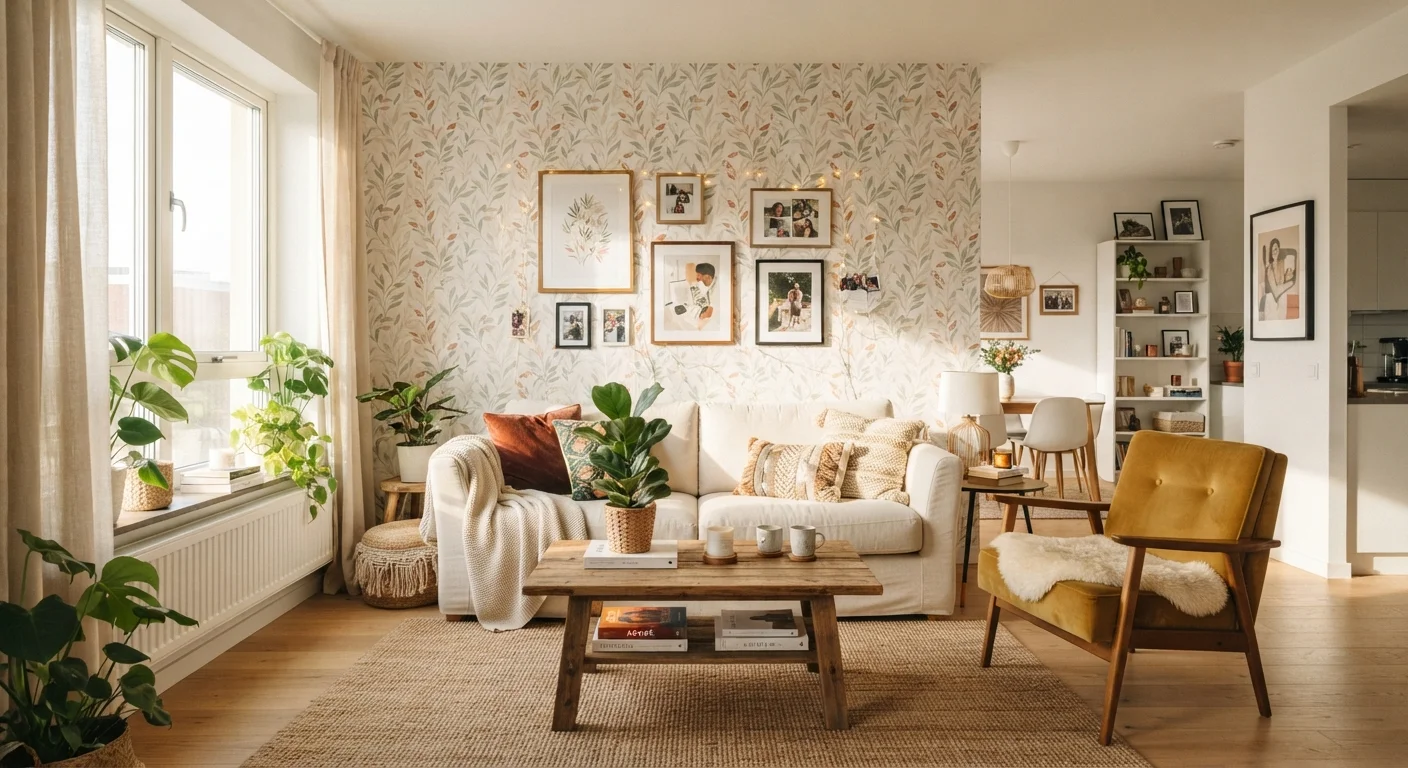
- Removable wallpaper and peel-and-stick tiles: When applied to clean, primed walls, quality removable wallpaper peels off without damage. Avoid textured or freshly painted walls, where adhesion is less predictable.
- Tension rods: Ideal for hanging curtains, room dividers, or under-sink organizers — no drilling required.
- Command strips and adhesive hooks: Designed for lightweight art and décor. Follow weight guidelines to avoid pulling paint on removal.
- Furniture arrangement: Completely within your control. Rugs, mirrors, and layered textiles can transform a space. See our small-space decorating principles for layout strategies that work in tight rooms.
- Lighting swaps (plug-in only): Floor lamps, plug-in sconces, and LED strip lights add ambiance without any wiring. Store the original fixtures if you swap out a hardwired piece — and note that electrical work almost always requires a licensed electrician and landlord permission.
- Temporary window film: Frosted or decorative window film adds privacy or pattern and typically removes cleanly.
Security deposit
A refundable sum paid by a tenant at the start of a lease, held by the landlord to cover unpaid rent or damage beyond normal wear and tear. Rules governing its return vary by state.
Normal wear and tear
The expected, minor deterioration of a rental unit from ordinary use — such as small nail holes or slight paint fading. Landlords generally cannot charge tenants for this type of wear.
Cosmetic change
A surface-level alteration that does not affect the structure, systems, or permanent fixtures of a unit. Removable wallpaper and peel-and-stick tiles are common examples.
Structural modification
Any change that affects load-bearing elements, plumbing, electrical, HVAC, or permanently alters the unit's surfaces or layout. These almost always require both landlord permission and, often, municipal permits.
Lease addendum
A written attachment to a standard lease that modifies or adds specific terms — for example, granting a tenant permission to paint walls a certain color.
What You Generally Cannot Change Without Permission
Some modifications seem minor but carry real consequences — financially and legally. These typically require explicit written landlord approval, and some may require permits regardless of who owns the property:
- Painting walls: Even a single accent wall changes the unit. Some landlords permit painting if you return to the original color; others prohibit it entirely. Get any agreement in writing.
- Drilling into tile: Bathroom and kitchen tile is expensive to replace. Damaging it — even accidentally — can result in significant charges against your security deposit.
- Replacing fixtures: Swapping out cabinet hardware, faucets, or light switches touches the landlord's property. Store originals and document the swap photographically if permission is granted.
- Installing shelving or built-ins: Wall-anchored shelving creates large holes and may require patching, painting, and inspection on move-out.
- Altering appliances or HVAC: Never modify gas lines, electrical panels, or HVAC systems. These involve safety codes and require licensed professionals.
Understanding the line between what's cosmetic and what's structural can save you from deposit disputes. Our room redecorating planning checklist is a useful pre-project tool for thinking through these decisions before spending anything.
Protecting Your Security Deposit
Your security deposit is money you want back. A few proactive habits dramatically reduce the chance of disputes at move-out:
- Document the unit before you move in. Photograph every wall, floor, fixture, and appliance. Timestamp the images and email them to your landlord so there's a shared record of pre-existing conditions.
- Keep original fixtures. If you remove a light fixture or cabinet hardware with permission, bag the originals and label them so reinstallation is straightforward.
- Patch small holes before moving out. Minor nail holes from picture hanging are often considered normal wear and tear, but many small holes may not be. Use a matching spackle and sand smooth.
- Read your state's security deposit laws. Each state sets rules about how deposits must be held, how quickly they must be returned, and what deductions are legally permissible. Knowing your rights helps you respond if charges seem unfair.
This article provides general information about tenant decorating decisions and is not legal advice. Lease terms and tenant rights vary significantly by state and municipality. Consult a licensed attorney or local tenant advocacy organization if you have specific legal questions about your rental agreement.
The content on this site is for informational purposes only and is not a substitute for professional advice. Always consult a qualified professional for guidance specific to your situation.