

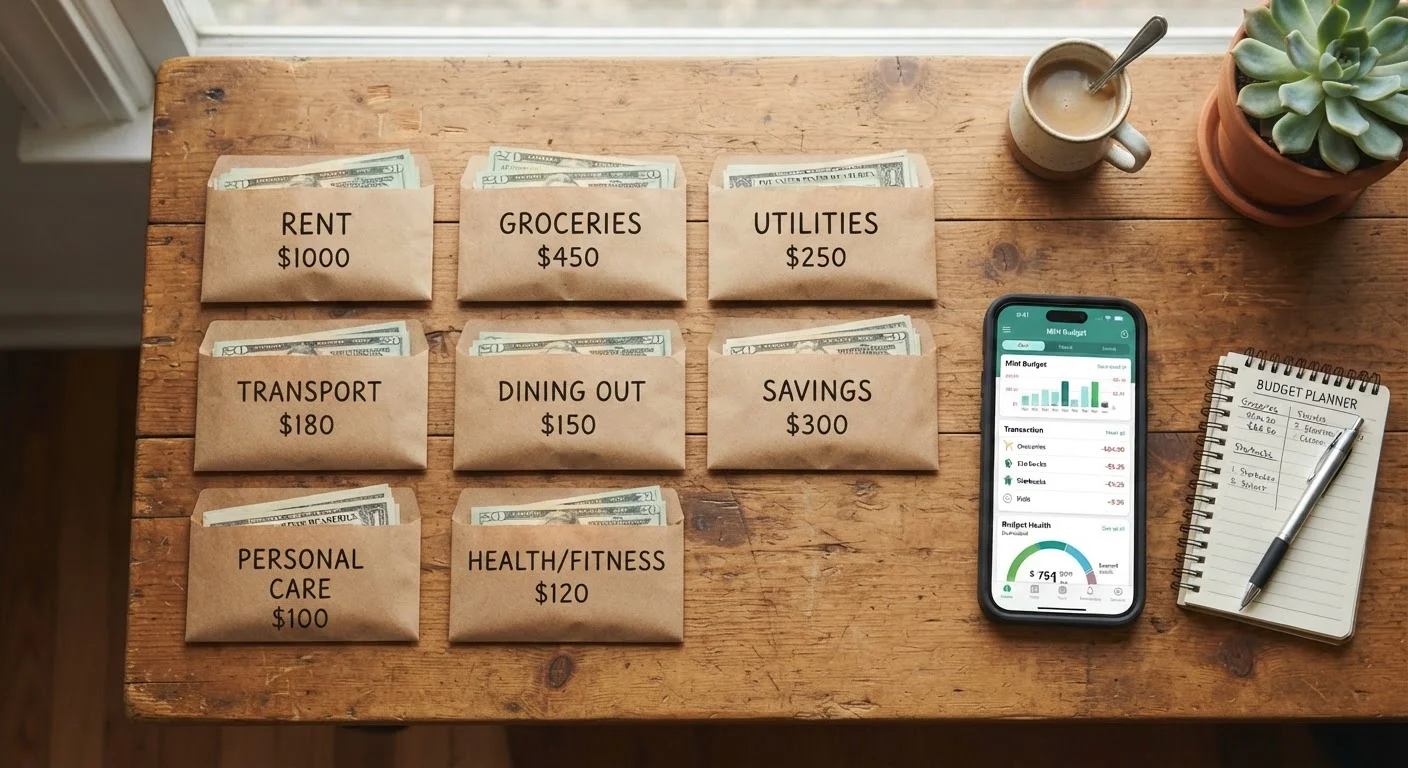
How the Envelope Method Works
The mechanics are straightforward. At the start of each pay period, you total your after-tax income and divide it across labeled envelopes based on your spending plan. Common categories include groceries, gas, utilities, dining out, clothing, and personal care. Fixed expenses like rent or mortgage payments are typically handled separately by direct payment, since they don't fluctuate month to month.
The discipline comes from the hard stop each envelope creates. When the grocery envelope is empty on day 22 of the month, there's no abstract number in an app — there's literally no cash. That physical reality changes spending behavior in a way that a bank balance rarely does, because a bank account doesn't segment what money is already spoken for.
This is why the method has remained popular for decades: it converts the abstract concept of a budget into something concrete and immediate. It's also why zero-based budgeting shares so much DNA with the envelope approach — both require every dollar to be assigned before it's spent.
Start With Just Three Envelopes
If the system feels overwhelming at first, begin with only your three highest-variable spending categories — typically groceries, dining out, and discretionary personal spending. Master tracking those for one full month before adding more envelopes. A simpler system you actually use beats a comprehensive one you abandon after two weeks.
Adapting the System for a Cashless World
Most Americans pay with cards or digital wallets, which makes stuffing physical envelopes with cash impractical for everyday life. Digital envelope systems solve this by replicating the same logic electronically. You set a dollar limit per category, track every transaction against it, and treat the limit as a hard ceiling — not a suggestion.
Some people use dedicated budgeting apps that are built around the envelope concept. Others build a simple version in a spreadsheet, listing categories, monthly allocations, and running totals. Either approach works as long as you update it consistently after each purchase.
A practical middle-ground many people use: keep physical cash envelopes only for high-temptation categories like dining out or entertainment, while tracking everything else digitally. This gives you the psychological friction of cash where it matters most, without the hassle of withdrawing and managing cash for every spending category.
1 in 3
Americans who report having no monthly budget
According to recurring surveys by the National Foundation for Credit Counseling, a significant share of U.S. adults have no formal budget in place.
~$500
Average monthly spending gap people discover when they first track
Financial counselors commonly report that new budgeters are surprised by how much untracked discretionary spending adds up across a single month.
Categories Most People Get Wrong
New envelope budgeters typically set up categories for recurring monthly expenses and forget about irregular ones. Car registration, annual subscriptions, holiday gifts, and medical copays don't show up every month — but they will show up, and without a planned envelope they blow holes in an otherwise careful budget.
The fix is to create sinking fund envelopes: you divide the expected annual cost by 12 and add that amount each month. A $360 car insurance renewal becomes $30 per month in a dedicated envelope, so when the bill arrives, the money is already there.
See our guide on spending categories most budgets underestimate for a more complete breakdown of costs that tend to catch people off guard.
Making Envelope Budgeting Stick
The most common reason the envelope method fails isn't math — it's inconsistency. Skipping a few transaction entries or raiding one envelope without adjusting another gradually erodes the system until it becomes a formality rather than a guide.
A monthly review habit is what keeps the system honest. At the end of each month, check which envelopes ran dry early, which ones had money left over, and whether your category amounts still reflect your actual priorities. Our end-of-month budget audit checklist walks through exactly what to look for before starting a new cycle.
For anyone working with limited income, the envelope method pairs particularly well with the strategies outlined in our guide on saving on a tight budget — because both approaches start from the same foundation: treating every dollar as a decision, not an afterthought.
“A budget is telling your money where to go instead of wondering where it went.”
— John C. Maxwell, Author and leadership speaker, widely cited in personal finance literature
Frequently Asked Questions
No — the cash-only version is the traditional approach, but digital adaptations let you track virtual envelopes in apps or spreadsheets. The core rule stays the same: when a category's balance hits zero, you stop spending there. Many people find digital envelopes more practical for online purchases and card payments.
Most people find five to ten categories manageable. Start with your most variable spending areas — groceries, dining, entertainment, personal care — and add categories as you identify consistent spending patterns. Too many envelopes can make the system feel overwhelming and hard to maintain.
You have two options: stop spending in that category until next pay period, or consciously shift money from a lower-priority envelope to cover the shortfall. The key word is 'consciously' — the decision should be deliberate, not automatic, so you stay aware of the trade-off you're making.
It can work, but requires adjustment. Irregular earners often do better budgeting from their lowest expected monthly income and treating any surplus as a separate allocation decision. This prevents over-spending in a high-income month and being short in a lower one.
Yes — by creating a dedicated debt-payment envelope, you treat debt repayment as a non-negotiable spending category rather than what's left at the end of the month. This is a straightforward way to prioritize debt without requiring a separate budgeting system.
The content on this site is for informational purposes only and is not a substitute for professional advice. Always consult a qualified professional for guidance specific to your situation.