

Our Verdict
Debt consolidation is a genuinely useful tool for consumers juggling multiple high-interest debts who qualify for a meaningfully lower rate and are committed to not adding new debt. It simplifies repayment and can reduce total interest paid over time. However, it is not a cure for overspending, and the wrong product or terms can leave you worse off.
Best suited for consumers with steady income, good-to-fair credit, and multiple high-interest unsecured debts who want a structured path to paying them off without the complexity of tracking several accounts.
What Debt Consolidation Actually Means
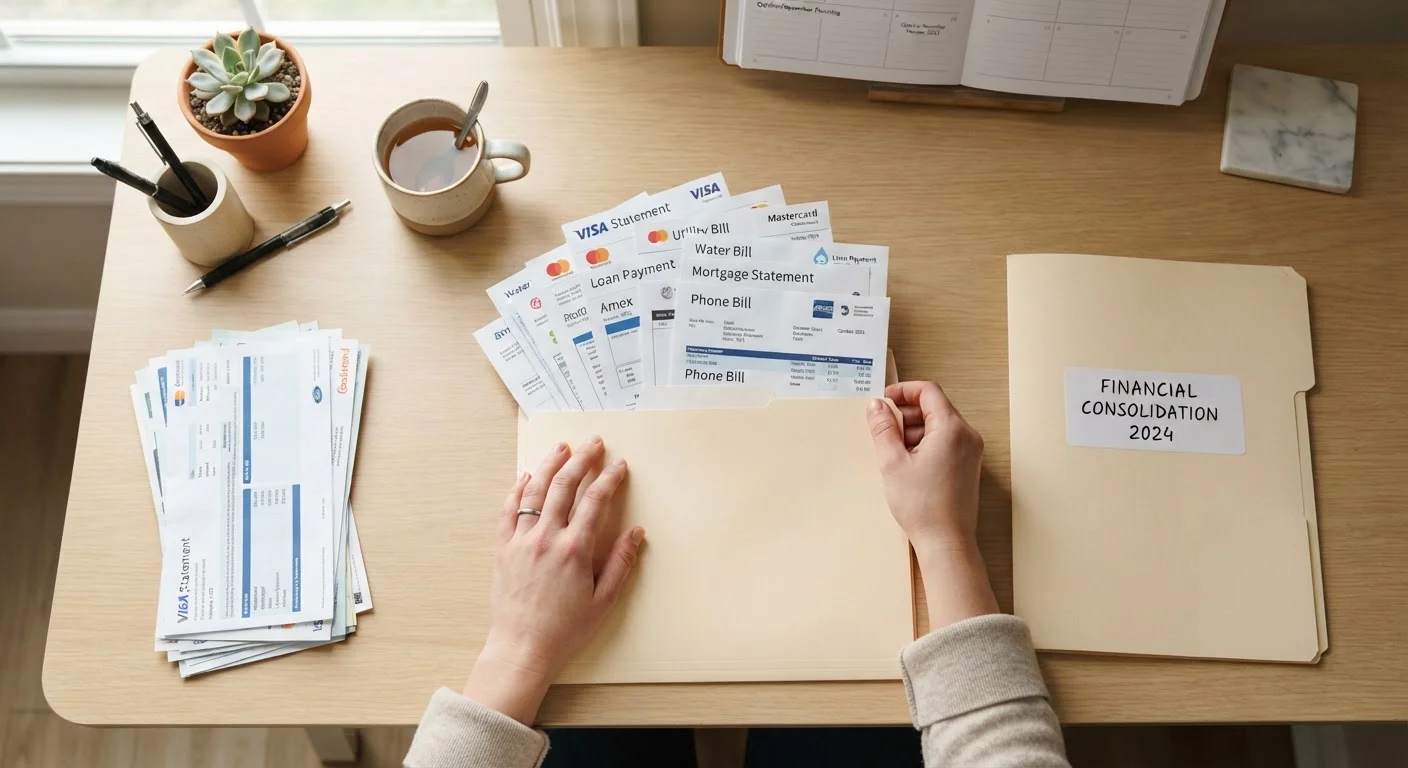
Debt consolidation is the process of combining multiple existing debts — typically unsecured ones like credit cards or personal loans — into a single new debt, usually with one monthly payment. The goal is generally to secure a lower interest rate, reduce payment complexity, or both.
It's worth being precise about what consolidation does not do: it does not erase what you owe. You're restructuring debt, not eliminating it. If you consolidate $15,000 in credit card balances into a personal loan, you still owe $15,000 — you've simply changed the lender and terms.
The three most common vehicles for consolidation are:
- Personal loans: A fixed-rate, fixed-term loan used to pay off existing balances. You then repay the loan in equal installments.
- Balance transfer credit cards: Cards offering a low or 0% introductory APR on transferred balances for a promotional period, typically 12–21 months.
- Home equity loans or HELOCs: Borrowing against your home's equity to pay off unsecured debt — lower rates, but your home becomes collateral.
For plain-language definitions of terms like APR, utilization rate, or charge-off, see our Debt & Credit Glossary.
The Pros: Where Consolidation Can Help
Consolidation offers real advantages — but only in the right circumstances. Here's where it tends to deliver genuine value:
Can lower your overall interest rate
If you're carrying credit card balances at 22–28% APR and qualify for a personal loan at 12%, you'll pay less interest over the life of the debt — assuming you don't extend the repayment term excessively.
Simplifies repayment into one monthly payment
Instead of tracking multiple due dates and minimum payments, you manage a single account. This reduces the chance of missed payments, which can damage your credit score.
Predictable payoff timeline with fixed loans
A fixed-term personal loan gives you a defined end date — something revolving credit card debt doesn't provide, since minimum payments can stretch repayment out for years.
May improve your credit utilization ratio
Paying off credit card balances with a personal loan lowers your revolving utilization rate, which is a significant factor in credit scoring models. This can lead to a credit score improvement over time.
Reduces financial management complexity
Fewer accounts to monitor means less time spent on debt administration and a clearer picture of your overall financial position month to month.
One factor people underestimate is the psychological benefit. Managing five minimum payments across five due dates creates cognitive load and leaves more room for missed payments. Simplifying to one payment on one date reduces that friction — which matters for follow-through. The financial stress of juggling multiple debts can also affect overall well-being; see our resources on mental wellness for broader strategies.
The Cons: Where Consolidation Can Backfire
Consolidation is frequently oversold as a quick fix. Understanding the downsides protects you from making a costly mistake:
Doesn't reduce the principal you owe
Consolidation is a restructuring tool, not debt forgiveness. If you owe $20,000 across five cards, you still owe $20,000 after consolidation — potentially more once fees are factored in.
Fees can offset interest savings
Personal loans may carry origination fees of 1–8% of the loan amount. Balance transfer cards typically charge 3–5% per transfer. These upfront costs reduce or eliminate the benefit of a lower rate, especially on shorter repayment timelines.
Risk of accumulating new debt on paid-off cards
Paying off credit cards via consolidation frees up available credit. Without changed spending habits, many people run those balances back up — ending up with both the consolidation loan and new card debt.
Secured options put assets at risk
Home equity loans and HELOCs convert unsecured debt into secured debt backed by your home. Defaulting could result in foreclosure — a far more serious consequence than defaulting on a credit card.
Longer terms can increase total interest paid
Spreading payments over a longer period lowers your monthly payment but can mean you pay more in total interest, even at a lower rate. Always compare total cost, not just monthly payment.
Requires good credit to access favorable rates
The best consolidation rates go to borrowers with strong credit profiles. If your credit is damaged, the rate you qualify for may be similar to — or worse than — your current debts.
Consolidation and Your Credit Score
Applying for a consolidation loan or balance transfer card triggers a hard inquiry, which can temporarily lower your credit score by a small amount. Opening a new account also affects your average account age. These effects are generally modest and short-lived if you manage the new account responsibly, but they're worth factoring in if you're planning to apply for a mortgage or major loan in the near term.
Your debt-to-income ratio plays a major role in what rates and loan amounts you'll qualify for. A high DTI may mean you can't access the lower rates that make consolidation worthwhile in the first place.
When Consolidation Makes Sense — and When It Doesn't
Consolidation is most likely to help when all of the following are true:
- You have multiple high-interest unsecured debts (particularly credit cards above 20% APR).
- You qualify for a consolidation product with a meaningfully lower rate.
- You have steady income to service the new payment reliably.
- You're prepared to avoid running up the credit card balances again after paying them off.
It's less likely to help — and may hurt — if you're consolidating low-interest debt, if fees erase the rate savings, or if the root cause of the debt is unresolved spending patterns.
Consolidation is also just one option. If your priority is reducing total interest paid, methods like the debt avalanche may be equally effective without taking on new credit. Compare approaches in our article on debt avalanche vs. debt snowball strategies.
If your income is reduced or inconsistent, consolidation may not be the right first step. See Managing Debt When Money Is Tight for strategies better suited to financial stress.
~$6,500
Average American credit card balance
According to Federal Reserve consumer credit data, average revolving credit card balances have remained in the mid-thousands for typical U.S. cardholders, making consolidation a relevant option for many households.
20%+
Typical credit card APR in recent years
The Federal Reserve tracks average credit card interest rates, which have generally exceeded 20% APR for accounts assessed interest in recent reporting periods — underlining the cost of carrying revolving balances.
3–5%
Common balance transfer fee range
Most balance transfer credit cards charge a fee of 3–5% of the transferred amount, which should be calculated against projected interest savings before proceeding.
This article is for general informational purposes only and does not constitute personalised financial or legal advice. Consult a licensed financial adviser or credit counsellor to evaluate options specific to your situation.
The content on this site is for informational purposes only and is not a substitute for professional advice. Always consult a qualified professional for guidance specific to your situation.