

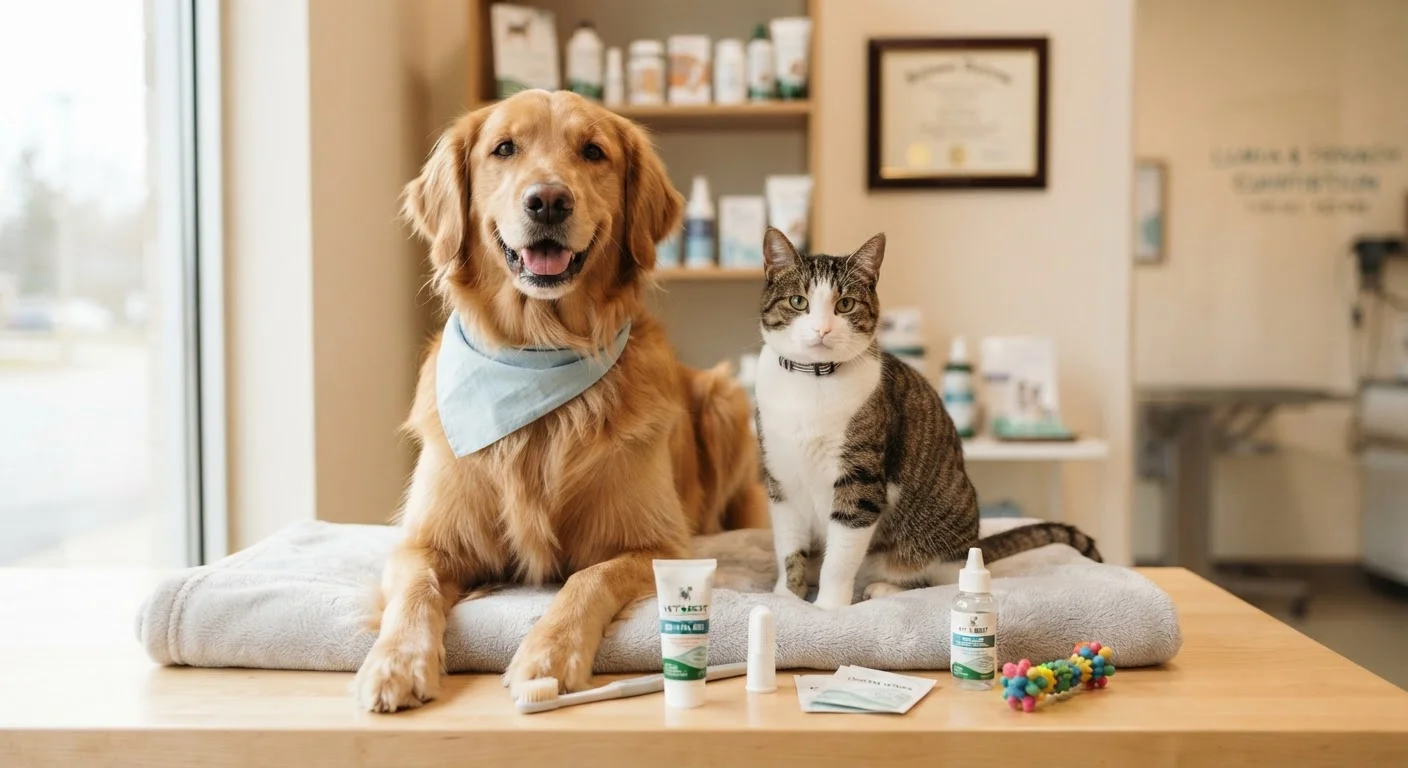
Why Pet Dental Health Gets Misunderstood
Dental disease is one of the most common health conditions seen in veterinary practice, yet it remains one of the most misunderstood. Many pet owners encounter conflicting information online — a problem that mirrors challenges in other areas of pet care, as explored in our article on when pet training advice online goes wrong.
The result is that well-meaning owners often either overlook real warning signs or follow advice that offers little clinical benefit. The myth-fact pairs below address the misconceptions veterinary professionals encounter most often.
Myth
Bad breath is just normal for dogs and cats — it's part of owning a pet.
Fact
Persistent bad breath (halitosis) in pets is a clinical sign of bacterial accumulation and often indicates active gum disease or tooth decay.
The bacteria responsible for dental disease produce sulfur compounds that cause the characteristic unpleasant odor. A mild, transient smell after eating is not unusual, but chronic or strong halitosis signals that plaque and tartar have built up to a point where the gums and supporting tissues are being affected. Treating it as a cosmetic inconvenience means underlying disease continues to progress — often painfully and silently.
Myth
Pets clean their own teeth naturally by chewing on toys, bones, or kibble.
Fact
Chewing can mechanically reduce some surface plaque, but it does not replicate the thoroughness of brushing or professional scaling, and hard objects can fracture teeth.
Dry kibble in particular is often cited as a teeth-cleaning food, but most kibble shatters before meaningful contact with tooth surfaces. Raw bones and very hard chews carry a documented risk of slab fractures — painful splits of the tooth crown that frequently require extraction. Chewing is a supplement to dental care, not a replacement. Products that carry a VOHC seal of acceptance have met published criteria for plaque or tartar reduction and represent a more evidence-informed choice within that category.
Myth
If my pet is still eating normally, their teeth must be fine.
Fact
Pets instinctively mask pain and continue eating even with significant dental disease, including tooth root abscesses and advanced periodontal breakdown.
This is one of the most consequential myths in veterinary dentistry. A pet's drive to eat is strong enough to override considerable discomfort. Owners who rely on appetite as a health indicator frequently discover — at a routine exam or when disease has become severe — that their pet has been living with undetected pain for months or longer. Changes to watch for include favoring one side of the mouth, dropping food, reluctance to chew hard items, or facial swelling, though many pets display no outward signs at all.
Myth
Dental cleanings require anesthesia only because vets want to charge more.
Fact
General anesthesia is medically necessary for a thorough, safe, and humane veterinary dental cleaning — it is not a cost-inflating add-on.
A complete dental procedure requires scaling below the gumline (subgingival scaling), where the most destructive bacteria accumulate. This cannot be performed safely or effectively on a conscious, moving animal. Anesthesia also allows dental radiographs — essential for identifying disease in tooth roots and surrounding bone — and ensures the airway is protected from inhaled debris. So-called anesthesia-free dental cleanings remove visible tartar from crown surfaces but leave subgingival disease untreated, creating a cosmetically improved appearance while underlying pathology progresses.
Myth
Small breeds don't need as much dental care as large breeds.
Fact
Small and toy breed dogs are generally at higher risk for periodontal disease, not lower, due to tooth crowding and jaw anatomy.
When teeth are crowded into a smaller jaw — common in breeds like Chihuahuas, Dachshunds, and Yorkshire Terriers — plaque and food accumulate in tighter spaces, accelerating tartar buildup and gum inflammation. Many small breeds also retain deciduous (baby) teeth longer, which compounds crowding. Veterinary guidelines consistently identify small breed dogs as a population that often requires more frequent dental monitoring, not less. Genetics and individual variation matter, too, so any breed can develop significant dental disease.
What Good Pet Dental Care Actually Looks Like
Once the myths are cleared away, a practical picture emerges. Effective oral care for pets involves a combination of home maintenance and professional oversight — neither alone is sufficient for most animals.
~80%
Dogs with dental disease by age 3
The American Veterinary Medical Association estimates that most dogs show signs of periodontal disease by their third year of life.
~70%
Cats with dental disease by age 3
Cats develop periodontal disease at similarly high rates, with many cases undetected until a veterinary oral exam is performed.
Toothbrushing with a pet-safe, enzyme-based toothpaste is the gold standard for home care. Veterinary dental chews, water additives, and dental diets carry varying levels of evidence; products accepted by the Veterinary Oral Health Council (VOHC) have met defined standards for plaque or tartar reduction, which is a useful filter when evaluating options.
Professional cleanings performed under general anesthesia allow veterinarians to scale below the gumline, take dental radiographs, and identify hidden disease. The frequency depends on your individual pet's breed, age, and oral health history — your vet is the right person to guide that schedule.
Never Use Human Toothpaste on Pets
Human toothpaste commonly contains fluoride and xylitol, both of which are toxic to dogs and cats. Always use a toothpaste specifically formulated for pets. If you are unsure which product is appropriate, ask your veterinarian before starting a brushing routine.
A well-rounded grooming routine that includes oral inspection is a sensible first step — our guide to building a consistent grooming routine for dogs at home explains how to incorporate basic checks into regular care. As with weight management — another frequently underestimated health factor covered in our article on pet obesity — prevention and early intervention yield the best long-term outcomes.
This article is for general informational purposes only and is not a substitute for professional veterinary advice. Always consult a licensed veterinarian regarding your pet's specific dental or health needs.
The content on this site is for informational purposes only and is not a substitute for professional advice. Always consult a qualified professional for guidance specific to your situation.