

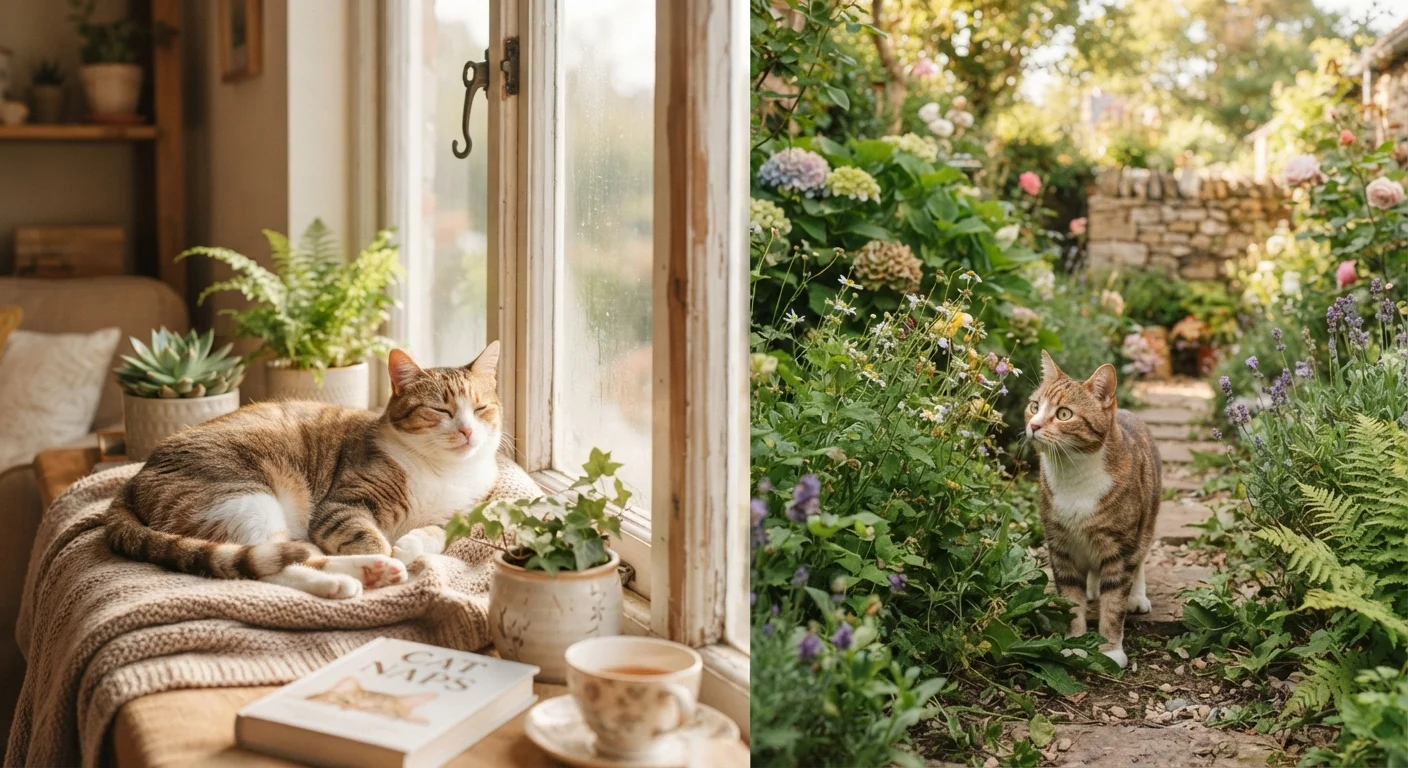
Our Verdict
Neither lifestyle is risk-free, but the evidence consistently places indoor cats at lower overall health risk and longer average lifespan. The indoor environment's advantages are most decisive in urban and suburban settings where traffic, predators, and disease exposure are high. With deliberate environmental enrichment, most cats can thrive indoors.
Indoor living is most appropriate for cats in high-traffic urban areas, those with compromised immune systems, or owners who can commit to active enrichment; outdoor or supervised access may suit resilient cats in lower-risk rural settings.
What the Research Says About Lifespan
Veterinary and epidemiological data consistently show a substantial lifespan gap between indoor and outdoor cats. Indoor cats are commonly estimated to live 12–18 years on average, while cats with outdoor access average closer to 2–5 years in some published estimates — though methodological differences between studies mean precise comparisons should be interpreted cautiously. The gap is real, but the exact magnitude varies by geography, traffic density, and local predator populations.
The causes of early outdoor cat mortality are well-documented: vehicle strikes, predation, infectious disease, poisoning, and exposure. These are not rare edge cases — they are the leading contributors to shortened outdoor cat lifespans documented in veterinary mortality data. Understanding this context helps owners weigh the decision honestly rather than anecdotally.
12–18 yrs
Estimated average lifespan of indoor cats
Veterinary sources commonly cite this range for indoor-only domestic cats, compared to substantially lower estimates for cats with outdoor access.
~60%
Share of U.S. cats kept primarily indoors
American Pet Products Association surveys have consistently found that the majority of owned cats in the U.S. are kept primarily or exclusively indoors.
Top 3
Infectious disease risks for outdoor cats
FeLV, FIV, and upper respiratory infections are among the most frequently cited infectious disease risks associated with outdoor cat contact in veterinary literature.
Outdoor Access: Real Risks and Genuine Benefits
Outdoor environments expose cats to a range of preventable hazards. Feline leukemia virus (FeLV), feline immunodeficiency virus (FIV), and upper respiratory infections spread through contact with other cats — contact that indoor-only cats rarely experience. Parasites including fleas, ticks, ear mites, and intestinal worms are significantly more prevalent in outdoor cats. Toxins are another serious concern: antifreeze, rodenticide-poisoned prey, and certain garden plants are routinely implicated in outdoor cat illness and death.
That said, outdoor access does provide genuine behavioral and physical benefits. Cats with outdoor time typically get more vigorous exercise, which can help maintain healthy body weight. Natural hunting behaviors — stalking, chasing, pouncing — are expressed freely, which may reduce frustration-based behaviors at home. Sensory variety from changing environments can support psychological wellbeing.
More vigorous daily exercise in natural settings
Outdoor cats engage in terrain-varied movement that indoor environments rarely replicate, helping to maintain muscle tone and healthy weight.
Natural expression of predatory behaviors
Hunting, stalking, and exploring satisfy deeply ingrained instincts, potentially reducing frustration-linked behavioral problems at home.
Rich sensory stimulation reduces boredom
Changing smells, sounds, and visual stimuli in outdoor environments provide a level of cognitive engagement difficult to fully reproduce indoors.
Sunlight and fresh air exposure
Outdoor cats benefit from natural UV exposure and ventilation, which may support circadian rhythm regulation and general wellbeing.
Indoor Living: Underappreciated Risks for Cats
Indoor cats are not automatically healthy cats. Without deliberate management, indoor environments carry their own significant risks. Obesity is among the most prevalent health issues in indoor cats; reduced activity combined with ad libitum feeding creates conditions for weight gain, which in turn elevates risk for diabetes, joint disease, and hepatic lipidosis. Feeding a cat appropriately — with attention to caloric density and meal structure — matters as much as whether they go outside.
Boredom and chronic stress are behavioral health concerns that owners sometimes underestimate. Cats are stimulus-seeking predators by nature; a barren indoor space can contribute to overgrooming, inappropriate elimination, and inter-cat conflict in multi-cat households. Scratching behavior, often seen as a nuisance, is actually a normal feline need that requires appropriate outlets indoors.
High exposure to infectious diseases
FeLV, FIV, and upper respiratory infections spread readily through contact with other cats — a risk dramatically lower for indoor-only cats.
Significantly elevated injury and mortality risk
Vehicle strikes, predator attacks, and fighting injuries are leading causes of premature death and serious injury in outdoor cats.
Greater parasite burden
Fleas, ticks, intestinal worms, and ear mites are substantially more common in cats with outdoor access, requiring more intensive preventive care.
Toxin exposure is difficult to control
Antifreeze, pesticides, toxic plants, and rodenticide-poisoned prey are common outdoor hazards owners cannot reliably eliminate.
Indoor-only cats face obesity and boredom risks
Without enrichment, reduced activity and overfeeding make indoor cats prone to weight gain and the cascade of conditions that follow.
Stress behaviors common in unstimulating environments
Overgrooming, inappropriate elimination, and aggression can emerge when indoor environments fail to meet cats' behavioral complexity needs.
Enrichment: Closing the Gap for Indoor Cats
The behavioral and physical shortfalls of indoor living are addressable through environmental enrichment — and this is where owner effort matters most. Vertical space (cat trees, wall-mounted shelves), puzzle feeders, rotating toys, window perches with outdoor views, and regular interactive play sessions can substantially reduce stress and inactivity. Research in applied animal behavior supports the value of these interventions for captive and domestic cats alike.
For owners who want to offer outdoor experience with reduced risk, supervised outdoor access through a secured enclosure (often called a "catio") or leash-trained walks can provide sensory variety without full free-roam exposure. These approaches are not universally feasible, but for motivated owners they represent a meaningful middle ground.
The 'Catio' Option: A Middle Ground
Secured outdoor enclosures — often called catios — allow cats to experience fresh air, sunlight, and outdoor sights and sounds without free-roam exposure to traffic, predators, or other cats. Designs range from window-box attachments to full backyard structures. While they require upfront investment, catios are increasingly recommended by veterinary behaviorists as a way to support enrichment without the full risk profile of unsupervised outdoor access.
Regardless of indoor or outdoor status, regular veterinary care — including parasite prevention, core vaccinations, dental checks, and age-appropriate screening — remains the most consistent lever owners have for protecting long-term cat health. See how health needs shift as cats age for guidance on adapting care routines over time.
This article is for general informational purposes only and is not a substitute for professional veterinary advice. Consult a licensed veterinarian for guidance specific to your cat's health, history, and environment.
The content on this site is for informational purposes only and is not a substitute for professional advice. Always consult a qualified professional for guidance specific to your situation.