

Why Human Foods Can Harm Pets
Dogs and cats metabolize many compounds very differently than humans do. Enzymes, detoxification pathways, and organ function vary enough across species that a food perfectly safe on your plate can trigger organ failure in your pet. Understanding the mechanism — not just the item to avoid — helps owners take toxicity seriously rather than dismissing it as overcaution.
This reference covers the most well-documented toxic foods, the biological reason each causes harm, and what to do if your pet is exposed. It is general educational information, not a substitute for veterinary advice. If you believe your pet has ingested any of the items listed here, contact your veterinarian or an animal poison control hotline immediately.
If you're building homemade meals or exploring alternative feeding styles, see our guide to home-cooked pet meals for nutritional context beyond toxicity.
| Species most affected | Dogs and cats (some toxins affect birds and rabbits more severely) |
| Most acutely dangerous food | Grapes/raisins and xylitol — both linked to rapid organ failure (ASPCA Animal Poison Control Center) |
| Cats vs. dogs sensitivity | Cats are generally more sensitive to allium toxicity; dogs more commonly report xylitol and grape cases |
| Safe threshold for grapes | None established — any amount should be treated as a potential emergency |
| U.S. poison control resources | ASPCA Animal Poison Control Center; Pet Poison Helpline (both fee-based, 24/7) |
| Forms that count for alliums | Raw, cooked, powdered, and dehydrated — all toxic |
The Most Dangerous Foods — and the Science Behind Each
Grapes and raisins (dogs, cats)
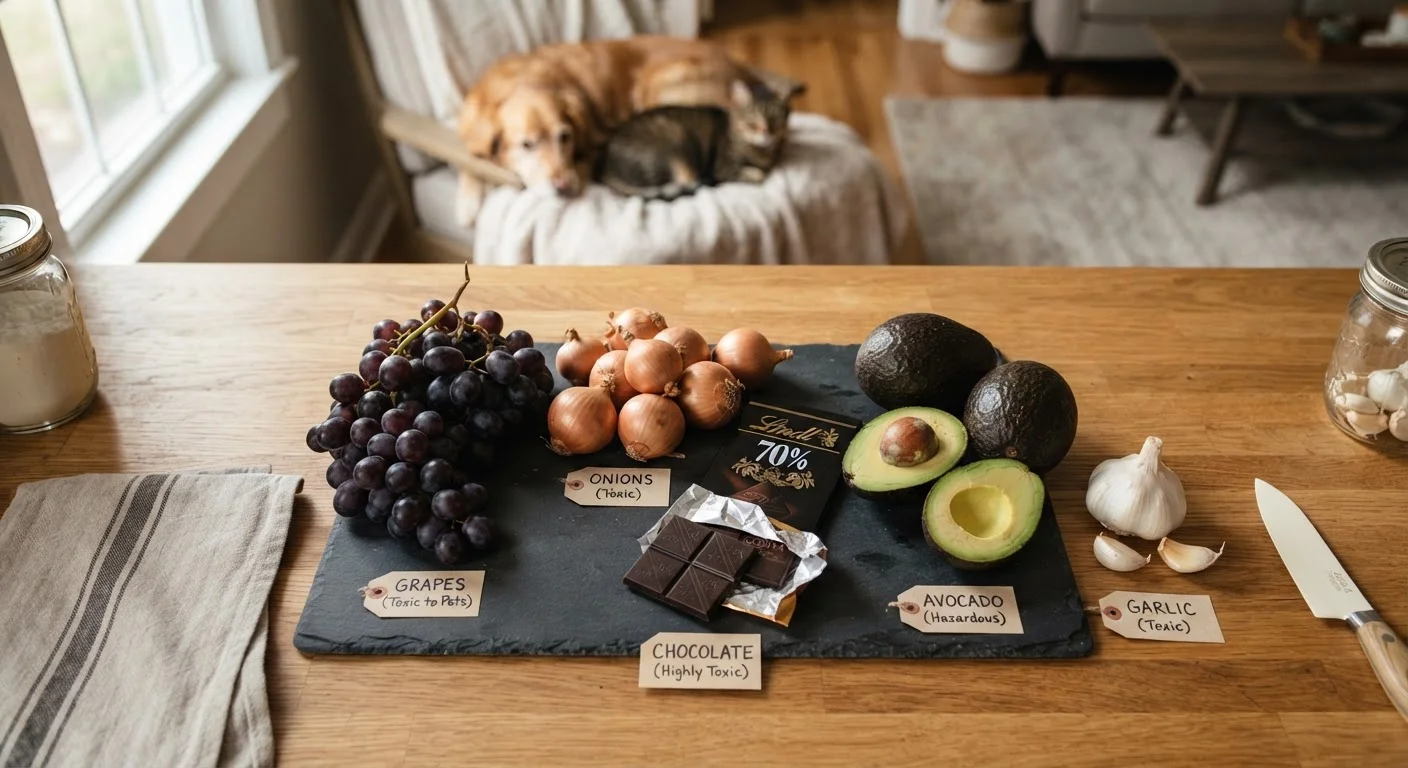
Grapes and raisins can cause acute kidney failure in dogs, and cases have been reported in cats. The exact toxic compound has not been definitively identified, but the reaction is dose-independent in some individuals — meaning even small amounts have caused severe illness. There is no established safe threshold.
Alliums — onions, garlic, leeks, chives (dogs and cats)
All members of the Allium family contain compounds called organosulfides, which damage red blood cells, leading to hemolytic anemia. Cats are more sensitive than dogs. Toxicity occurs with raw, cooked, powdered, or dehydrated forms. Garlic powder is particularly concentrated and therefore more dangerous by weight.
Chocolate and caffeine (dogs and cats)
Chocolate contains theobromine and caffeine — methylxanthines that dogs and cats cannot metabolize efficiently. Theobromine accumulates, overstimulating the cardiac and nervous systems. Dark chocolate and baking chocolate carry far higher concentrations than milk chocolate, but no form is safe. Signs include vomiting, tremors, and cardiac arrhythmias.
Xylitol (dogs)
Xylitol is an artificial sweetener found in sugar-free gum, some peanut butters, baked goods, and oral-care products. In dogs, it triggers a rapid insulin release, causing profound hypoglycemia (dangerously low blood sugar). Higher doses can cause liver failure. Cats appear less susceptible, but exposure should still be treated as an emergency.
Macadamia nuts (dogs)
Macadamia nuts cause weakness, hyperthermia, and tremors in dogs within 12 hours of ingestion. The mechanism is not fully understood, but toxicity is well-documented in veterinary literature. Cats are rarely reported to be affected, though avoidance is prudent.
Avocado (birds, rabbits, dogs in large amounts)
Avocado flesh contains persin, a fungicidal toxin highly dangerous to birds and rabbits. Dogs and cats appear more tolerant, but the high fat content presents pancreatitis risk, and avocado seeds pose a serious choking and obstruction hazard.
Alcohol and raw yeast dough (dogs and cats)
Even small amounts of ethanol are toxic to pets. Raw yeast dough is doubly dangerous: it ferments in the warm stomach, producing alcohol and carbon dioxide simultaneously, causing both ethanol toxicity and gastric distension.
Theobromine
A naturally occurring methylxanthine compound found in cacao. Dogs and cats metabolize it far more slowly than humans, allowing it to accumulate to toxic levels that overstimulate the heart and nervous system.
Hemolytic anemia
A condition in which red blood cells are destroyed faster than they can be produced. In pets, allium toxicity triggers oxidative damage to red blood cells, leading to this form of anemia.
Xylitol
A sugar alcohol used as an artificial sweetener in many human products. In dogs, it causes a rapid and dangerous drop in blood sugar by triggering excessive insulin release.
Organosulfides
Sulfur-containing compounds present in onions, garlic, and related plants. These compounds oxidize and rupture red blood cells in dogs and cats, causing hemolytic anemia.
Persin
A fungicidal toxin found in avocado leaves, skin, pit, and flesh. It is highly toxic to birds and small mammals, though dogs and cats show greater tolerance to the flesh in moderate amounts.
Hypoglycemia
Abnormally low blood sugar. In the context of xylitol poisoning in dogs, rapid insulin release causes blood glucose to drop to dangerously low levels, potentially causing seizures or death.
What To Do If Your Pet Is Exposed
Time is a critical factor in most toxicoses. Do not wait for symptoms to appear before seeking help — many toxic processes advance rapidly before outward signs are visible.
- Stay calm and do not induce vomiting unless specifically directed by a veterinarian. Some substances cause more harm on the way back up.
- Identify what was ingested — the item, the approximate amount, and the time of exposure. Check product labels for ingredient lists if relevant (e.g., confirming xylitol in a product).
- Contact a professional immediately. Reach your veterinarian, an emergency animal hospital, or the ASPCA Animal Poison Control Center (a fee-based service available around the clock in the U.S.) or the Pet Poison Helpline.
- Follow professional guidance only. Do not administer home remedies, hydrogen peroxide, or any other substance without explicit veterinary instruction.
Keeping an eye on what your pet consumes is part of responsible ownership. For a broader look at pet health decisions, visit our Pet Health & Care hub.
When to Act: Don't Wait for Symptoms
Many toxic compounds — including xylitol and grape toxins — cause serious internal damage before any outward symptoms appear. If you suspect ingestion, treat it as an emergency and contact a veterinary professional right away. Early intervention significantly improves outcomes in most documented toxicosis cases.
This article is for general informational purposes only and does not constitute veterinary medical advice. Always consult a licensed veterinarian regarding your pet's specific health needs or in any suspected poisoning emergency.
The content on this site is for informational purposes only and is not a substitute for professional advice. Always consult a qualified professional for guidance specific to your situation.