

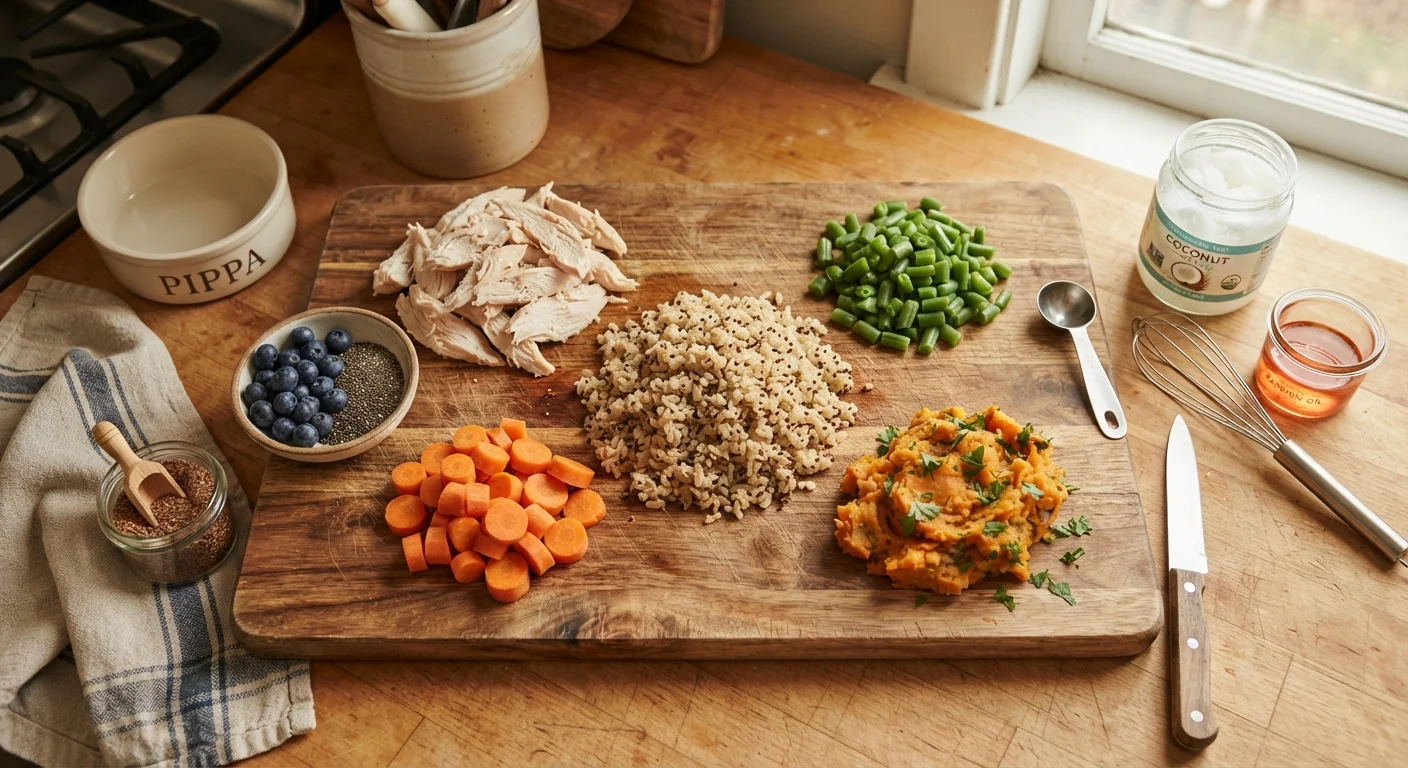
Why Home-Cooked Diets Are More Complicated Than They Look
Cooking for a pet feels intuitive — real ingredients, no preservatives, total control. But veterinary nutrition research consistently shows that homemade diets, prepared without professional guidance, frequently fall short of meeting a pet's complete nutritional needs. A study published in the Journal of Nutritional Science found that the vast majority of home-cooked dog diet recipes available online and in popular books were deficient in multiple essential nutrients.
The challenge isn't ingredient quality — it's nutritional completeness. Dogs and cats require precise amounts of proteins, fats, carbohydrates, vitamins, and minerals in ratios that differ meaningfully from human nutrition. Missing even one critical micronutrient over weeks or months can contribute to serious health problems. Unlike commercial pet foods formulated to meet established nutrient profiles, a home kitchen offers no built-in safety net.
This doesn't mean home cooking is impossible — it means it requires the same rigor you'd apply to managing a medical diet for a person. For context on how nutrient needs shift over time, see our guide on how dietary needs change across life stages.
Core Practices for a Nutritionally Sound Homemade Diet
If you're committed to feeding your pet home-cooked food, the following evidence-based practices give your approach its best chance of being genuinely beneficial rather than inadvertently harmful.
Work with a board-certified veterinary nutritionist to formulate or validate every recipe you use long-term.
Veterinary nutritionists have specialized training in animal dietary science that general practitioners and pet owners typically do not. A formulated recipe accounts for species, breed, age, weight, health status, and activity level — variables that determine actual nutrient requirements. Without this expertise, even well-sourced recipes are essentially guesses.
Use a kitchen scale for every meal rather than measuring by volume or visual estimation.
Nutritional targets for pets are calculated by weight, not cups or handfuls. Volume measurements vary significantly depending on how ingredients are chopped or packed, introducing caloric and macronutrient variation that accumulates into real health consequences. Consistent weighing is the only reliable way to match what you serve to what the recipe intends.
Supplement as directed by your formulated recipe — do not add or skip supplements based on availability or preference.
Home-cooked diets rarely achieve nutritional completeness from whole foods alone. A professionally formulated recipe will specify supplements to close identified gaps. Omitting them or substituting arbitrarily eliminates the protective structure that makes the diet viable. Fat-soluble vitamins and trace minerals can also cause toxicity if over-supplemented without guidance.
Stick to the formulated recipe consistently and make changes only through your veterinary nutritionist.
Improvising ingredient substitutions — even seemingly equivalent ones — changes the nutrient profile of the diet. A recipe balanced around chicken thighs will have a different fat and micronutrient profile if beef is swapped in informally. Consistency is the mechanism through which a formulated diet actually delivers its intended nutrition.
Schedule regular veterinary check-ups and periodic bloodwork to monitor your pet's nutritional health.
Many nutritional deficiencies and imbalances develop gradually and show no outward signs until they are advanced. Routine bloodwork can flag early changes in organ function, red blood cell counts, and metabolic markers that suggest dietary adjustment is needed. Monitoring provides the feedback loop that makes home cooking sustainable and safe.
Keep in mind that even well-intentioned recipes can create cumulative problems. Rotating ingredients randomly or eyeballing portions introduces variability that can undermine nutritional targets over time.
Nutrients Most Often Missing — and Why They Matter
Calcium is the most commonly deficient nutrient in home-cooked pet diets. Without bones or a properly dosed calcium supplement, muscle-meat-based meals produce a calcium-to-phosphorus ratio that can impair bone development and density — particularly dangerous in growing puppies and kittens. Zinc, iodine, vitamin D, and vitamin E are also frequently under-supplied.
95%+
Home-cooked recipes with nutrient deficiencies
Research published in the Journal of Nutritional Science found that the overwhelming majority of home-cooked dog diet recipes evaluated were deficient in one or more essential nutrients.
6+
Essential nutrients commonly under-supplied
Calcium, zinc, iodine, vitamin D, vitamin E, and choline are among the nutrients most frequently found to be deficient in home-prepared pet diets, according to veterinary nutrition literature.
Cats have additional nutritional requirements that dogs do not. Taurine — an amino acid essential for cardiac and retinal health — must come directly from animal tissue; cats cannot synthesize adequate amounts themselves. Arachidonic acid and preformed vitamin A (from animal liver) are similarly non-negotiable for cats. A diet that keeps a dog healthy can cause serious, irreversible harm in a cat.
Before adding any supplement to address these gaps, consult your veterinarian. Over-supplementing fat-soluble vitamins such as vitamin A and D can cause toxicity just as deficiency can cause illness. There is no safe way to guess at dosing without a formulated plan.
Cats and Dogs Have Very Different Nutritional Requirements
Cats are obligate carnivores with specific needs — including taurine, arachidonic acid, and preformed vitamin A — that must come from animal-sourced ingredients. Dogs are omnivores with more dietary flexibility, though they are far from nutritionally simple. A recipe formulated for one species should never be fed to the other. If you have both cats and dogs at home, each needs a separately formulated diet plan reviewed by a professional.
Ingredients to Avoid Completely
Several common kitchen staples are genuinely dangerous to dogs and cats and must never appear in a homemade pet meal. Onions and garlic (including powdered forms) destroy red blood cells in both species. Grapes and raisins have been associated with acute kidney failure in dogs, though the exact mechanism remains under investigation. Xylitol, found in some peanut butters and sugar-free foods, is acutely toxic to dogs even in small amounts.
For a complete reference, our article on foods toxic to dogs and cats covers the documented risks and what to do if accidental ingestion occurs. Macadamia nuts, chocolate, raw yeast dough, and alcohol also belong on the exclusion list regardless of how small the quantity.
If you're weighing home cooking against other feeding approaches, it helps to understand the full landscape. Our comparison of wet food, dry kibble, and raw diets offers an objective look at each format's nutritional trade-offs.
This article provides general educational information about pet nutrition and is not a substitute for personalized veterinary advice. Always consult a licensed veterinarian or board-certified veterinary nutritionist before making significant changes to your pet's diet.
The content on this site is for informational purposes only and is not a substitute for professional advice. Always consult a qualified professional for guidance specific to your situation.