

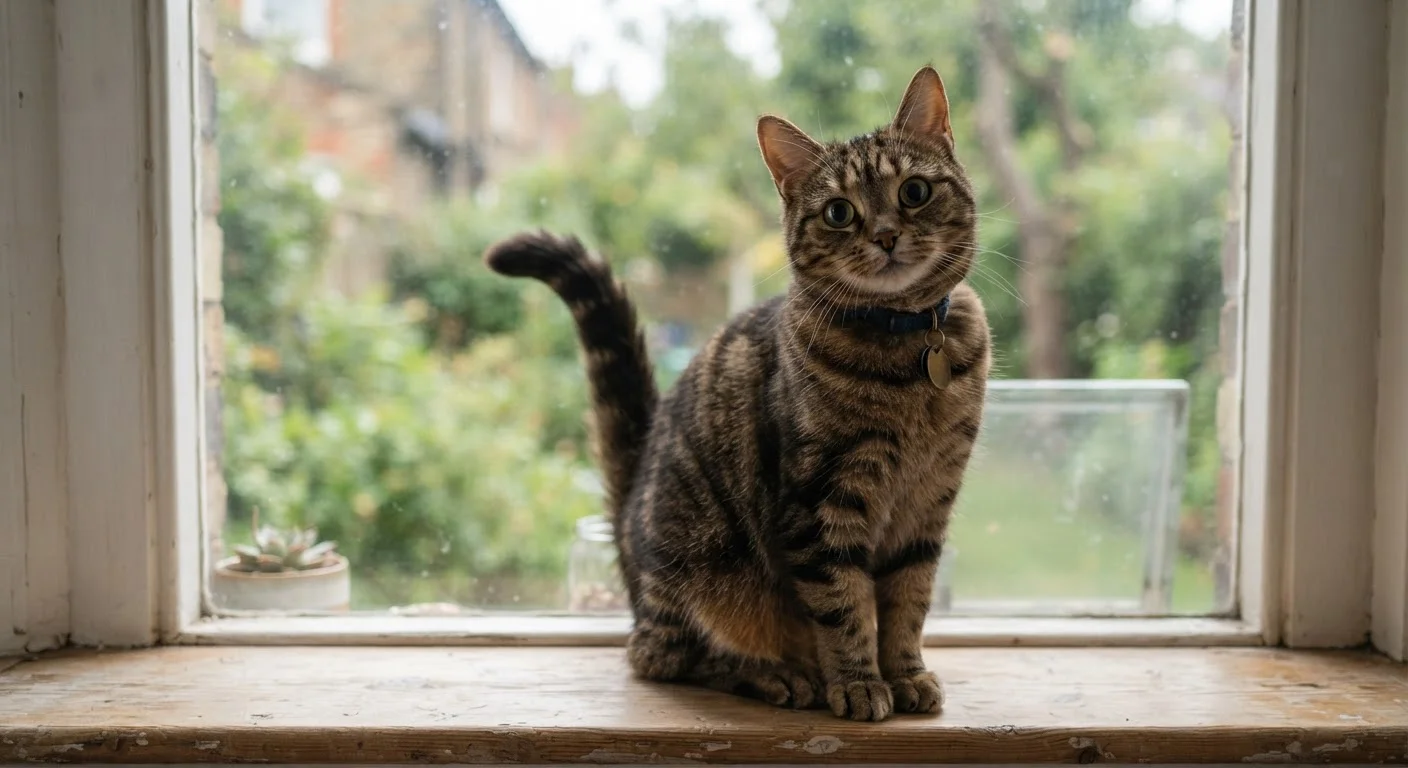
Why Feline Body Language Is Different
Cats evolved as both predators and prey, which shaped a communication system built on subtlety. Unlike dogs — who broadcast emotions through large, readable gestures — cats rely on nuanced, layered signals that combine ear position, tail carriage, eye shape, and overall posture simultaneously. Missing one element can lead to a misread. For comparison, see how dogs express themselves in our practical field guide to dog body language.
Feline signals are also context-dependent. A low tail means something different in a confident adult cat exploring familiar territory than in a kitten meeting a stranger. Building fluency means reading the whole picture, not just one cue.
Piloerection
The involuntary raising of fur along the back and tail, making the cat appear larger. It occurs during fear or extreme agitation as part of the threat-response system.
Slow blink
A deliberate, relaxed closing and opening of the eyes directed at another individual. In cats, it signals trust and non-aggression and is sometimes described as a social bonding gesture.
Affiliative behavior
Friendly social actions — such as head-bunting, grooming, and vertical tail greetings — that cats use to reinforce bonds with trusted individuals.
Displacement behavior
An out-of-context action (like grooming or yawning) performed when a cat is in conflict or mildly stressed, often used to self-soothe or signal ambivalence.
Overstimulation
A state reached during handling or petting where a cat's tolerance threshold is exceeded, often signaled by tail lashing, skin rippling, or sudden aggression after apparent calm.
Decoding the Core Signals: Ears, Eyes, Tail, and Posture
Use the quick reference below alongside the descriptions here. Each body part functions as an independent channel; fluency comes from reading them together.
| Primary communication channels | Ears, eyes, tail, posture, and vocalizations |
| Friendly greeting signal | Upright tail with a slightly hooked tip |
| Aggression warning sign | Ears pinned flat, constricted pupils, hard stare |
| Trust signal | Slow blink directed at a person or animal |
| Overstimulation warning | Rapid tail lashing, skin rippling, ear rotation |
| Fear indicator | Piloerection (puffed fur), arched back, crouched posture |
Ears
- Forward and slightly angled: Engaged, curious, alert to something interesting.
- Swiveling rapidly: Scanning for sound; mildly anxious or highly focused.
- Flattened sideways ("airplane ears"): Fear, stress, or defensiveness — back off and give space.
- Pinned flat against the skull: Aggression warning. Avoid direct interaction.
Eyes
- Slow blink: A relaxed, trusting signal sometimes called a "cat kiss." Returning a slow blink can reinforce affiliation.
- Dilated pupils in normal light: Arousal — excitement, fear, or playfulness depending on context.
- Constricted pupils with a hard stare: Potential threat or aggression. Avoid direct eye contact.
- Half-closed eyes: Contentment and comfort.
Tail
- Vertical, tip slightly hooked: Friendly greeting; cats hold this posture when approaching trusted people or animals.
- Puffed (piloerection): Fear or extreme agitation — the cat is trying to appear larger.
- Low and tucked: Submission or significant stress.
- Lashing rapidly side to side: Irritation or overstimulation; a warning that contact may result in a scratch or bite.
- Gentle, slow wag at the tip: Mild interest or light focus.
Posture and Body
- Exposed belly: Often misread as an invitation to touch. It signals trust and relaxation, but many cats dislike belly contact — follow the individual cat's cues.
- Arched back with puffed fur: Classic fear-aggression display; the cat feels threatened.
- Crouched, tense, weight shifted back: Ready to flee or defend; reduce pressure immediately.
- Loaf position (paws tucked under body): Comfortable and at ease, though not in full deep-rest mode.
When Body Language Signals a Health Problem
Behavioral and postural changes often precede or accompany illness. A cat that suddenly crouches more, hides, or shifts grooming habits may be experiencing discomfort rather than a mood change. Animals are wired to conceal vulnerability, so even subtle shifts deserve attention. Our guide on signs your pet may be in pain expands on the overlap between behavior and physical distress.
Behavior Changes Can Signal Medical Issues
A cat that withdraws, stops grooming normally, or adopts an unusual resting posture isn't necessarily "moody" — these can be early signs of pain or illness. Cats are instinctively inclined to mask discomfort, so changes that persist for more than a day or two deserve a veterinary assessment rather than a wait-and-see approach.
Conditions like arthritis or dental disease can alter a cat's resting posture, grooming reach, and social tolerance. If you notice a persistent change in how your cat holds itself or interacts with you, a veterinary evaluation is warranted. Some illnesses also present differently across species — health conditions that show up differently in cats than in dogs is a useful companion read.
This article provides general behavioral information for educational purposes. It is not a substitute for professional veterinary advice. If you have concerns about your cat's health or behavior, consult a licensed veterinarian.
The content on this site is for informational purposes only and is not a substitute for professional advice. Always consult a qualified professional for guidance specific to your situation.