

Summary
22 items · 20–45 minutes
Why Your Makeup Bag Deserves a Regular Check-In
Most of us have a mascara that's been rolling around since last year or a foundation that separated months ago. It happens to everyone — beauty products accumulate quietly, and expiry dates rarely feel urgent until something goes wrong. But using expired or contaminated makeup can lead to skin irritation, breakouts, and in more serious cases, eye infections.
Think of this checklist the same way you'd think about a home audit — a deliberate, periodic sweep that helps you catch problems before they become bigger ones. It doesn't have to be a marathon session; 20–45 minutes done seasonally can make a real difference in how your routine looks and feels.
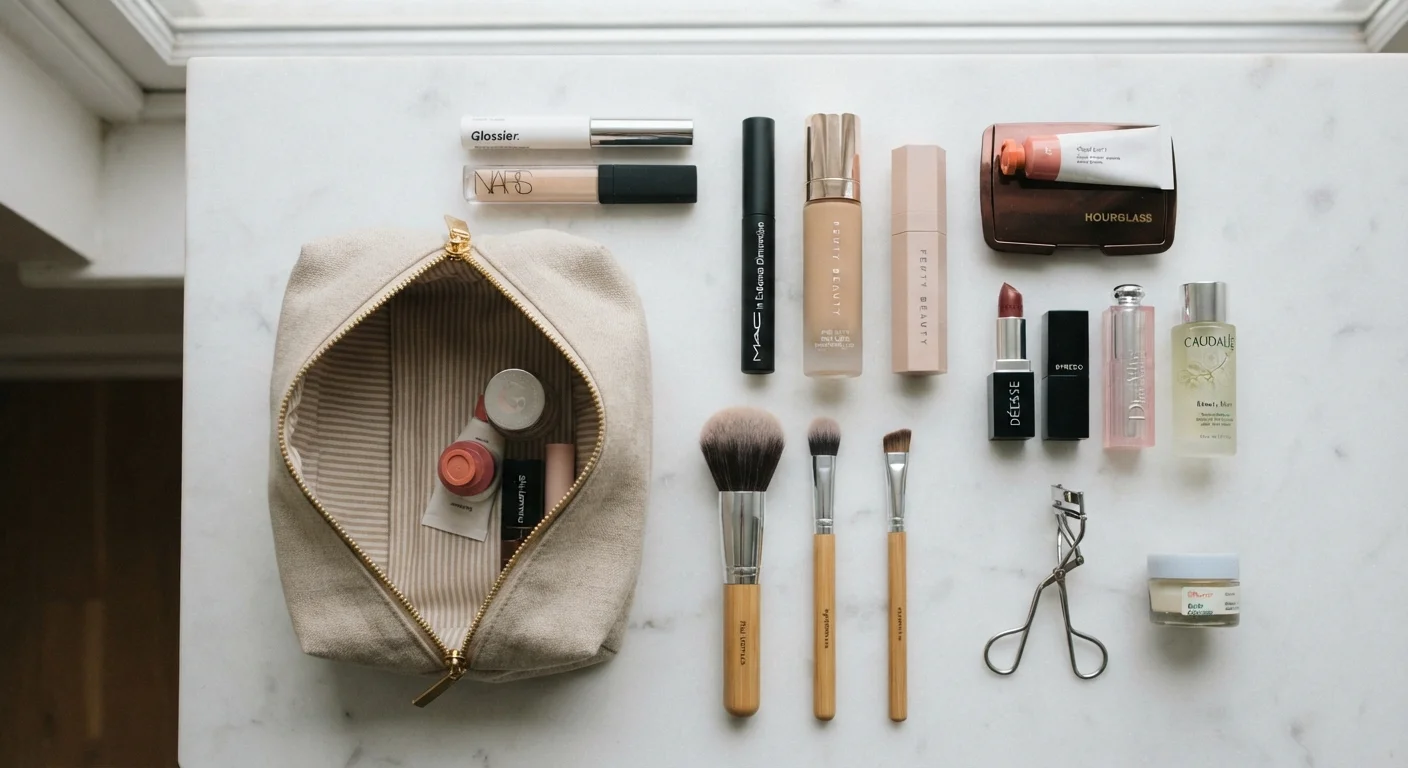
Before you start, gather everything together: your main bag, any overflow drawers, travel kits, and brushes. Having it all in one place means nothing gets missed.
Magnifying glass or phone camera
Used to read small PAO symbols and date stamps printed on product packaging.
Marker or label stickers
Used to write the opened date on products that don't have a visible PAO stamp.
Brush cleaning solution or gentle liquid soap
Used to deep-clean brushes and sponges during the audit.
Paper towels and a clean towel
Used to blot and air-dry tools after cleaning.
Small bins or bags for sorting
Used to separate keep, toss, and donate piles during the audit.
Reading Expiry Signals: PAO Symbols and Shelf-Life Basics
Many makeup products carry a Period After Opening (PAO) symbol — a small open jar icon followed by a number and the letter M (for months). A 12M label means the product is considered safe to use for 12 months after you first open it. Some products also carry a traditional best-before date, especially those with active skincare ingredients like SPF or retinol.
General shelf-life benchmarks worth knowing:
- Mascara and liquid eyeliner: 3 months after opening
- Liquid and cream foundation: 6–12 months
- Concealer: 6–12 months
- Powder products (blush, bronzer, eyeshadow): Up to 2 years
- Lipstick and lip gloss: 1–2 years
- Eyeliner pencils: Up to 2 years if regularly sharpened
These are general guidelines, not guarantees. A product stored in a hot, humid bathroom may degrade faster than the PAO suggests. If you're just getting started building a pared-back routine, our everyday makeup guide walks through the handful of versatile products worth prioritizing — and keeping fresh.
Eye Products Carry the Highest Risk
Expired or contaminated eye makeup is a leading cause of preventable eye infections, including bacterial conjunctivitis. Because the eye area is particularly sensitive, the 3-month rule for mascara and liquid liner should be treated as a firm limit, not a rough guideline. Never share eye products with others, and avoid pumping mascara wands in and out of the tube, which pushes air — and bacteria — inside.
The Full Makeup Bag Audit Checklist
Work through each product category systematically. For each item, check the PAO or date, assess its condition, and decide: keep, clean, or toss. Mark anything you're keeping but running low on so you can replace it intentionally rather than in a panic.
Eye Products
Face Products
Lip Products
Brushes, Sponges, and Tools
Storage and Habits
This kind of intentional review pairs well with other periodic audits. Just as the wardrobe planning checklist helps you avoid buying things you don't need, a makeup audit prevents duplicate purchases and ensures every product in your rotation is actually earning its place.
Stop Using It If Your Skin Reacts
If you develop redness, itching, or swelling after using a product — even one that isn't technically expired — stop using it immediately. Formulas can break down in ways that aren't always visible, and skin sensitivities can develop over time even with products you've used before. If a reaction persists or involves your eyes, consult a healthcare provider promptly. This checklist is for general guidance and is not a substitute for professional medical advice.
Keeping Things Clean Between Audits
Auditing your bag seasonally is only part of the picture. Daily and weekly habits keep contamination at bay between full reviews. Brush hygiene is one of the most overlooked factors in skin health — foundation brushes accumulate oil, dead skin cells, and bacteria with every use. A weekly wash with a gentle cleanser and full air-dry makes a noticeable difference.
For more on building clean, consistent grooming habits, the Hair & Grooming hub covers accessible routines for all hair types and budgets. And if clutter in your beauty space is creating stress, that low-level background tension is worth addressing — the Mental Wellness hub has practical strategies for creating environments that support calm and focus.
The goal isn't a perfectly curated, Instagram-worthy makeup collection — it's a bag where every product is safe, functional, and genuinely useful to you.
The content on this site is for informational purposes only and is not a substitute for professional advice. Always consult a qualified professional for guidance specific to your situation.