

Start here
Why Less Really Is More
Build your kit
The Core Products Worth Starting With
Apply it
Putting It Together: A Simple Daily Routine
Prep your skin
Skincare First: The Foundation Under Your Makeup
Stay organized
Keeping Your Products Fresh and Safe
Why Less Really Is More
If you've ever stood in a beauty aisle feeling completely overwhelmed, you're not alone. The makeup world can feel enormous — but a natural, polished everyday look doesn't require a 20-step routine or a drawer full of products. In fact, a minimal approach is often more flattering and far more sustainable.
Wearing less makeup means fewer products to learn, fewer things to go wrong, and less time in front of the mirror each morning. It also means your skin stays more comfortable throughout the day. The goal here isn't a dramatic transformation — it's a refreshed, put-together version of you.
Just like building a functional wardrobe from scratch, the secret is starting with a small number of versatile essentials and learning to use them well before adding anything else.
Start with what you'll actually use
Resist the urge to buy a wide range of products before you know what you like. Begin with two or three items, get comfortable with them, and only add more if you feel something is genuinely missing from your routine. A small, well-used kit beats a large, untouched one every time.
The Core Products Worth Starting With
You don't need everything at once. These five product types cover almost every everyday scenario and work across a wide range of skin types and tones:
Tinted moisturizer
A lightweight lotion that combines skincare hydration with a small amount of pigment to even out skin tone. It provides less coverage than foundation but feels more comfortable and natural for everyday wear.
BB cream
Short for 'blemish balm' or 'beauty balm,' this is a multi-tasking product that combines moisturizer, light coverage, and sometimes SPF in one step — similar in concept to tinted moisturizer.
Concealer
A pigmented product with more coverage than tinted moisturizer, used on specific areas like dark circles or blemishes rather than applied all over the face.
Brow gel
A clear or tinted gel applied to eyebrow hairs to hold them in place and add subtle definition, similar to a light-hold hair gel but formulated for brows.
Pilling
When skincare or makeup products roll up into small flakes on the skin instead of blending smoothly — usually caused by applying products before previous layers have fully absorbed.
- Tinted moisturizer or BB cream: Evens out skin tone with light, breathable coverage. Far more forgiving than foundation for beginners.
- Concealer: Targets specific spots — dark circles, blemishes, or redness — without covering the whole face.
- Mascara: Opens up the eyes instantly. One coat of a lengthening or volumizing formula makes a significant difference.
- Tinted lip balm or lip gloss: Adds a wash of color while keeping lips hydrated. Much easier to apply than traditional lipstick.
- Brow gel or pencil: Groomed brows frame the face naturally. A clear or tinted gel is the easiest starting point.
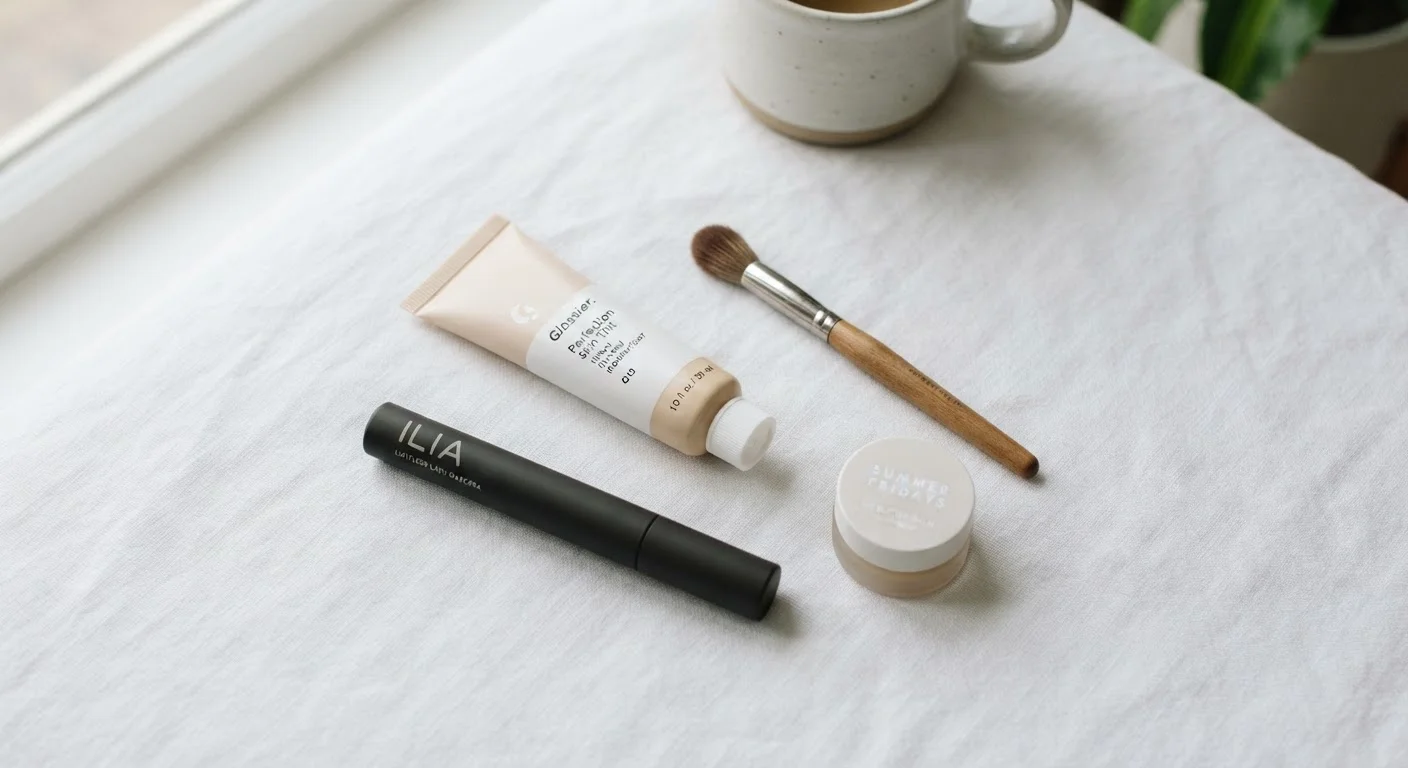
That's genuinely it. These five items can take you from zero to a cohesive, natural-looking everyday face — no brushes required for most of them.
Putting It Together: A Simple Daily Routine
Once your skin is prepped (more on that next), here's a straightforward order of application that keeps things efficient:
- Tinted moisturizer: Apply with clean fingertips, blending outward from the center of your face.
- Concealer: Dab under eyes and on any spots you want to minimize. Blend the edges gently.
- Brows: Use a clear gel to tame, or a tinted pencil for light definition. Work in short, hair-like strokes.
- Mascara: Wiggle the wand from the root to the tip of your lashes. One or two coats is plenty for a natural look.
- Tinted lip balm: Swipe on and you're done.
The entire process takes five to ten minutes once you're familiar with the products. Confidence builds quickly — within a week of daily practice, most steps become almost automatic.
This low-effort approach pairs well with a relaxed personal style. For ideas on outfits that match the same easy energy, check out outfit formulas that work across most occasions.
Skincare First: The Foundation Under Your Makeup
Makeup always performs better on well-prepped skin. A basic morning routine — cleanser, moisturizer, and SPF — creates a smooth, hydrated base that helps products blend easily and wear longer. If you're not sure where to start with skincare, a five-minute morning skincare routine covers the essentials concisely.
Let your moisturizer absorb for a minute or two before applying tinted moisturizer or concealer. This prevents pilling (when product rolls up into little flakes) and helps everything sit more naturally on the skin.
SPF and makeup: a quick note
Some tinted moisturizers and BB creams include SPF, which is a convenient bonus. However, the amount of tinted moisturizer most people apply isn't typically enough to deliver the labeled SPF protection on its own. Applying a dedicated SPF moisturizer underneath remains the more reliable approach for sun protection.
If you have specific skin concerns — persistent acne, rosacea, or very sensitive skin — a dermatologist can offer guidance on which product types and ingredients are most appropriate for you. General beauty content isn't a substitute for personalized skincare advice.
Keeping Your Products Fresh and Safe
One real advantage of a minimal makeup kit is that it's much easier to keep organized and hygienic. Makeup products don't last forever — expired products can harbor bacteria and cause skin irritation or eye infections.
As a general guide: replace mascara every three months after opening, and check liquid or cream products like tinted moisturizers and concealers every six to twelve months. Signs that a product has turned include a change in smell, texture, or color.
For a thorough walkthrough of what to keep, what to toss, and how to store things safely, The Makeup Bag Audit is a practical companion resource. Keeping a small kit makes this kind of regular check quick and painless.
Five-Minute Morning Skincare Routine
A concise beginner's guide to morning skincare using just cleanser, moisturizer, and SPF — the ideal prep layer before any makeup application.
The Makeup Bag Audit
A practical checklist for reviewing your makeup collection, covering expiry dates, contamination signs, and safe storage habits to keep your kit healthy.
This article is for general informational purposes only. It does not constitute medical or dermatological advice. If you have skin concerns, consult a qualified healthcare professional.
Frequently Asked Questions
Start with tinted moisturizer, mascara, and a tinted lip balm. These three products cover the basics with minimal effort and work across most skin tones and types. Add concealer once you feel comfortable.
Makeup applies and wears better over moisturized, prepped skin. Even a quick cleanser and moisturizer before applying makeup makes a noticeable difference in how the look holds through the day.
Look for stores with testers or generous return policies so you can try shades against your jawline in natural light. Many tinted moisturizers come in sheer formulas that blend well across a range of tones.
A minimal routine using four to five products typically takes five to ten minutes. With practice, most people get it down to under five minutes.
Yes — primer is optional, especially when using a tinted moisturizer. Once you're comfortable with the basics and want longer wear, primer is worth exploring as an add-on step.
Most mascara should be replaced every three months; tinted moisturizers and concealers typically last six to twelve months after opening. Check for changes in smell, texture, or color as signs a product has turned.
The content on this site is for informational purposes only and is not a substitute for professional advice. Always consult a qualified professional for guidance specific to your situation.