

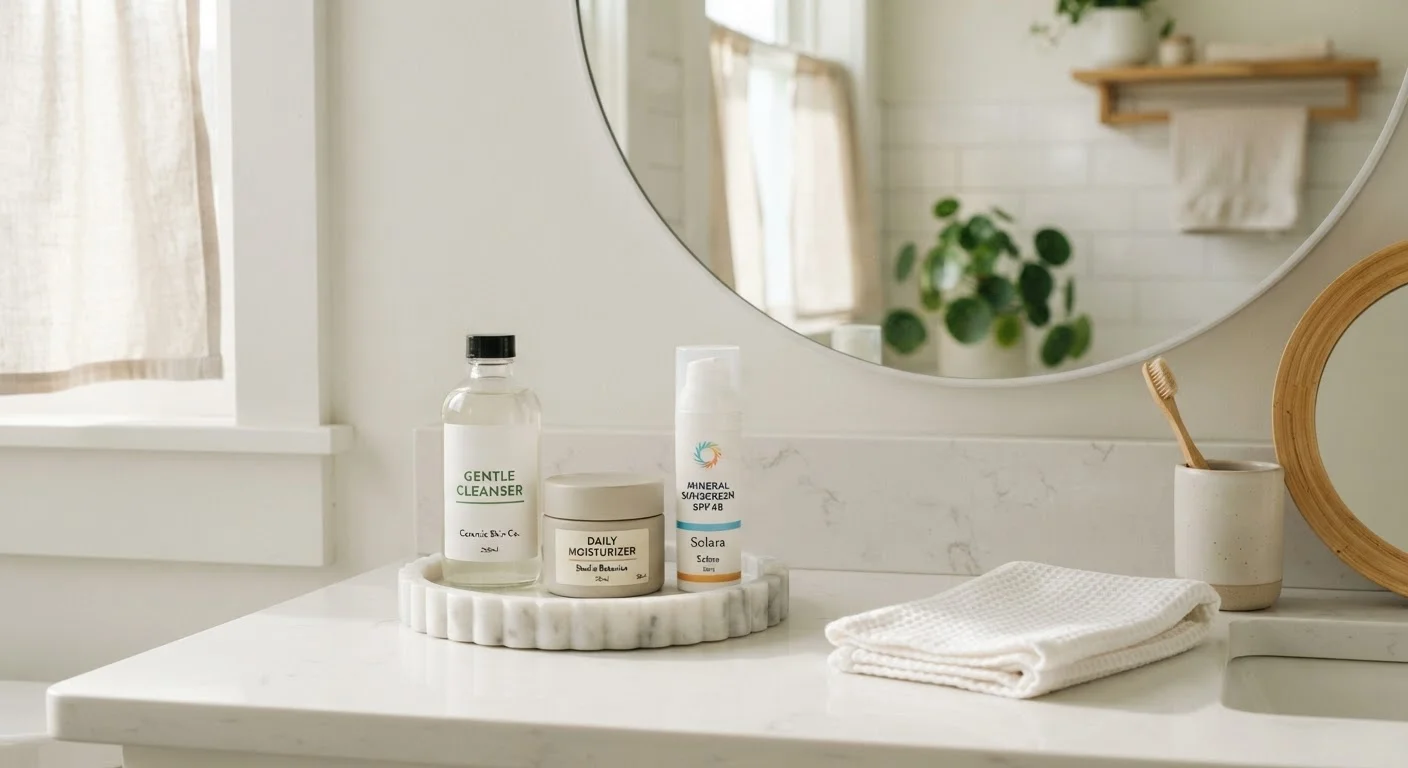
Why Three Steps Are Enough
The skincare aisle can feel overwhelming, but a solid morning routine doesn't require a dozen products or a 20-minute window. Dermatologists consistently point to three core steps as the foundation of any effective morning regimen: cleansing, moisturizing, and sun protection. Everything else — serums, toners, essences — builds on this base and is optional until you're ready to explore further.
Keeping it simple also makes consistency easier, and consistency is what actually moves the needle. A three-product routine you do every morning will serve your skin better than a complicated one you abandon by Thursday. If you're curious about eventually adding targeted treatments, our guide to layering skincare products explains how to sequence additional steps without undermining the ones you already have in place.
Gentle Facial Cleanser
Removes overnight oil buildup and preps skin to absorb the products that follow.
Facial Moisturizer
Replenishes hydration and helps maintain the skin's protective barrier throughout the day.
Broad-Spectrum Facial Sunscreen (SPF 30+)
Shields skin from UVA and UVB rays to reduce the risk of sun damage.
Soft Face Towel or Microfiber Cloth
Gently pats skin dry without causing friction or irritation.
Before you begin, gather your three products and read the label on each — particularly the sunscreen. Some chemical sunscreens recommend applying 15–20 minutes before sun exposure to reach full effectiveness, so it's worth knowing your formula.
What you will need
Your Three-Step Morning Routine
Avoid Over-Cleansing in the Morning
Unless your skin is visibly dirty or very oily, a gentle rinse with water (or a mild cleanser) is sufficient in the morning. Using a strong or foaming cleanser twice daily can strip the skin's natural moisture barrier, leading to dryness, irritation, or increased sensitivity.
Cleanse gently
Wet your face with lukewarm water — hot water can break down the skin barrier over time. Apply a small amount of cleanser (about the size of a nickel) and massage it in using gentle circular motions for 30–60 seconds. Rinse thoroughly and pat — don't rub — dry with a clean towel.
Dry or sensitive skin: A creamy or micellar-water cleanser is a good starting point. Oily or combination skin: A gel or foaming formula helps manage excess sebum without over-stripping.
Apply moisturizer while skin is slightly damp
While your skin is still lightly damp — not dripping — apply your moisturizer. Dampness helps the product absorb more effectively and lock in hydration. Use upward, gentle strokes across your cheeks, forehead, nose, and chin, and don't forget your neck.
Dry skin: Richer creams with ingredients like ceramides or glycerin provide deeper hydration. Oily skin: Lightweight gels or oil-free lotions work well. Sensitive skin: Fragrance-free formulas reduce the chance of irritation.
Apply sunscreen as the final step
Once your moisturizer has had a moment to settle — about 60 seconds is plenty — apply a generous, even layer of facial sunscreen. Most guidelines suggest about a quarter-teaspoon for the face and neck. Blend it in fully, making sure to cover the hairline, jawline, and the often-missed area around the eyes.
Mineral sunscreens (zinc oxide, titanium dioxide) tend to be gentler on sensitive skin. Chemical sunscreens typically absorb more invisibly, which many people prefer under makeup. Either type provides effective protection when applied correctly.
SPF Is Non-Negotiable in the Morning
UV exposure is a leading driver of premature skin aging and increases the risk of skin cancer — both on sunny and overcast days. Dermatologists broadly recommend applying a broad-spectrum SPF 30 or higher every morning as part of any skincare routine. No other step in a morning routine replaces this protection.
Oily Skin Still Needs Moisturizer
Skipping moisturizer when you have oily skin can actually backfire — skin may overproduce oil to compensate for dehydration. Look for gel-based or oil-free formulas labeled 'non-comedogenic,' which means they're formulated to avoid clogging pores. A lightweight layer goes a long way.
Adapting Your Routine as Conditions Change
Once your core three-step routine feels natural, it's worth knowing that skin needs aren't static. Cold, dry winters can call for a heavier moisturizer, while humid summers might be the moment to switch to a lighter gel texture. If you want a deeper look at seasonal adjustments, our article on skincare across the seasons walks through practical changes for each climate shift.
If you're building a broader self-care practice and prefer a minimal approach to makeup as well, our everyday makeup for low-effort looks pairs well with this foundation. And if you'd like to round out your regimen with an evening counterpart, our nighttime skincare roadmap for beginners covers what to do after the sun goes down.
This article is for general informational purposes only. If you have a skin condition, persistent irritation, or concerns about a specific ingredient, consult a licensed dermatologist or healthcare professional for personalized guidance.
The content on this site is for informational purposes only and is not a substitute for professional advice. Always consult a qualified professional for guidance specific to your situation.