

Why Order Actually Matters
Skincare layering isn't about following a rigid ritual for its own sake — it's about making sure the products you buy actually reach your skin and do their job. Apply a thick moisturizer before a water-based serum and you've essentially created a barrier the serum can't penetrate. Use a face oil before an SPF and you've diluted your sun protection.
The guiding principle is simple: thinnest texture to thickest. Lightweight, water-based formulas absorb quickly and need direct contact with skin. Heavier creams and oils form a physical layer that locks everything in. Get that order right and every product works harder.
Before you build your routine, it helps to understand your skin type — the skin types guide explains what oily, dry, combination, and sensitive skin actually mean for the products you need. And if you want to decode exactly what's in your serums and creams, reading a skincare label walks you through ingredient lists in plain language.
What you will need
What You'll Need
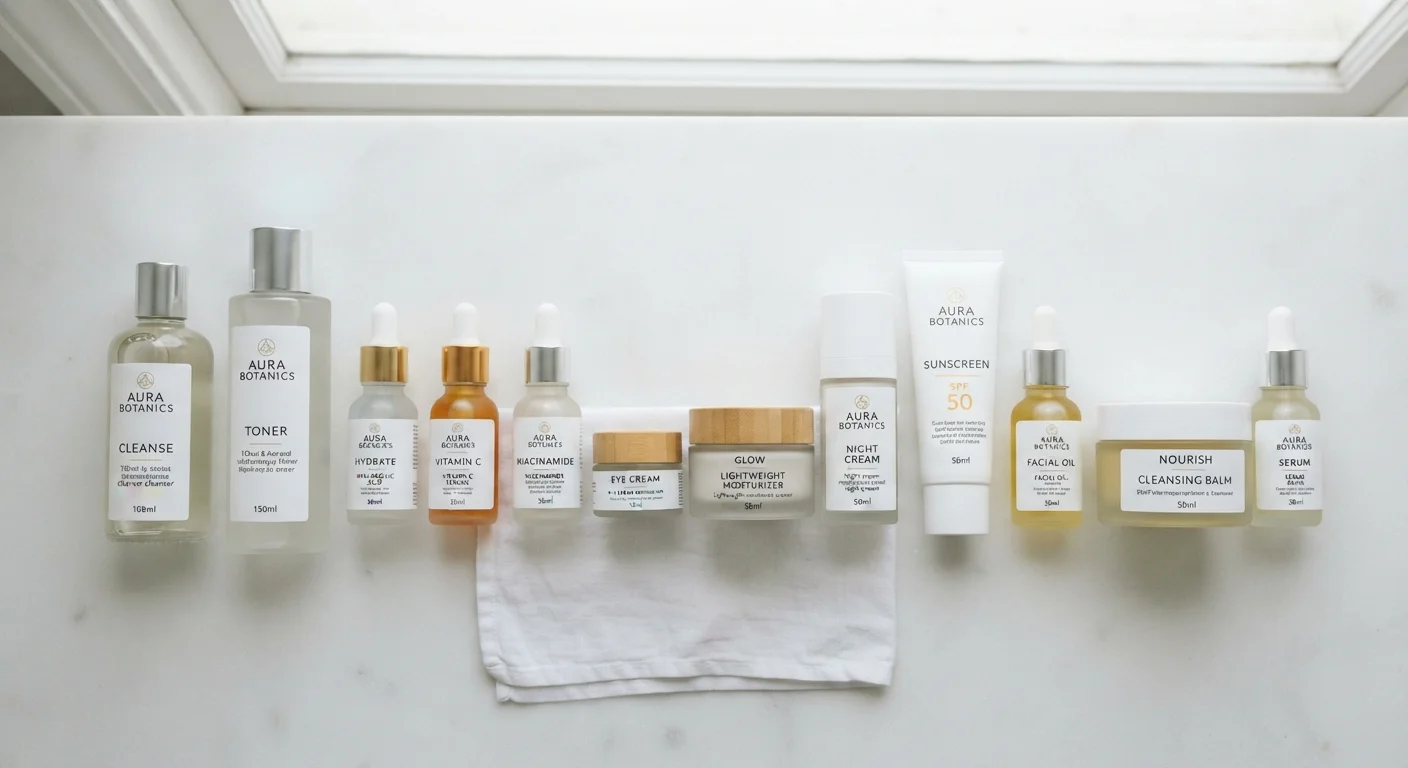
You don't need a ten-step shelf to layer effectively — even a three-product routine benefits from the right sequence. Below are the products that commonly appear in layered routines, from truly essential to genuinely optional.
Cleanser
Removes dirt, oil, and residue to give the skin a clean surface before layering products.
Toner or essence
Balances skin pH and provides an initial layer of hydration right after cleansing.
Serum
Delivers concentrated active ingredients — such as hyaluronic acid or vitamin C — to the skin.
Eye cream
Applies targeted treatment to the delicate under-eye area before heavier products.
Moisturizer
Hydrates and seals in previous layers, maintaining the skin barrier.
Face oil
Locks in moisture as the last or near-last step in an evening routine.
Broad-spectrum SPF sunscreen
Protects the skin from UV damage; always applied as the final morning skincare step.
The Layering Steps
Follow these steps in order each morning and evening, skipping any that don't apply to your current routine. The morning sequence ends with sunscreen; the evening sequence may end with a face oil or a richer moisturizer instead.
Cleanse
Start with a clean slate. Wash your face with a gentle cleanser suited to your skin type — this removes overnight buildup, sunscreen, makeup, and environmental residue. Pat your skin dry with a clean towel, leaving it slightly damp if you plan to follow immediately with a toner or hydrating serum.
Apply toner or essence (optional)
If your routine includes a toner or essence, this is where it goes — right after cleansing and before any treatment products. Toners can help rebalance skin pH and add a base layer of hydration. Pat a small amount gently into the skin with your hands rather than dragging a cotton pad across your face.
Apply treatments and serums
Serums are typically the thinnest liquid in your routine and pack the highest concentration of active ingredients, so they go on before any heavier products. Apply a few drops, press gently into the skin, and allow 30–60 seconds before moving on. If you use more than one serum, layer thinnest to thickest.
Spot treatments for acne or hyperpigmentation also belong at this stage — on clean skin, before moisturizer seals things in.
Apply eye cream (optional)
Eye creams are formulated for the thin, delicate skin around the eye area. Use your ring finger — it applies the lightest pressure — to pat a small amount along the orbital bone, moving from the inner corner outward. Apply this before moisturizer so the lighter formula isn't blocked by a heavier cream.
Moisturize
Moisturizer seals in the layers beneath it and supports your skin's barrier function. Use a formula appropriate for your skin type — a lightweight gel-cream for oily skin, a richer cream for dry skin. Warm a small amount between your palms and press it into the skin rather than rubbing vigorously.
Not sure which formula suits you? The skin types guide breaks down what each skin type actually needs from a moisturizer.
Apply face oil (evening only, optional)
Face oils are occlusive — they sit on top of the skin and slow moisture loss. Because they can block absorption of water-based products, they belong at or near the end of your routine. In the evening, apply a few drops after moisturizer and press gently into the skin. Most people skip face oil in the morning, particularly if they have oily or combination skin.
Apply sunscreen (morning only)
Every morning routine ends with a broad-spectrum sunscreen of SPF 30 or higher — after all skincare products, before any makeup. Apply it generously to your face and neck, and don't forget areas like the ears and the top of the hands.
Sunscreen Must Be Your Last Skincare Step
Applying anything over sunscreen — including moisturizer or a facial oil — dilutes the SPF and compromises its protective ability. In the morning, sunscreen goes on after all other skincare and before any makeup. This applies to every skin type, every day, regardless of the weather.
Don't Mix Certain Actives in the Same Layer
Some ingredients — like retinol and vitamin C, or AHAs and niacinamide — can interact unpredictably when applied simultaneously, potentially causing irritation or reducing effectiveness. If your routine includes active ingredients, use them at different times of day or on alternate nights. When in doubt, introduce new actives one at a time and give your skin a week to adjust.
Common Layering Mistakes and How to Avoid Them
Give Each Layer a Moment to Settle
You don't need to wait five minutes between every step, but a quick 30–60 second pause after serums and treatments makes a real difference. It prevents products from balling up or pilling and gives actives a chance to start absorbing before you seal them in with moisturizer.
One of the most common errors is applying too many products at once, creating a heavy film that sits on top of the skin rather than absorbing into it. Less is often more — a well-ordered three-step routine will outperform a chaotic seven-step one.
Another frequent mistake is skipping sunscreen on overcast days or when spending most of the day indoors near windows. UV rays penetrate cloud cover and glass, so a daily SPF habit is worth building year-round.
For those new to active ingredients like retinol or AHAs, the sequencing question quickly becomes a safety question too. Our retinol guide gives an honest overview of who benefits and when to be cautious. If you're building a nighttime routine from scratch, this beginner's roadmap covers every evening step in detail.
This article is for general informational and educational purposes only. It is not a substitute for advice from a qualified dermatologist or healthcare professional. If you experience persistent skin concerns, consult a licensed skincare or medical professional.
The content on this site is for informational purposes only and is not a substitute for professional advice. Always consult a qualified professional for guidance specific to your situation.