

Start here
Start With a Clear Picture of What You Need
Next
Set a Realistic Clothing Budget
Then
Build Around a Core Set of Versatile Pieces
When you're ready
Smart Shopping Habits That Stretch Every Dollar
Finally
Care for Your Clothes So They Last
Start With a Clear Picture of What You Need
Before spending a single dollar, take stock of your actual life. A wardrobe built around your real daily routine will serve you far better than one assembled around who you wish you were or who you used to be. Think honestly: How do you spend most of your days — office work, physical labor, casual errands, or a mix? What occasions genuinely come up each month?
If you already have some clothes, a quick audit is worth doing first. Our wardrobe planning checklist walks you through identifying what you already own, what's missing, and what's just taking up space. You may also find that restyling what you have already covers more ground than expected — getting more mileage from your existing clothes is a smart first move before opening your wallet.
Cost-per-wear
The actual cost of a garment divided by the number of times you wear it. A higher-priced item worn frequently can cost less per wear than a cheaper item worn rarely.
Capsule wardrobe
A small, curated collection of versatile clothing pieces that can be mixed and matched to create a wide variety of outfits, minimizing the total number of items needed.
Core wardrobe
The foundational pieces that cover your everyday clothing needs — items worn regularly and that pair easily with most other pieces you own.
Off-season shopping
Buying seasonal clothing (like winter coats or summer dresses) at the end of that season, when prices are typically reduced to clear remaining inventory.
Wardrobe audit
A deliberate review of all the clothing you currently own, assessing what fits, what you actually wear, and what genuine gaps exist before making any new purchases.
Set a Realistic Clothing Budget
Clothing spending works best when it's a deliberate line item in your monthly budget — not something that just happens. If you've never set up a budget before, our plain-English budgeting guide is a helpful starting point, with no financial jargon required. More general strategies live in our Budgeting Basics hub.
When building from scratch, it often makes sense to set a slightly higher one-time allocation for the foundation phase, then drop to a smaller monthly maintenance amount. Spreading purchases across several months prevents sticker shock and gives you time to assess each piece before buying the next. Think in terms of cost-per-wear: a $30 shirt worn 60 times is a better investment than a $10 shirt worn twice.
Build Gradually, Not All at Once
Resist the urge to replace everything in a single shopping trip. Buying one or two well-considered pieces per month lets you assess fit, versatility, and how much you actually reach for each item before committing more money. This slow-and-steady approach almost always results in a more cohesive, useful wardrobe.
Build Around a Core Set of Versatile Pieces
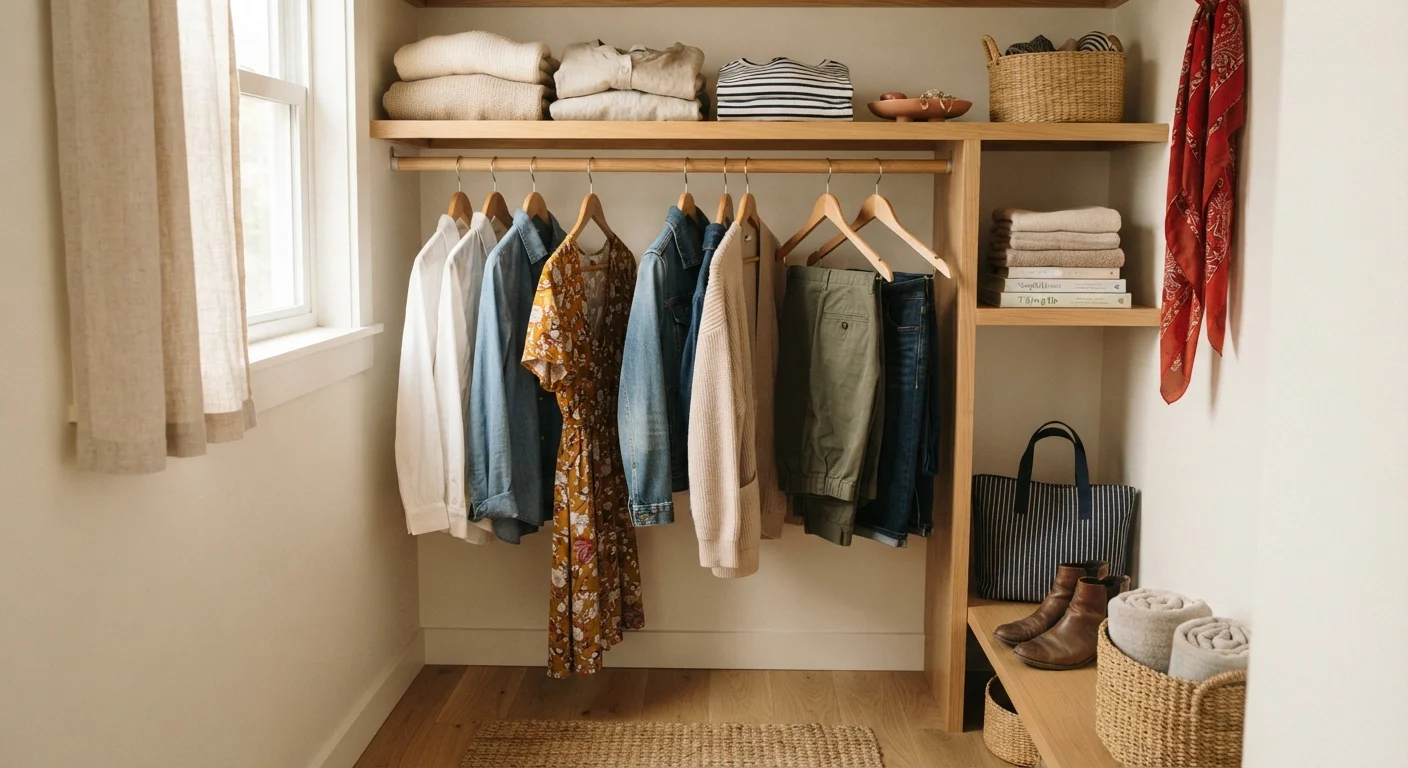
A functional starter wardrobe isn't about volume — it's about versatility. Aim for pieces that mix and match easily across multiple outfits. Neutral tones (white, gray, navy, tan, black) tend to combine most flexibly, though your personal color preferences matter too. Our guide on neutral vs. bold color strategies can help you find the right balance for your style.
A practical starting framework for most adults might include:
- Two or three well-fitting bottoms (pants, jeans, or skirts suited to your lifestyle)
- Four to five tops in neutral or versatile tones
- One or two layering pieces (a cardigan, jacket, or hoodie)
- One pair of shoes that works for most daily situations
- Undergarments and basics in sufficient quantity for a full week
Every item you add should connect to at least three others already in your collection. If it only pairs with one specific outfit, it's a specialty item — not a wardrobe foundation piece.
Smart Shopping Habits That Stretch Every Dollar
Where and how you shop matters as much as what you buy. Thrift stores and consignment shops can yield quality garments at a fraction of their original cost — the inventory changes constantly, so visiting regularly pays off. Clothing swaps with friends or community groups are another low-cost option worth exploring.
Shopping off-season (buying winter pieces in late winter, summer pieces in late summer) tends to surface significant markdowns at traditional retailers. Online resale platforms have also made it easier to find specific items at reduced prices, though it's worth factoring in return policies before purchasing.
Watch Out for "Deal" Mindset Traps
Buying something just because it's marked down — rather than because it fills a genuine need — is one of the fastest ways to overspend on a wardrobe. A low price on an item you'll rarely wear is still money spent. Always check a potential purchase against your actual wardrobe gaps before adding it to your cart.
When evaluating any garment, check the fabric content and seam construction — not just the price. Thicker fabrics, reinforced seams, and natural fiber blends often signal better durability. A slightly higher upfront cost on a well-made piece can mean far fewer replacements over time.
As your wardrobe evolves across seasons, our guide to seasonal wardrobe transitions offers practical strategies for staying relevant year-round without constant new purchases.
Care for Your Clothes So They Last
Even the most budget-friendly wardrobe becomes expensive if items wear out quickly from poor care. Following garment care labels is the single most effective step most people overlook. Washing in cold water, air-drying when possible, and using the appropriate wash cycle for each fabric type can meaningfully extend a garment's life.
Store clothes properly — folded knitwear rather than hanging it (which causes stretching), and hanging structured pieces like blazers and collared shirts. Address small repairs like loose buttons or minor seam splits promptly; left unattended, they become bigger problems that can sideline a garment permanently.
Building a wardrobe from scratch is genuinely empowering — it's one of the most tangible ways to make intentional choices about how you present yourself to the world each day. Start small, stay intentional, and remember that a well-curated handful of clothes you actually wear is worth far more than a cluttered closet full of near-misses.
Frequently Asked Questions
There's no magic number, but many style experts suggest that 10–15 well-chosen, mix-and-match pieces can cover most everyday situations. The key is versatility — each item should work with at least three others in your closet. Quality and fit matter more than quantity.
Yes, absolutely. Thrift stores, clothing swaps, and shopping end-of-season sales are all legitimate ways to acquire quality pieces at a fraction of retail prices. Starting small and adding gradually is far more budget-friendly than trying to assemble everything at once.
Prioritize pieces that fit your actual daily life — work, errands, and any regular activities. A few well-fitting bottoms, neutral tops, one layering piece, and a versatile pair of shoes typically form a solid foundation for most lifestyles.
Neutrals tend to offer more mix-and-match flexibility, which is especially valuable when building from scratch on a limited budget. Once you have a reliable base, adding a few bolder pieces becomes much easier. Our article on <a href="/style-beauty/everyday-fashion/neutral-vs-bold-choosing-a-color-strategy-for-your-everyday-wardrobe">choosing a color strategy</a> explores this in depth.
Shopping with a written list of specific gaps — rather than browsing open-endedly — is one of the most effective ways to avoid impulse purchases. Setting a per-trip spending limit also helps. If you're unsure about an item, a simple waiting period (24–48 hours) often clarifies whether it's a genuine need.
Only after your core, everyday wardrobe feels stable and genuinely functional. Trend pieces are most enjoyable and least wasteful when they complement a solid foundation rather than replace one. Shopping seasonal items after the season peaks can also reduce their cost significantly.
The content on this site is for informational purposes only and is not a substitute for professional advice. Always consult a qualified professional for guidance specific to your situation.