

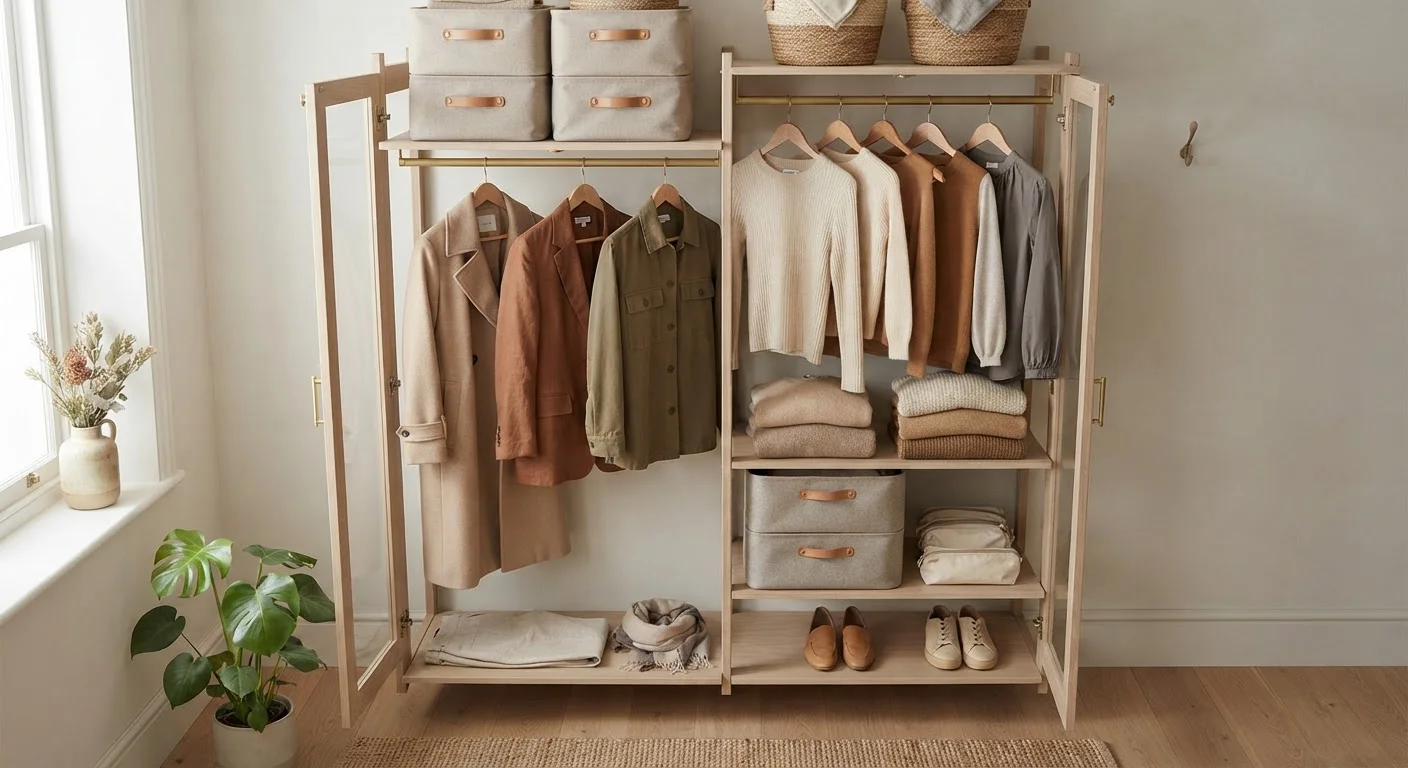
Why Seasonal Transitions Feel Harder Than They Should
Every time the weather shifts, many people feel a familiar pull — the sense that nothing in the closet quite fits the moment. But that feeling is usually a wardrobe structure problem, not a wardrobe size problem. As explored in our breakdown of the "nothing to wear" phenomenon, the real issue is often a lack of intentional organization, not a shortage of clothes.
Seasonal transitions are the moment those structural gaps become most visible. The good news: once you understand what's actually happening, the fixes are practical, low-cost, and surprisingly satisfying.
Transition Seasons Vary by Region
"Seasonal transition" looks very different in Minnesota than in Southern California. The layering and storage strategies here are adaptable to any climate — what matters is building habits around your local weather patterns, not a generalized four-season calendar. Adjust timing and piece selection to what your actual winters and summers demand.
Best Practices for Smooth Seasonal Wardrobe Transitions
These proven approaches help you move between seasons confidently — using what you already own as the foundation.
Conduct a season-end audit before packing anything away.
Storing clothes you no longer wear wastes prime closet space and means you'll rediscover unwanted items six months later. An audit lets you make clear decisions — keep, donate, or repair — while the season is fresh in your memory.
Build your transition wardrobe around layers, not temperature-specific pieces.
A single lightweight jacket, a few long-sleeve shirts, and a versatile mid-layer can cover an enormous range of temperatures. Pieces that only function in one narrow climate window are the first to create that "nothing to wear" feeling when weather shifts unpredictably.
Store off-season clothes properly to protect their condition.
Clothes that emerge from storage wrinkled, musty, or moth-damaged feel like a loss rather than a rediscovery. Proper storage — folded knits flat, hanging structured pieces, using breathable bags — means off-season items return feeling almost new.
Identify your true transition-season wardrobe before buying anything new.
Most people already own enough pieces to get through a seasonal transition — they just haven't identified them. Deliberately pulling and grouping those pieces makes them visible and usable, which reduces the perceived need to shop.
Rotate your closet physically, not just mentally.
Out-of-sight clothing becomes out-of-mind clothing. A physical swap — moving summer items to the back or to storage and bringing forward the next season's pieces — changes what you reach for naturally each morning.
Quick Wins You Can Do This Weekend
You don't need a full weekend overhaul to make meaningful progress. The actions below take anywhere from ten minutes to an hour and create real momentum. Before reaching for anything new, run through the wardrobe planning checklist to confirm you're identifying genuine gaps rather than impulse wants.
Building a Wardrobe That Transitions Naturally
The longer-term goal isn't just surviving each seasonal switch — it's building a wardrobe that flows between seasons with minimal friction. That means leaning into pieces that do double or triple duty: a lightweight merino crewneck that works under a blazer in October and alone in March; dark straight-leg trousers that pair with sandals in September and ankle boots in November.
Color strategy plays a bigger role here than most people realize. A wardrobe built around a consistent color palette makes cross-season mixing dramatically easier — you can read more in our guide on choosing a color strategy for your everyday wardrobe. Meanwhile, if you're filling genuine gaps rather than browsing out of habit, understanding the real trade-offs between secondhand and fast fashion can help you make smarter acquisition decisions.
The "First Cold Week" Test
When the first genuinely cold week of fall arrives, pay attention to what you automatically reach for — those are your anchor transition pieces. Build the rest of your seasonal wardrobe around them rather than starting from scratch. This tells you more about your actual style preferences than any seasonal trend guide.
For anyone who feels perpetually overwhelmed by their closet despite owning plenty, the capsule wardrobe concept offers a structured framework worth exploring. And if you want to maximize what's already hanging in your closet before the season fully shifts, getting more mileage out of what you already own is a practical next step.
~50%
Clothes in the average closet rarely worn
Research and wardrobe studies consistently find that people regularly wear roughly half or fewer of the clothes they own, suggesting significant untapped wardrobe potential.
3–4x
More outfits possible with intentional layering
Style educators and capsule wardrobe researchers note that strategic layering can multiply the number of usable outfit combinations from a fixed set of pieces.
The content on this site is for informational purposes only and is not a substitute for professional advice. Always consult a qualified professional for guidance specific to your situation.