

Why Outfit Formulas Actually Work
Getting dressed shouldn't feel like a daily puzzle. Outfit formulas — repeatable clothing combinations that rely on consistent principles of proportion, color, and layering — take the cognitive load out of morning decisions while still producing looks that feel intentional and polished. Think of them as a reliable framework, not a uniform.
The underlying logic is simple: when you trust the structure, you free up mental energy for everything else. Research on decision fatigue suggests that the more low-stakes choices we make early in the day, the less capacity we have for meaningful ones later. A go-to formula sidesteps that drain entirely.
The formulas below are deliberately broad. They don't require specific garments or price points — they work on the clothes you likely already own. For a deeper look at how fit and proportion underpin all of this, see the enduring principles behind dressing well at any price point.
The Monochromatic Tone Stack
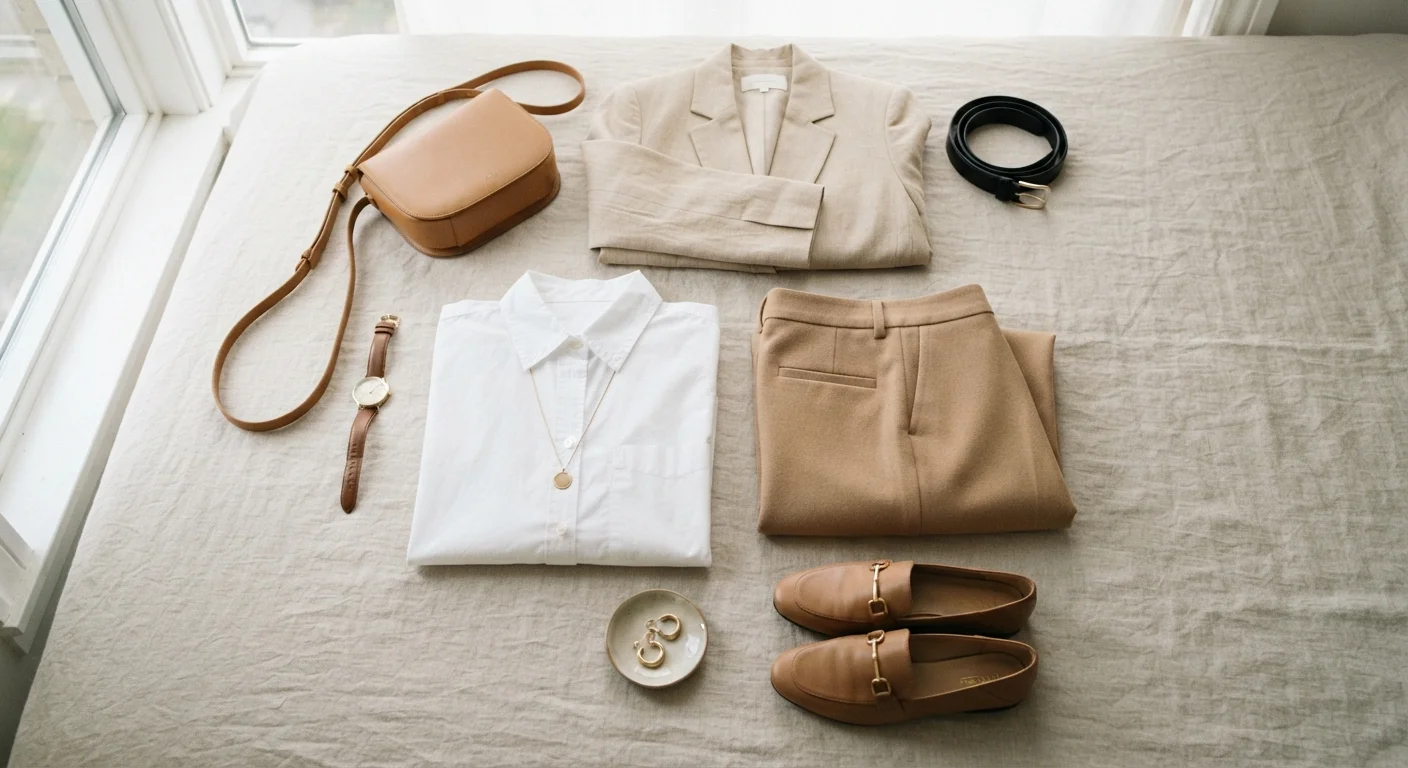
Wearing one color family head to toe — varying shades rather than matching exactly — creates an immediately cohesive look with almost zero effort. A pale cream top with warm tan trousers and camel shoes reads as curated, not accidental. The same principle works in navy, grey, or olive.
The visual effect of elongation and simplicity makes this formula particularly forgiving across body types. For more on how proportion and color interact with different silhouettes, dressing for your body shape offers grounded, research-backed perspective.
Tonal dressing requires no color-matching skill — just variations of one hue, which almost always work together.
The Relaxed Trouser + Fitted Top Equation
Balancing volume is one of the most consistent principles in styling: if the bottom is wide or relaxed, the top should be closer-fitting, and vice versa. A straight-leg or wide-leg trouser paired with a tucked-in fitted tee or ribbed top keeps the silhouette grounded without looking overdone.
This formula transitions easily from weekend to low-key office environments. Swap sneakers for loafers and add a structured bag, and the same outfit reads several notches more formal — no outfit change required.
Balancing a relaxed bottom with a fitted top is one of the simplest silhouette principles that reliably works.
The Three-Layer Casual Formula
Layering creates visual depth and gives you flexibility as temperatures shift. The classic three-layer casual stack: a basic tee or tank as a base, a mid-layer like an open shirt, zip-up, or light knit, and a denim or chore jacket on top. Each layer should be slightly longer than the one beneath it for a natural, cascading effect.
Sticking to a consistent color palette across all three layers — say, white, soft blue, and mid-wash denim — keeps the look cohesive rather than cluttered. The capsule wardrobe concept is built around this kind of intentional layering logic.
Three layers in a harmonious color palette offer built-in flexibility for shifting temperatures and settings.
The Elevated Basics Formula
A well-fitted dark trouser or structured chino paired with a plain, high-quality-looking top and clean, simple shoes is one of the most cross-occasion reliable formulas in existence. It reads polished in most professional settings, works for casual dinners, and handles semi-formal events with the right accessories.
The elevation comes from fit and fabric rather than fussiness. A smooth knit or a neat button-down tucked in reads notably more intentional than a boxy tee, even in the same pair of trousers. Fabric selection matters more here than most people expect.
Dark trousers plus a well-fitted top in a smooth fabric is arguably the most universally occasion-appropriate combination.
The Statement-Piece Anchor
Build an outfit around one intentional piece — a patterned skirt, a textured blazer, a boldly colored shirt — and let everything else recede into neutrality. The anchor piece does all the work; surrounding it with understated basics ensures it reads as a style choice rather than visual noise.
This formula is especially useful for people who want personality in their wardrobe without complexity. One interesting piece per outfit, reliably paired with solid neutrals, keeps the getting-dressed process simple while still producing results that feel distinct and personal.
One statement piece surrounded by quiet neutrals consistently produces a look that feels thoughtful and confident.
The Dress-Plus-Layer Shortcut
A simple solid or subtly patterned dress becomes a multi-occasion workhorse when treated as a base layer. Add an oversized denim jacket and sandals for daytime; swap to a blazer and ankle boots for an evening event or work meeting. The dress itself stays the same — the outerwear and footwear shift the register entirely.
This formula is one of the most efficient in terms of cost-per-wear, since a single dress generates several distinct looks. If formalwear occasions come up, renting vs. owning formalwear explores when it makes practical and financial sense to own versus rent for specific events.
A simple dress treated as a base layer can shift from casual to semi-formal with only outerwear and footwear changes.
Putting It All Together
None of these formulas require a closet overhaul. They're designed to work with what you already own — and if you're not sure what you're actually working with, getting more mileage out of the clothes already in your closet is a smart place to start before buying anything new.
Start With What You Already Own
Before testing any formula, do a quick inventory of what you have. Most people own more versatile pieces than they realize — they just haven't been combined intentionally. Pull out your neutral bottoms, your basic tops, and any layering pieces, and try mapping them to these formulas first. Buying new should come after you've exhausted what's already hanging in your closet.
Color strategy also plays a bigger role than most people realize. Whether you gravitate toward neutrals or prefer bolder combinations, choosing a color strategy for your everyday wardrobe can help you decide which approach suits your lifestyle and budget. For event-specific dressing, dressing for a dress code you don't fully understand breaks down the terminology so you can adapt any of these formulas with confidence.
The content on this site is for informational purposes only and is not a substitute for professional advice. Always consult a qualified professional for guidance specific to your situation.