

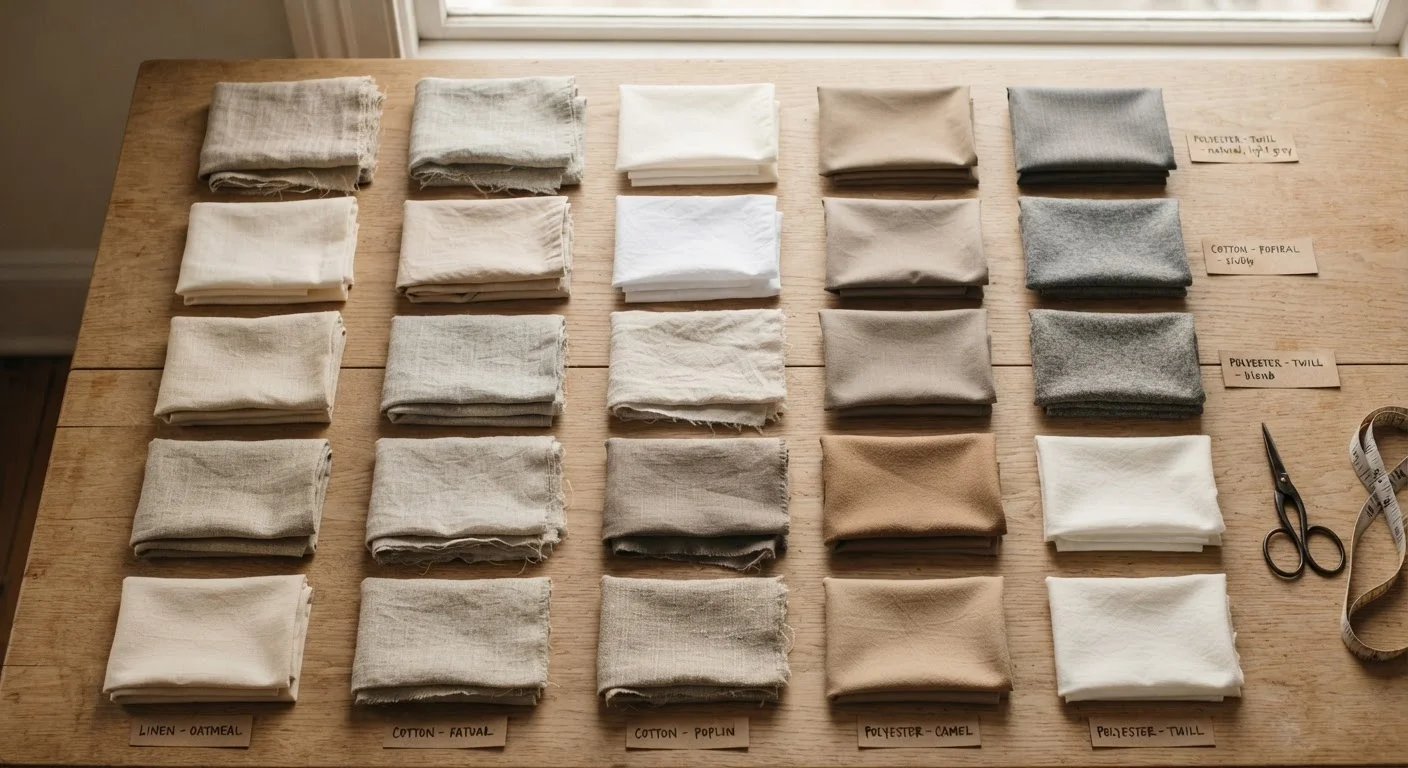
Why Fabric Choice Actually Matters
Most of us pick clothes by color, fit, or price — and fabric is an afterthought at best. But what a garment is made of determines how it feels against your skin, how long it lasts, whether it wrinkles after five minutes, and whether it traps heat or lets it escape. Learning to read a care label is one of the most practical wardrobe skills you can develop.
This guide walks through the most common everyday fabrics in plain language — no textile-industry jargon required. Use it as a quick reference next time you're standing in a store or scrolling a product page wondering what exactly "poly-rayon blend" means for your Tuesday commute. And if you're already building a smarter closet, see our outfit formulas that work across most occasions for ways to put these fabrics to work.
| Most common everyday fabric | Cotton (U.S. apparel market data, general industry consensus) |
| Best for wrinkle resistance | Polyester or poly blends |
| Best for hot, humid weather | Linen or lightweight cotton |
| Most delicate to wash | Rayon / viscose |
| Label requirement (U.S.) | FTC requires fiber content and care instructions on all clothing (Federal Trade Commission, Textile and Wool Acts) |
| Typical spandex content for stretch | 2–5% of total fabric weight |
The Big Four: Cotton, Polyester, Linen, and Rayon
These four materials make up the majority of everyday American clothing. Here's what each one actually delivers:
Cotton
Feel: Soft, breathable, familiar. Pros: Absorbs moisture, gentle on skin, widely available at all price points, easy to wash. Cons: Wrinkles easily, can shrink in hot water, and takes a while to dry. Best for: T-shirts, underwear, casual pants, and anything worn close to the skin in warm weather.
Polyester
Feel: Smooth to slick depending on the weave. Pros: Durable, wrinkle-resistant, holds color well, dries fast, and is typically more affordable. Cons: Traps heat and can feel clammy when you sweat; some people find it uncomfortable in high humidity. Best for: Activewear, work uniforms, travel clothing, and any situation where you need low-maintenance durability.
Linen
Feel: Crisp and slightly textured when new; softens with each wash. Pros: Extremely breathable, gets softer over time, has a relaxed, elevated look. Cons: Wrinkles almost on contact — this is part of its character, but it's not for everyone. Best for: Hot-weather dressing, casual warm-weather occasions, and weekend wear.
Rayon (Viscose)
Feel: Silky, lightweight, and drapey. Pros: Breathable, flattering drape, often more affordable than silk, takes dye beautifully. Cons: Weakens when wet, can shrink or distort if machine-washed aggressively, and may require hand washing or dry cleaning. Best for: Blouses, flowy dresses, and any layered look where you want movement and flow.
Natural fiber
A fiber derived directly from plants or animals, such as cotton, linen, wool, or silk. Natural fibers are often breathable and biodegradable, though care requirements vary.
Synthetic fiber
A fiber made from chemically produced materials, most commonly petroleum-derived polymers like polyester and nylon. Synthetics tend to be durable, wrinkle-resistant, and moisture-wicking.
Rayon / Viscose
A semi-synthetic fiber made by processing plant-based cellulose (often wood pulp) into a soft, drapey fabric. It behaves similarly to natural fibers but requires careful washing.
Fabric blend
A fabric woven or knit from two or more different fiber types to combine their properties, such as cotton-polyester blends that balance softness and durability.
Elastane / Spandex
A synthetic fiber known for extreme stretch and recovery. Added in small percentages to other fabrics to provide flexibility without bulk.
Modal
A type of rayon made from beech tree cellulose. It is generally softer and more resistant to shrinkage than standard rayon, and is commonly used in loungewear and intimates.
Blends, Specialty Fabrics, and Reading Labels
Many garments combine two or more fibers to get the best of each. A cotton-polyester blend, for example, brings cotton's softness together with polyester's wrinkle resistance and durability — you'll see this in everything from dress shirts to casual tees. A linen-rayon blend softens linen's stiffness while keeping it breathable.
Blends Aren't a Red Flag
Seeing "60% cotton, 40% polyester" on a label isn't a sign of low quality — it's often an intentional design choice to improve performance. Blends can make a garment more affordable, longer-lasting, or easier to care for. The key is knowing what you're getting so you can decide if it suits your needs and lifestyle.
A Few Specialty Fabrics Worth Knowing
- Wool: Naturally temperature-regulating and odor-resistant; works in cold and surprisingly mild weather. Requires gentle care.
- Spandex / Elastane: Almost never used alone — added in small percentages (2–5%) to give stretch to jeans, swimwear, and athletic wear.
- Modal: A type of rayon made from beech tree pulp, often softer and more durable than standard rayon. Common in loungewear and underwear.
- Nylon: Tough, lightweight, and water-resistant; common in outdoor gear, leggings, and hosiery.
Reading a Care Label
U.S. garments are required by the FTC to carry a permanent care label listing fiber content and care instructions. If the label says "dry clean only," that's the manufacturer's recommendation — ignoring it risks damage. When in doubt with delicate fabrics, hand washing in cool water and air drying is a safe default for most non-structured garments.
Once you understand what your clothes are made of, you can also get more life out of them — check out our piece on getting more mileage out of the clothes already in your closet for practical techniques. And if you're curious about the environmental side of fabric choices, style and sustainability: what everyday shoppers should actually know offers an honest breakdown of what terms like "eco-friendly" actually mean.
The content on this site is for informational purposes only and is not a substitute for professional advice. Always consult a qualified professional for guidance specific to your situation.