

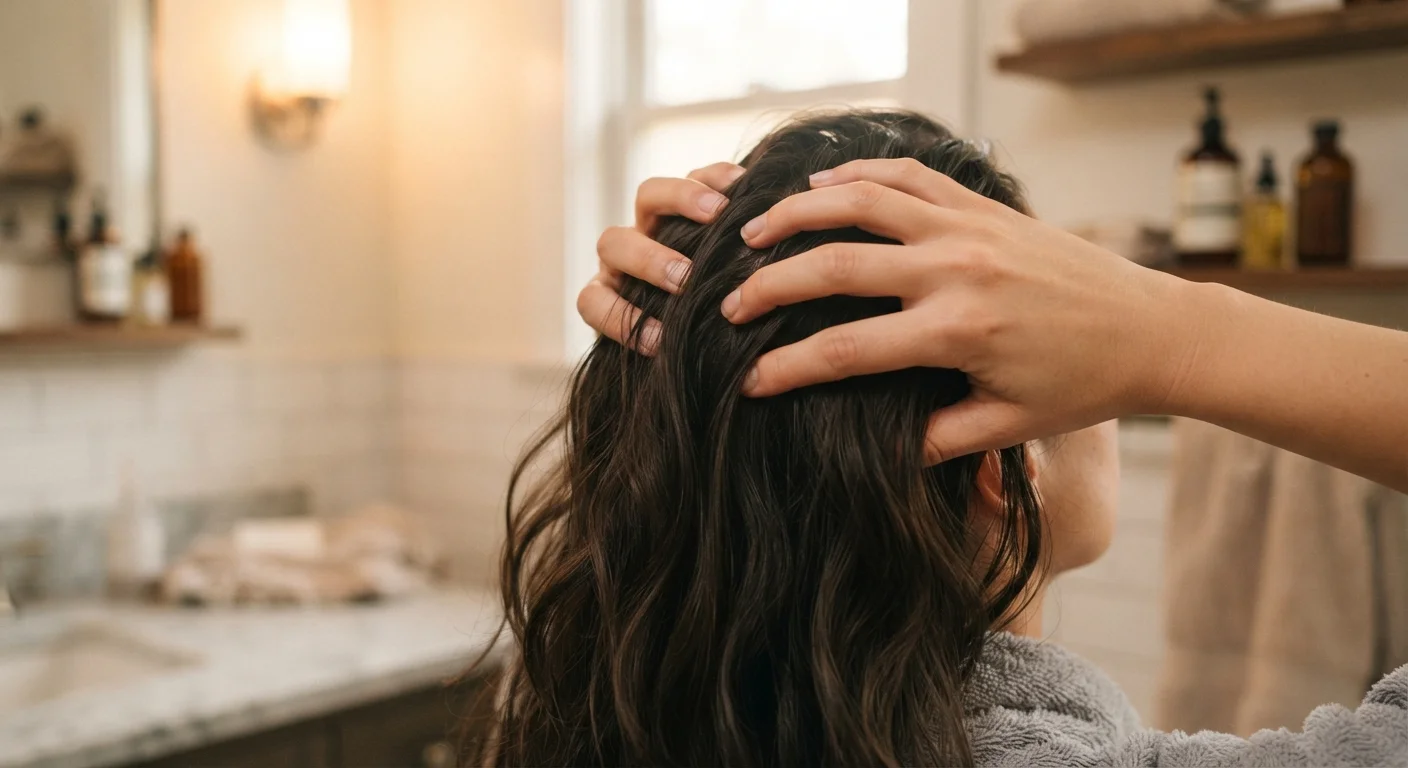
What Scalp Massage Actually Does
Scalp massage is one of the few hair care habits that genuinely earns its reputation — within limits. The mechanical pressure from fingertips stimulates blood flow to the dermis, which is where hair follicles sit. Better circulation means follicles are better supplied with oxygen and nutrients. Some small-scale research has also suggested that regular massage may influence follicle thickness over time, though the evidence base remains limited and most studies have been small or short-term.
What massage does not do is reverse genetic hair loss, repair follicles that are no longer active, or offset the effects of poor nutrition, chronic stress, or hormonal changes. For a fuller picture of all the variables that influence hair growth, see everything that affects how fast your hair grows. Scalp massage is a supportive habit — one piece of a broader approach to scalp health from the ground up.
Not a Replacement for Medical Care
Scalp massage is a general wellness habit, not a medical treatment. If you're experiencing significant hair shedding, scalp pain, persistent flaking, or noticeable thinning, consult a dermatologist before relying on self-care alone. Underlying conditions like alopecia areata, psoriasis, or hormonal imbalances require professional diagnosis and treatment.
What You'll Need Before Starting
No special equipment is required. Your fingertips are the primary tool, and the technique is accessible to anyone.
What you will need
Fingertips
The primary tool — used to apply gentle, circular pressure across the scalp.
Scalp massager tool (silicone)
A handheld silicone tool with flexible bristles that can substitute for or complement fingertip massage.
Lightweight carrier oil
Adds slip during massage to reduce friction, especially helpful for dry or textured hair.
How to Perform a Scalp Massage
Follow these steps in order for the most effective and comfortable result. The goal is slow, deliberate pressure — not speed or force.
Position your hands correctly
Place the pads of your fingertips — not your nails — against your scalp. Spread all ten fingers across the sides and crown of your head. Your thumbs can rest near the temples. Keep your fingers slightly curved so the fingertip pads make full contact with the scalp surface.
Begin with gentle circular motions
Using small, slow circular movements, apply moderate pressure and move the skin of the scalp slightly against the skull — you're not sliding your fingers across the hair surface. Work in 2–3 cm circles. Start at the nape of the neck and work forward toward the hairline, or begin at the crown and work outward.
Cover the full scalp systematically
Move through distinct zones: the nape and base of skull, the sides above the ears, the temples, the crown, and the hairline. Spending roughly 30–45 seconds per zone ensures even coverage. Avoid lingering too long on one spot, which can cause tenderness.
Maintain session length and consistency
A single session should last roughly 4–5 minutes. Small studies have explored sessions in this range and found them sufficient to promote circulation without causing fatigue or strain. Daily or near-daily practice over several weeks is where any cumulative benefit tends to develop — one-off sessions are unlikely to produce noticeable change.
Finish and assess your scalp's response
After massaging, gently run your fingertips across the scalp to check for any areas of tenderness or unusual sensitivity. A mild warm sensation is normal and indicates increased blood flow. Any sharp pain, increased itching, or stinging is a signal to reduce pressure or pause the practice and assess whether an underlying scalp issue may need attention.
Dry vs. Oil-Assisted Massage
Both approaches are valid. Dry massage works well during a quick morning routine and leaves no residue. Adding a lightweight oil — like jojoba or a few drops of a diluted essential oil — can add slip and reduce friction, making it a better choice for coarser or drier hair textures. Either way, the mechanical motion is what drives the benefit.
Setting Realistic Expectations
Consistency matters more than intensity here. A daily 4–5 minute session practiced over 4–6 weeks is the kind of routine where people most often report noticing a difference — in scalp feel, reduced tension headaches, or mild improvements in hair texture. Dramatic changes in hair growth or density within a few sessions are not a realistic expectation, and any sources suggesting otherwise should be read critically.
It's also worth revisiting some of the broader hair care myths worth letting go, since scalp massage is sometimes oversold as a miracle fix. When it's one part of consistent grooming habits that hold up over time, it earns its place in the routine.
Avoid Massage on Actively Irritated Scalp
If your scalp has open sores, active eczema flare-ups, or is significantly inflamed, skip massage until the area has healed. Stimulating an already-reactive scalp can spread bacteria, increase inflammation, or cause further discomfort. When in doubt, check with a healthcare professional before resuming.
This article provides general wellness information and is not a substitute for advice from a qualified healthcare or dermatology professional. If you have concerns about scalp conditions or significant hair loss, consult a licensed professional.
The content on this site is for informational purposes only and is not a substitute for professional advice. Always consult a qualified professional for guidance specific to your situation.