

Summary
18 items · 30-60 minutes
Why Switching Auto Insurance Requires a Checklist
Switching auto insurers seems straightforward - find a lower rate or better coverage, sign up, cancel the old policy. But the process has several moving parts where things can go wrong quietly. A lapse in coverage lasting even one day can be reported to your state's DMV, affect your ability to register your vehicle, and flag you as a higher-risk driver when you next apply for coverage.
The checklist below guides you through every step: what to verify before you shop, how to time the switch so coverage is continuous, and what to confirm once your new policy is active. For background on the coverage types you'll be comparing, see our guide to auto insurance coverage types.
Never Cancel Before New Coverage Is Active
A coverage lapse - even for a single day - can be reported to your state's motor vehicle authority, potentially leading to license or registration suspension depending on your state's laws. It also creates a gap on your insurance history that future insurers may use to classify you as higher risk, which can raise your premiums. Always have written confirmation that your new policy is active before initiating cancellation of the old one.
What You'll Need to Work Through This Checklist
Gather these materials before you begin. Having them on hand will prevent delays and ensure you're making accurate comparisons between your current and prospective policies.
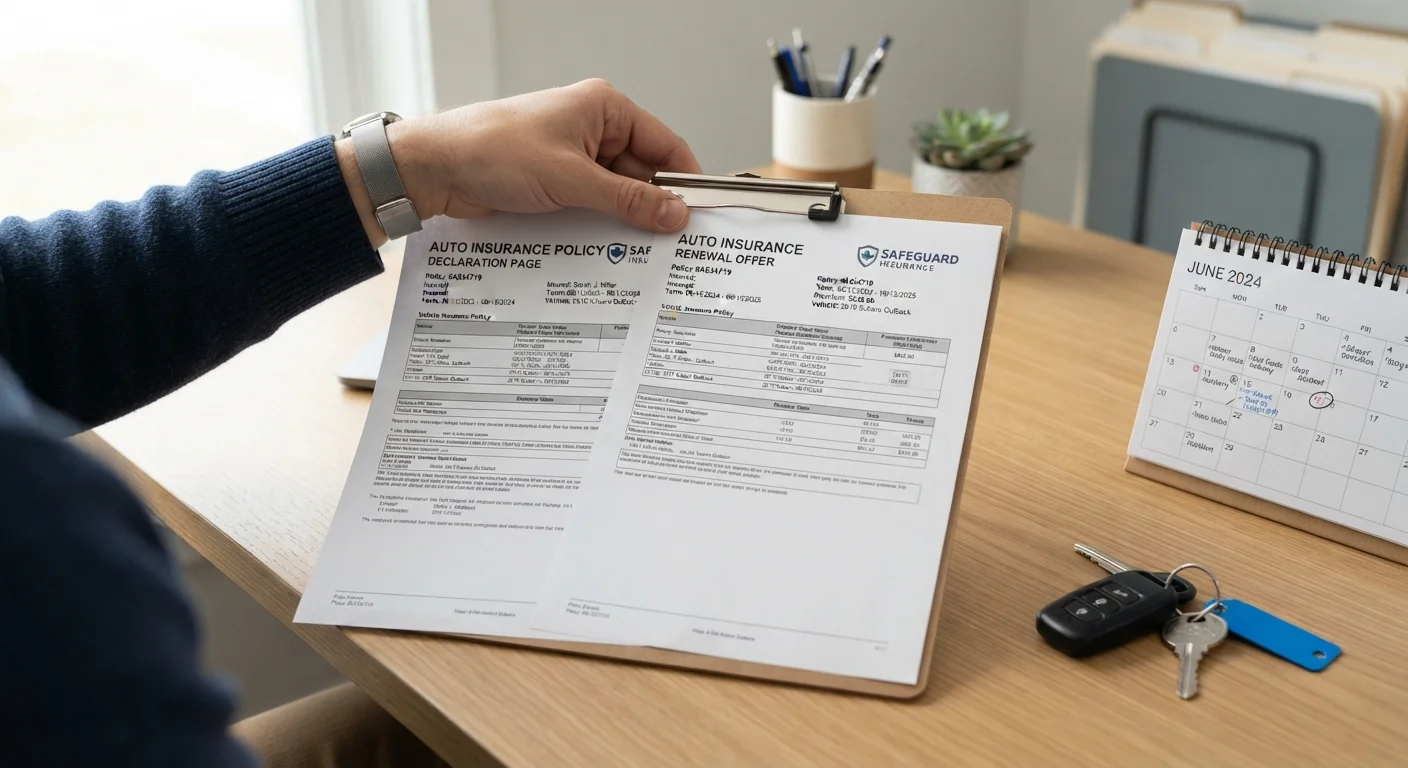
Current policy declarations page
Provides your existing coverage limits, deductibles, and premium details for direct comparison with new quotes.
Vehicle information (VIN, year, make, model)
Required to obtain accurate quotes and to ensure your new policy lists your vehicle correctly.
Driver's license numbers for all household drivers
Insurers need these to rate all listed drivers accurately and ensure complete household coverage.
Lender or leasing company contact details
Needed to notify your lienholder of the new policy and confirm it meets their required coverage minimums.
State minimum coverage reference
Confirms the legal liability minimums your new policy must meet in your specific state.
The Switching Checklist
Work through each group in order. The preparation steps protect you before anything is signed; the verification steps confirm nothing was missed after the switch is complete.
Before You Shop for a New Policy
Evaluating and Binding Your New Policy
Cancelling Your Old Policy
Post-Switch Verification
Mid-Term Cancellations May Cost You
Many auto insurers charge a short-rate or flat cancellation fee when you end a policy before its expiration date. The fee amount varies by insurer and state regulation. If your renewal date is close, it may be worth waiting to switch at renewal to avoid this charge. Ask your current insurer directly what the cancellation terms are before committing to a switch date.
Unexpected coverage shortfalls are one of the most common issues drivers encounter after switching. Our article on gaps in auto coverage that catch drivers off guard explains the blind spots worth watching for as you compare policies.
If your reason for switching is tied to a life change - a move, marriage, or adding a driver - the underlying coverage needs may have shifted too. See our article on auto insurance after a major life change for what typically needs to be updated and why.
This article is for general informational purposes only and does not constitute personalized insurance, financial, or legal advice. Coverage terms, exclusions, and regulations vary by insurer and state. Always read your actual policy documents carefully and consult a licensed insurance agent or adviser for guidance specific to your situation.
The content on this site is for informational purposes only and is not a substitute for professional advice. Always consult a qualified professional for guidance specific to your situation.