

Liability Coverage: The Legal Foundation
Liability coverage is the cornerstone of virtually every auto insurance policy in the United States - and in nearly every state, some level of it is legally required to drive. It pays for bodily injury and property damage that you cause to other people in an accident. It does not pay for your own injuries or damage to your own vehicle.
Liability coverage is typically expressed as three numbers, such as 100/300/100. These represent, in thousands of dollars: the maximum per-person bodily injury payout, the maximum per-accident bodily injury payout, and the maximum property damage payout. Carrying only your state's minimum limits can leave you personally responsible for costs that exceed those limits.
For a broader breakdown of how liability-only policies compare to more comprehensive options, see our guide to liability vs. full coverage.
State Minimums Are a Floor, Not a Goal
Your state's minimum liability limits define the least amount of coverage you can legally carry - not the amount that will realistically protect your finances in a serious accident. Medical bills and vehicle repair costs from a significant collision can far exceed minimum limits. Many insurance professionals suggest carrying limits well above the state minimum, and an umbrella policy may provide additional protection for higher-exposure situations.
Collision and Comprehensive: Protecting Your Own Vehicle
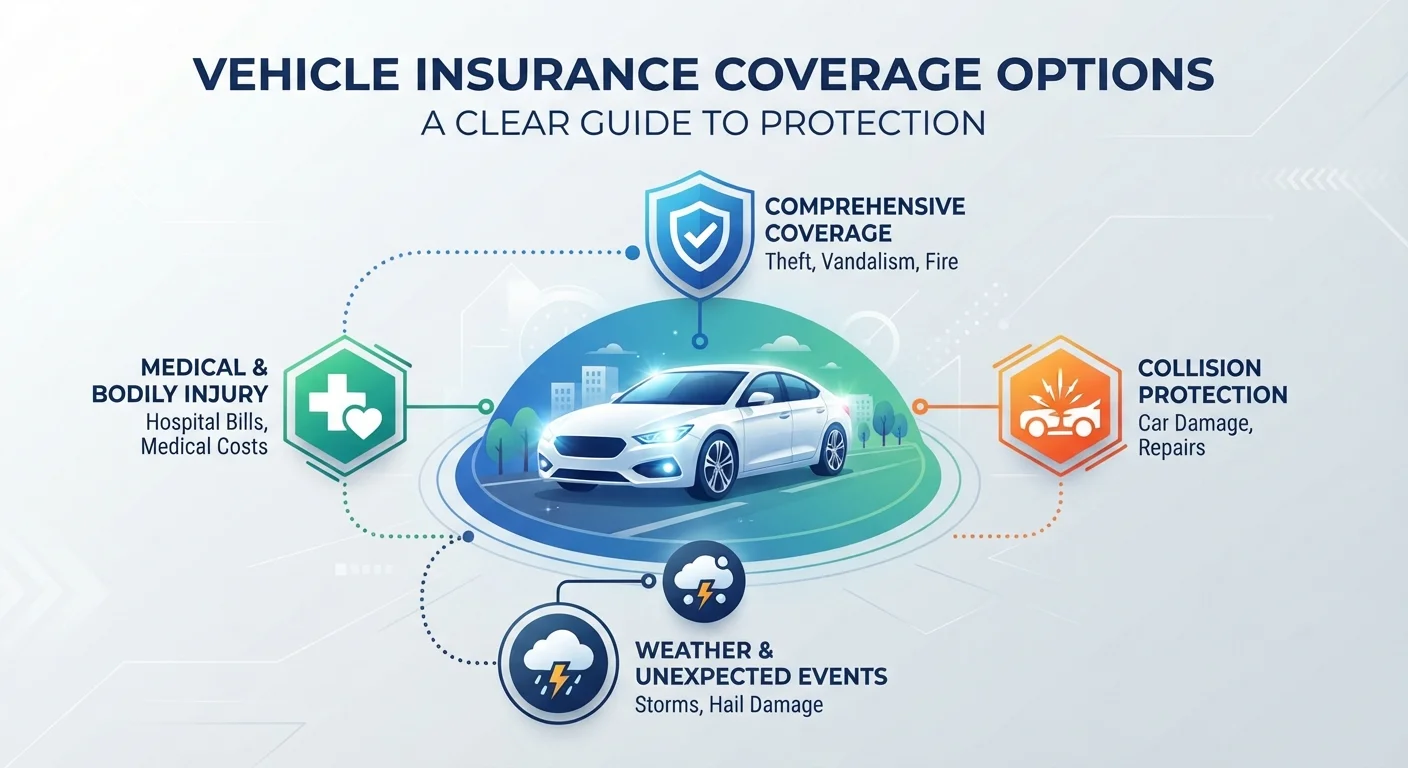
While liability coverage protects others, collision and comprehensive coverage protect your own vehicle - but they apply to entirely different situations.
Collision coverage pays to repair or replace your vehicle when it's damaged in an accident involving another vehicle or object, regardless of who is at fault. If you rear-end another car or hit a guardrail, collision applies.
Comprehensive coverage handles damage caused by events outside of collisions - theft, vandalism, hail, floods, fire, and collisions with animals such as deer. If a tree falls on your car during a storm, that's a comprehensive claim, not a collision claim.
Both coverages come with a deductible - the amount you pay out of pocket before your insurer covers the rest. Higher deductibles generally mean lower premiums, and vice versa. Neither coverage is state-mandated, but lenders financing or leasing a vehicle typically require both.
For a detailed comparison of how these two coverages interact, see comprehensive vs. collision coverage explained.
~1 in 7
Estimated uninsured drivers on U.S. roads
According to the Insurance Research Council, an estimated one in seven U.S. drivers carries no auto insurance.
49 states
States requiring some form of liability insurance
New Hampshire is the only state that does not mandate auto liability insurance, though financial responsibility requirements still apply.
12 states
No-fault states requiring PIP coverage
As of current state law surveys, roughly a dozen states operate under no-fault insurance systems requiring personal injury protection coverage.
PIP, MedPay, and Uninsured Motorist: The Coverage That Fills the Gaps
Three additional coverage types address situations the core categories don't fully resolve.
Personal Injury Protection (PIP) - sometimes called no-fault coverage - pays for medical expenses, lost wages, and related costs for you and your passengers after an accident, regardless of who caused it. It is mandatory in states that use a no-fault insurance system and available as an option in others.
Medical Payments (MedPay) is a narrower alternative to PIP available in non-no-fault states. It covers medical and funeral expenses for you and passengers but typically does not extend to lost wages or other costs PIP may include.
Uninsured and Underinsured Motorist (UM/UIM) coverage protects you when the driver who caused your accident either has no insurance or carries limits too low to cover your losses. According to the Insurance Research Council, roughly one in seven drivers on U.S. roads is estimated to be uninsured, making this coverage practically significant for many drivers.
Understanding how these coverages interact with your full policy is essential. Our auto insurance terms reference can help you navigate the language used in your policy documents.
How Coverage Types Combine - and Where Gaps Can Appear
Most auto insurance policies are assembled from several of these coverage types, and the specific combination you carry determines what is - and isn't - protected. Drivers who assume they have broader protection than their policy actually provides can find themselves facing significant out-of-pocket costs after an incident.
Common situations where gaps emerge include: driving a rental vehicle without rental reimbursement coverage, assuming liability coverage extends to your own vehicle damage, or carrying state-minimum liability limits that fall well short of actual accident costs.
Coverage gaps that catch drivers off guard explores the most common blind spots in standard auto insurance policies in more detail.
If you want to understand how the specific terms in your policy are structured, reading an auto insurance policy without getting lost in the fine print provides a practical walkthrough of declarations pages, exclusions, and endorsements.
This article is for general informational purposes only and does not constitute personalized insurance, legal, or financial advice. Coverage terms, requirements, and availability vary by state and insurer. Consult a licensed insurance professional to evaluate your specific situation.
Frequently Asked Questions
Most states require at least bodily injury liability and property damage liability coverage. Some states also mandate personal injury protection or uninsured motorist coverage. Minimums vary by state, and carrying only minimums may leave significant financial exposure.
"Full coverage" is an informal term, not an official policy category. It typically refers to a combination of liability, collision, and comprehensive - but it doesn't mean every possible situation is covered. Specific exclusions and limits still apply.
Whether it makes sense depends on your vehicle's current market value, your deductible amount, and your ability to absorb a loss out of pocket. A qualified insurance agent can help you evaluate the trade-off for your specific situation.
Both cover medical costs after an accident regardless of fault, but PIP is broader - it can also cover lost wages and related expenses. Medical payments (MedPay) is narrower and typically covers only medical and funeral expenses.
Rental reimbursement coverage is a separate, optional add-on that covers the cost of a rental while your vehicle is being repaired after a covered claim. Standard liability, collision, or comprehensive coverage does not automatically pay for rental expenses.
Uninsured motorist coverage is designed for this scenario. It steps in to cover your medical bills and, in some states, property damage when the at-fault driver carries no insurance. Without it, you may need to pursue the other driver directly, which is often difficult.
The content on this site is for informational purposes only and is not a substitute for professional advice. Always consult a qualified professional for guidance specific to your situation.