

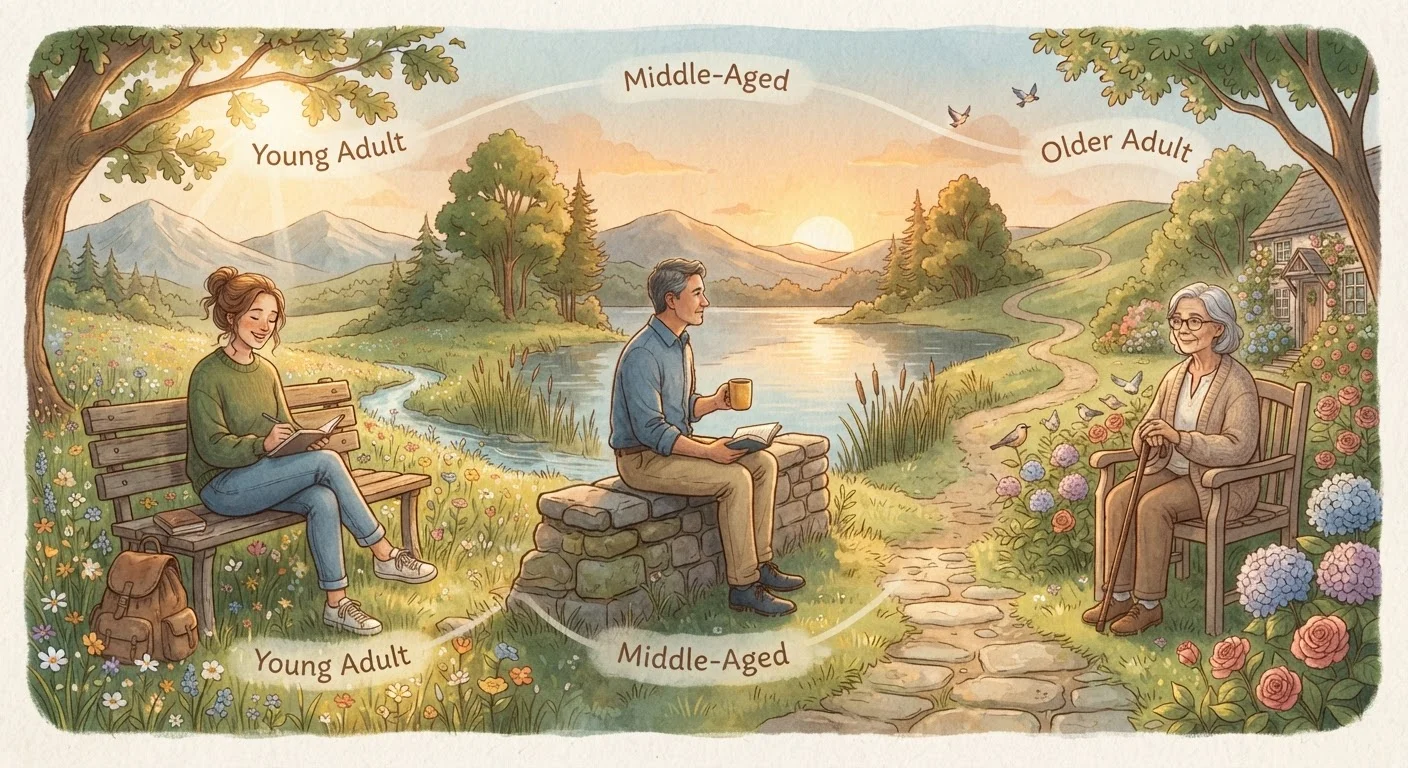
Why Mental Wellness Isn't One-Size-Fits-All
Mental wellness is not a static destination. It is a dynamic state shaped by biology, relationships, responsibilities, and the particular challenges each decade of life tends to bring. A coping strategy that steadied you at 22 may feel inadequate at 42, and what works at 60 may reflect hard-won wisdom rather than any single technique.
Psychologists have long recognized that emotional development continues well past childhood. Research into adult development - including influential frameworks from theorists such as Erik Erikson - suggests that each life stage carries its own central psychological tasks. Navigating those tasks well tends to support mental wellness; feeling stuck or overwhelmed by them is often when distress arises.
Understanding how mental wellness shifts across the lifespan helps normalize the experience of needing different support at different times. It also challenges the common myths about mental wellness that suggest there is one right way to cope or thrive.
50%
Mental health conditions onset by age 14
According to the World Health Organization, approximately 50% of all mental health conditions begin by age 14, with most cases emerging by age 24.
1 in 5
U.S. adults experience mental illness annually
The National Institute of Mental Health estimates that about 1 in 5 U.S. adults lives with a mental illness in any given year.
11 years
Average delay between symptoms and treatment
Research suggests an average gap of roughly 11 years between the onset of mental health symptoms and when people first receive treatment.
Early Adulthood (Ages 18-35): Identity, Stress, and Foundation-Building
Early adulthood is often characterized by significant transitions: leaving home, entering the workforce, forming serious relationships, and establishing a sense of independent identity. These changes are exciting, but they also generate considerable psychological pressure. Young adults frequently face financial uncertainty, social comparison, loneliness despite hyperconnectivity, and the stress of building a life largely from scratch.
Anxiety and depression have their median age of onset in the mid-20s for many conditions, making this a critical period for recognizing and addressing mental health needs early. Sleep disruption, poor diet, and irregular routines - common in this age group - can amplify emotional vulnerability.
In your 20s and early 30s, investing in therapy before you feel like you 'need' it builds the emotional vocabulary and coping toolkit that will serve you across decades.
Early intervention and skills-building in adulthood are consistently linked to better long-term mental health outcomes and lower likelihood of crisis-level episodes later.
If you find journaling too open-ended, try a structured prompt: 'What drained me this week, what restored me, and what do I want to do differently?' - three questions that surface patterns quickly.
Structured self-reflection prompts lower the barrier to consistent practice and have been associated with improved emotional processing in research on expressive writing.
Effective strategies during this period tend to center on establishing routines, building a support network, developing emotional self-awareness, and - where needed - accessing therapy without shame. The weekly mental wellness self-assessment checklist is a practical starting point for building that reflective habit.
Midlife (Ages 35-55): Competing Demands and Emotional Recalibration
Midlife is often described as the decade of competing obligations. Many people in this stage are simultaneously managing career pressures, raising children, supporting aging parents, and navigating relationship changes. This accumulation of roles - sometimes called the "sandwich generation" phenomenon - can erode time for self-care and make mental wellness feel like a luxury rather than a necessity.
Midlife is also when many people experience what researchers describe as a values reassessment: a growing awareness of mortality, a questioning of earlier goals, and a search for deeper meaning. This is not pathological - it can be a productive reorientation - but when left unexamined, it can manifest as burnout, irritability, or a persistent sense of emptiness.
Burnout Can Masquerade as Productivity
In midlife, chronic overcommitment often presents not as obvious distress but as emotional numbness, cynicism, or physical exhaustion. These are recognized signs of burnout - not personal failure or weakness. Dismissing these signals as normal can delay recovery and worsen outcomes over time. If these symptoms persist, speaking with a healthcare provider is a sound step.
Strategies that tend to be most effective in midlife include deliberate boundary-setting, regular physical activity (which is closely linked to mood regulation - see how physical activity needs shift across life stages), and making space for social connection outside of work and parenting roles.
Later Adulthood (Ages 55+): Meaning, Loss, and Resilience
A persistent cultural myth suggests mental health inevitably declines with age. The evidence tells a more nuanced story. Many older adults report greater emotional stability, better impulse control, and a stronger ability to prioritize what matters - characteristics sometimes called the "positivity effect" in aging psychology. At the same time, later life introduces distinct challenges: the loss of peers and partners, retirement identity shifts, physical health changes, and - for some - increasing isolation.
Grief is a significant mental wellness consideration in later adulthood, and it is not limited to bereavement. People may grieve career roles, mobility, independence, or the future they had imagined. Acknowledging these losses, rather than minimizing them, is an important part of healthy adaptation.
“Aging is not lost youth but a new stage of opportunity and strength. The goal is not to feel young again, but to feel fully alive in the stage you are in.”
— Betty Friedan, Author and social activist known for writing on aging and identity
Social engagement remains one of the strongest protective factors for mental wellness in older adults. Maintaining meaningful relationships, contributing to community, and finding purpose in daily activities are consistently linked to better emotional outcomes. Connection to physical health habits also pays dividends: regular movement, adequate sleep, and nutritious eating all support mood and cognitive wellbeing in this stage.
Habits That Support Mental Wellness at Any Age
While needs shift across life stages, certain habits show consistent protective effects throughout adulthood:
- Quality sleep: Sleep and mental health are bidirectional - poor sleep worsens mood and cognitive function, while emotional distress disrupts sleep. Prioritizing consistent sleep hygiene matters at every age.
- Physical movement: Regular activity reduces symptoms of anxiety and depression across all adult age groups. The type and intensity may need to evolve, but the benefit does not diminish.
- Social connection: Loneliness is a significant risk factor for poor mental health outcomes. Sustaining genuine relationships - not just surface-level contact - matters consistently.
- Self-reflection: The ability to notice and name emotional states, rather than suppress or ignore them, is a foundational skill that can be practiced and strengthened over time.
- Flexibility: Rigid coping strategies tend to break down under novel stressors. Psychological flexibility - the ability to adapt while staying aligned with personal values - is a learnable trait with strong research backing.
This article is for general informational purposes and does not constitute medical or mental health advice. Always consult a qualified healthcare or mental health professional for guidance specific to your circumstances.
When to Seek Professional Support
Across every life stage, one principle holds: professional mental health support is appropriate well before a crisis point. Therapy, counseling, and psychiatric care are not last resorts - they are tools that work best when engaged proactively.
Start Before You Feel Overwhelmed
Reaching out to a therapist or counselor when life feels manageable - rather than waiting for a crisis - allows you to build skills and rapport before you need them most. Many people find that even a few sessions during a stable period substantially improves their capacity to handle future stress.
Signs that professional support may be helpful include persistent sadness or anxiety lasting more than two weeks, significant changes in sleep or appetite, withdrawal from relationships, difficulty functioning at work or home, and thoughts of self-harm. If you or someone you know is experiencing thoughts of suicide or self-harm, contact a crisis line or emergency services immediately.
The right type of professional support may also shift with age. Young adults often benefit from therapists who specialize in identity and emerging adulthood issues. People in midlife may find value in therapists trained in stress management, burnout, or relationship dynamics. Older adults may benefit from providers familiar with grief, life transitions, and the psychosocial aspects of aging.
Financial pressures can be a real barrier to access. It may help to know that community mental health centers, employee assistance programs, and sliding-scale therapy options exist in many areas. Just as financial strategies benefit from a life-stage lens, so does the approach to mental health investment - starting earlier and maintaining it consistently tends to yield the strongest long-term outcomes.
This article is for informational purposes only and does not constitute medical or mental health advice. Please consult a licensed mental health or healthcare professional for personalized guidance.
The content on this site is for informational purposes only and is not a substitute for professional advice. Always consult a qualified professional for guidance specific to your situation.