

Why Paint Finish Is More Than a Visual Choice
When most people pick a paint color, they focus almost entirely on the hue. But the finish — also called the sheen — shapes how that color looks on the wall, how the surface handles moisture, and how easy it is to clean after everyday use. Choosing the wrong finish for a room can mean walls that show every scuff in a high-traffic hallway, or a bathroom that traps mildew behind a flat coat that can't be wiped down.
Each finish level sits on a spectrum from completely flat to mirror-like gloss. The higher the sheen, the more light the surface reflects — and the more durable and washable it typically is. Understanding that trade-off is the core of making a smart finish choice.
| Finish types on the sheen scale | Flat → Matte → Eggshell → Satin → Semi-gloss → Gloss |
| Most washable finish | Gloss / Semi-gloss |
| Best for hiding wall imperfections | Flat / Matte |
| Standard finish for interior trim and doors | Semi-gloss |
| Most commonly recommended for living areas | Eggshell |
| Finish most sensitive to application technique | Satin and higher sheens |
For a broader look at how surface materials interact with light and use in your home, see our room-by-room material guide for flooring comparisons that follow the same durability logic.
The Four Main Finishes and Where Each One Works
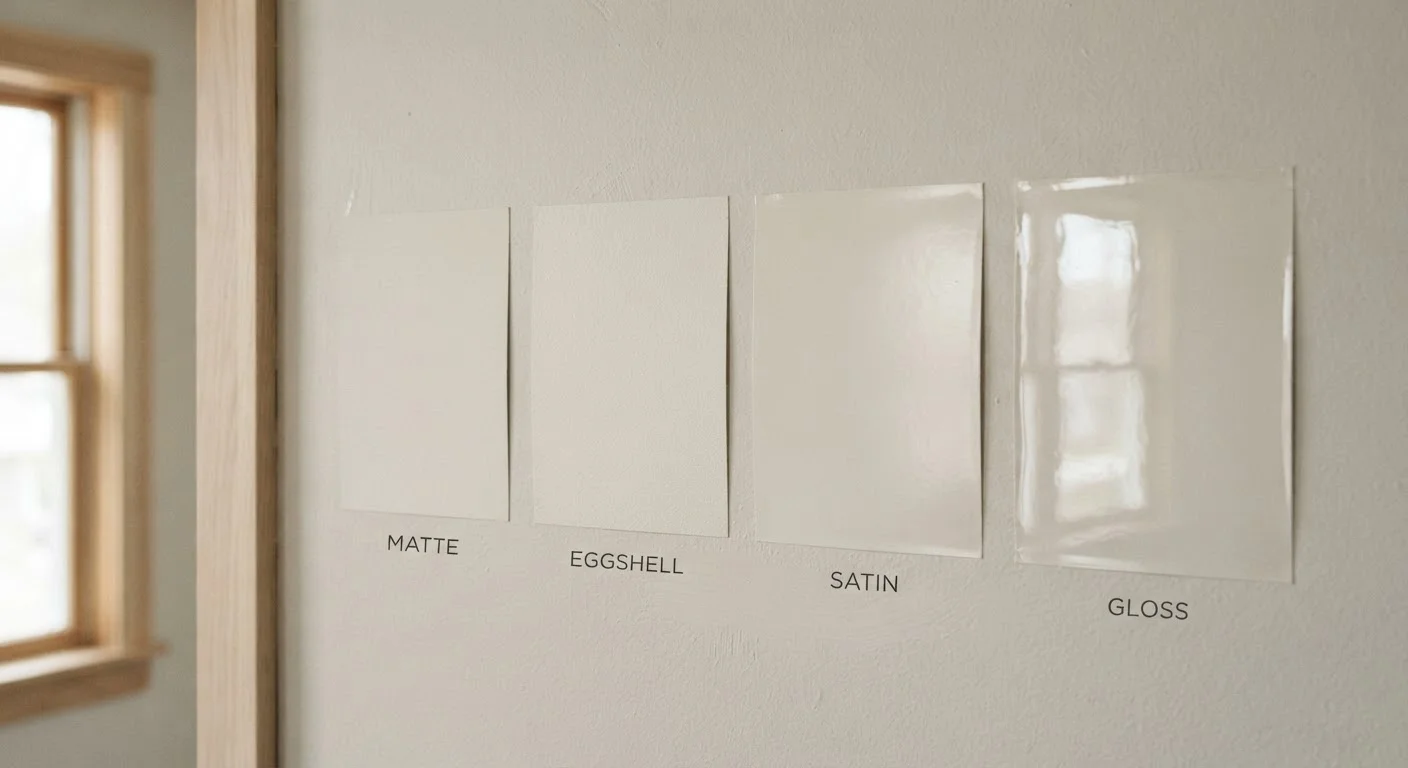
Matte (Flat) — Matte finish absorbs light rather than reflecting it, which gives walls a smooth, velvety appearance. It hides surface imperfections like drywall patches, roller marks, and minor wall texture extremely well. That makes it popular for ceilings, low-traffic bedrooms, and formal living rooms where aesthetics matter more than durability. The downside: flat paint is difficult to scrub. Repeated wiping tends to lift or burnish the surface, leaving shiny patches that stand out against the surrounding area.
Eggshell — Named for its subtle, low-luster appearance, eggshell sits just above matte on the sheen scale. It reflects a small amount of light, which adds a slight depth to color without creating a noticeable shine. It's more washable than flat paint and holds up better in rooms that see moderate activity. Most interior designers consider eggshell a reliable default for living rooms, dining rooms, and master bedrooms.
Sheen
The degree of light reflectivity in a dried paint surface. Higher sheen means more light bounces off the surface, creating a shinier appearance. Sheen level also correlates with durability and washability.
Flat / Matte finish
A paint finish with little to no light reflectivity. It creates a smooth, non-shiny surface that hides imperfections well but is difficult to clean without damaging the paint film.
Eggshell finish
A low-luster finish with slight sheen, named for its resemblance to the surface of an eggshell. More washable than flat paint while still maintaining a relatively understated appearance.
Satin finish
A mid-range finish with a soft, pearl-like sheen. Durable and moisture-resistant, making it suitable for kitchens, bathrooms, and high-traffic areas.
Semi-gloss finish
A noticeably shiny finish that reflects substantial light and creates a hard, washable surface. Commonly used on trim, doors, and cabinetry.
Burnishing
The shiny patches that appear on matte or flat paint when the surface is scrubbed or rubbed repeatedly. Burnished areas reflect light differently than the surrounding surface, making them visually apparent.
Satin — Satin has a soft, pearl-like sheen that becomes more apparent in direct light. It's noticeably more durable than eggshell — easier to wipe clean without damaging the surface — which makes it well-suited for kitchens, bathrooms, hallways, children's rooms, and any area that takes regular abuse. One thing to note: satin shows brush strokes and roller marks more readily than lower-sheen options, so application technique matters more.
Semi-Gloss and Gloss — These finishes reflect significant light and create a hard, smooth surface that resists moisture, grease, and repeated scrubbing. Semi-gloss is the standard choice for trim, doors, and window casings. Full gloss is reserved for accent details, cabinetry, and occasionally high-impact accent walls where a lacquer-like look is intentional. Both finishes amplify surface flaws, so thorough surface prep before painting is essential.
Surface Prep Matters More at Higher Sheens
Glossier finishes like satin, semi-gloss, and gloss amplify surface imperfections — dents, patches, and sanding marks become more visible under raking light. Before applying any finish above eggshell, fill holes, sand smooth, and prime bare areas thoroughly. Skipping prep is one of the most common reasons a paint job looks uneven after drying.
Quick-Reference: Matching Finish to Room
Use this framework when deciding which finish to apply in each space:
- Ceilings: Flat or matte — minimizes glare from overhead lighting and hides seams
- Bedrooms and formal living rooms: Matte or eggshell — prioritizes aesthetic depth over scrubability
- Dining rooms and hallways: Eggshell or satin — balances appearance with enough durability for regular contact
- Kitchens and bathrooms: Satin or semi-gloss — resists moisture and tolerates frequent wiping
- Trim, doors, and cabinets: Semi-gloss or gloss — hard finish that stands up to repeated touching and cleaning
Keep in mind that paints within the same brand's product line can vary slightly in their sheen levels — a satin from one manufacturer may read closer to eggshell in practice. If color consistency across rooms matters to you, request small test samples and compare them in your actual lighting conditions before committing to full quantities.
For a deeper comparison of how each finish performs by specific room type, interior paint finishes compared breaks down the performance trade-offs in more detail.
The content on this site is for informational purposes only and is not a substitute for professional advice. Always consult a qualified professional for guidance specific to your situation.