

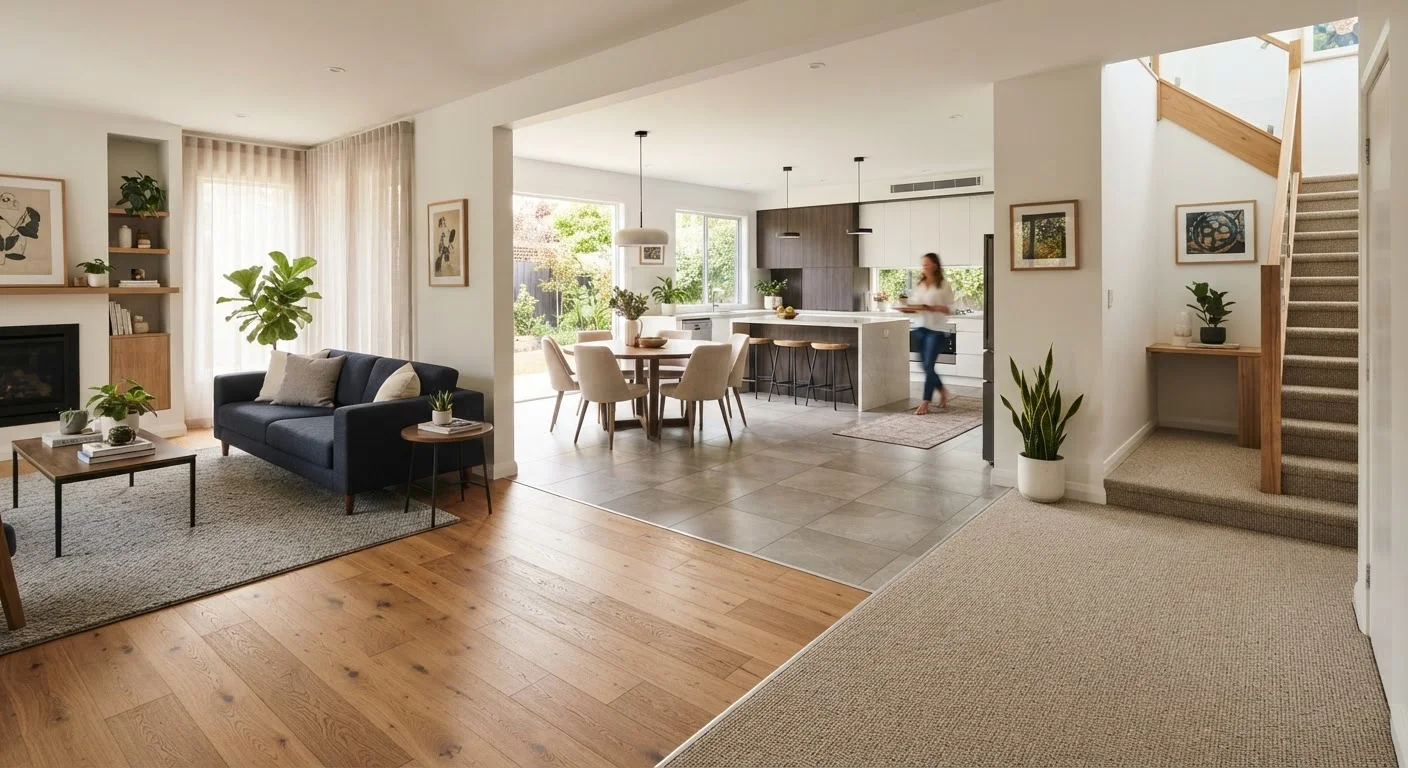
How to Match Flooring to Room Demands
No single flooring material performs equally well in every room. A kitchen demands moisture resistance; a bedroom rewards softness underfoot; a mudroom needs to survive heavy foot traffic and tracked-in debris. Understanding a material's core performance characteristics — hardness, water resistance, thermal comfort, and maintenance burden — makes it far easier to narrow options before you commit.
This reference covers the five materials most commonly found in American homes: hardwood, engineered wood, ceramic or porcelain tile, luxury vinyl plank (LVP), and carpet. For each, the key questions are: How durable is it? How does it feel to live on? And what does regular upkeep actually involve?
| Most water-resistant material | Porcelain tile |
| Softest underfoot | Carpet |
| Best for below-grade rooms | Luxury vinyl plank (LVP) or porcelain tile |
| Can be refinished | Solid hardwood (multiple times); engineered wood (1–2 times) |
| Grout sealing frequency | Every 1–2 years for ceramic/porcelain tile |
| Carpet vacuuming (high-traffic areas) | 2–3 times per week |
For a broader view of how flooring fits into a full decorating project, see the complete room decorating walkthrough that covers everything from layout to finishing layers.
Material-by-Material Performance Breakdown
Hardwood
Solid hardwood is prized for longevity — a well-maintained floor can last decades and be refinished multiple times. It performs best in living rooms, dining rooms, and bedrooms where moisture is minimal. Hardwood is not recommended for bathrooms or below-grade basements, as moisture causes cupping and warping. Daily upkeep involves sweeping and occasional damp mopping with a wood-safe cleaner; harsh chemicals strip the finish over time.
Engineered Wood
Engineered wood uses a real hardwood veneer over a plywood core, making it more dimensionally stable than solid wood in humidity-variable environments. It tolerates moderate moisture better and can be installed over radiant heating systems. Refinishing is possible but limited — typically once or twice, depending on veneer thickness.
Ceramic and Porcelain Tile
Tile is the benchmark for water resistance, making it the default choice for bathrooms, kitchens, and laundry rooms. Porcelain is denser and less porous than ceramic, giving it an edge in areas with standing water. Grout lines require periodic sealing to prevent staining and mildew. Tile is hard and cold underfoot, which some find uncomfortable in bedrooms or long-standing work areas without area rugs.
Luxury Vinyl Plank (LVP)
LVP has grown in popularity because it combines waterproof construction with a wood-look aesthetic at a generally lower material cost than hardwood. It handles spills and pet accidents well and is softer underfoot than tile. Most LVP products are scratch-resistant but not scratch-proof; furniture leg pads are advisable. It cannot be refinished, so deep scratches or gouges require plank replacement.
Carpet
Carpet remains the warmest, quietest, and most cushioned option, making it well-suited for bedrooms and family rooms. It traps allergens and requires vacuuming two to three times per week in high-use areas, plus periodic deep cleaning. Wall-to-wall carpet is generally not recommended in kitchens or bathrooms. Area rugs over hard flooring can replicate much of carpet's acoustic and comfort benefit with easier maintenance.
Luxury Vinyl Plank (LVP)
A multi-layer synthetic flooring product that mimics the appearance of wood. It is 100% waterproof, relatively affordable, and resistant to scratches, but cannot be refinished when worn.
Subfloor
The structural layer of flooring beneath the finished surface material. Its condition and moisture content directly affect how well any flooring product performs over time.
Grout
A cement- or epoxy-based filler used to seal the gaps between tile pieces. Unsealed or cracked grout absorbs moisture and stains, so periodic maintenance is necessary.
Refinishing
The process of sanding down the surface of a hardwood floor and applying new stain and finish coats. This restores appearance and can add years of usable life to a floor.
Dimensional stability
A material's resistance to expanding, contracting, or warping in response to changes in temperature and humidity. Engineered wood and LVP rate higher than solid hardwood in this respect.
Room-by-Room Recommendations
Kitchen
Prioritize water resistance and easy cleaning. Porcelain tile and LVP are the strongest performers. Hardwood is used in kitchens but requires vigilant care around sinks and dishwashers.
Bathroom
Porcelain tile is the industry standard. Seal grout annually and ensure the subfloor is moisture-protected during installation. Avoid solid hardwood and carpet entirely.
Living and Dining Rooms
Hardwood, engineered wood, and LVP all work well here. Consider traffic patterns — a household with large dogs or young children may find LVP's scratch resistance more practical than hardwood's refinishability.
Bedrooms
Carpet remains popular for warmth and quiet. Engineered wood or LVP with an area rug is a practical alternative for allergy-prone households.
Basement
Moisture is the primary concern below grade. LVP and porcelain tile are the safest choices. Solid hardwood and standard carpet are high-risk due to humidity and potential flooding.
Pairing the right flooring with smart upkeep habits extends its lifespan considerably. The seasonal home maintenance checklist includes flooring care tasks organized by time of year.
The content on this site is for informational purposes only and is not a substitute for professional advice. Always consult a qualified professional for guidance specific to your situation.