

Our Verdict
No single finish works perfectly in every room. The right choice depends on how much traffic a surface sees, how much natural light enters the space, and whether moisture or scrubbing are regular factors. Matching sheen level to room function — rather than defaulting to one finish throughout — produces the most durable and visually cohesive results.
| Best for | Recommended |
|---|---|
| Low-traffic bedrooms and ceilings where a soft, shadow-free look matters | Matte |
| Living rooms and dining areas that need everyday wiping without high sheen | Eggshell |
| Kitchens, bathrooms, kids' rooms, and high-traffic hallways | Satin |
| Trim, baseboards, doors, and cabinet fronts requiring maximum washability | Gloss / Semi-Gloss |
Why Paint Finish Matters as Much as Color
Most homeowners spend hours choosing a paint color and about thirty seconds choosing the finish. That's a mistake. The sheen level of a paint — how much light it reflects — directly affects how durable the surface is, how easy it is to clean, and how the color reads on the wall. A deep charcoal in matte will feel moody and flat; the same color in satin will feel almost metallic. Understanding this relationship puts you in control of the final result.
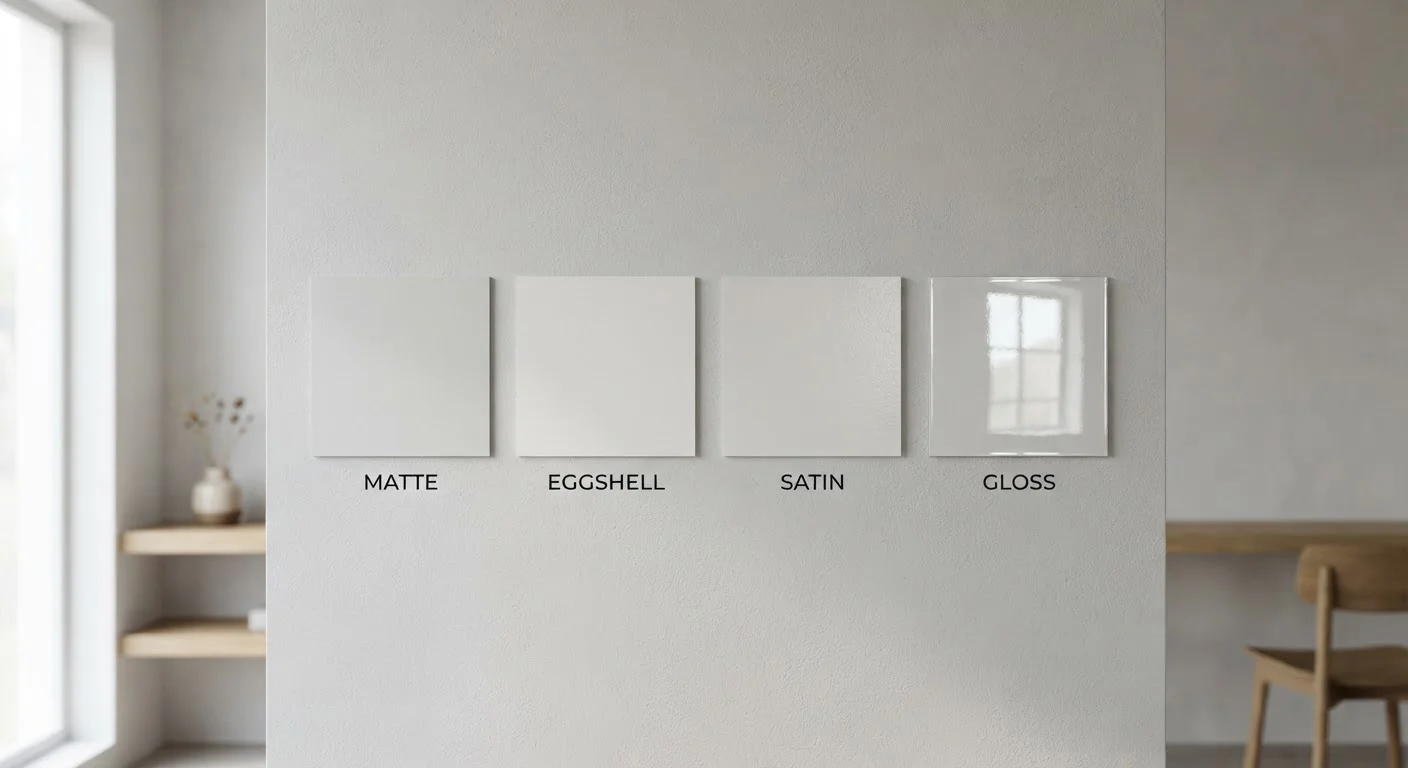
Paint finishes generally fall on a spectrum from flat (zero sheen) to high-gloss (maximum sheen). The four most common interior finishes are matte, eggshell, satin, and gloss — each covering a distinct range of that spectrum. How you layer finishes across a room is as fundamental to the finished look as your color palette. For a broader view of how these decisions fit into a full decorating plan, see our complete room decorating walkthrough.
| Matte | Eggshell | Satin | Gloss / Semi-Gloss | |
|---|---|---|---|---|
| Sheen level | None / flat | Very low | Medium | High to very high |
| Washability | Poor — burnishes easily | Light wiping only | Good — handles scrubbing | Excellent — very durable |
| Hides imperfections | Excellent | Good | Fair | Poor — reveals flaws |
| Moisture resistance | Low | Low to moderate | Good | Very good |
| Best rooms | Ceilings, bedrooms | Living rooms, dining | Kitchens, hallways, kids' rooms | Trim, doors, cabinets |
| Surface prep sensitivity | Forgiving | Moderately forgiving | Requires good prep | Demands thorough prep |
Matte and Eggshell: The Low-Sheen Options
Matte (flat) finish reflects almost no light, which means it excels at disguising surface flaws — drywall patches, slight texture inconsistencies, older walls with minor dings. Ceilings are the classic application, but matte also works well in adult bedrooms and formal spaces where walls aren't regularly touched. The tradeoff is washability: scrubbing a matte surface tends to burnish it, leaving shiny spots. Use it where durability is less critical.
Eggshell finish has a barely-there sheen — comparable to the surface of an actual eggshell — that sits just above flat. It handles light cleaning with a damp cloth, which makes it the default recommendation for living rooms, dining rooms, and adult bedrooms that see moderate use. It doesn't amplify imperfections as aggressively as satin or gloss, and it reads as a true wall color without added brightness. If you're working to establish a cohesive interior style, eggshell gives you the most neutral canvas. Understanding your interior design style can help inform whether a flatter or shinier finish suits the aesthetic you're aiming for.
Test Your Finish Before Committing
Paint a 12-by-12-inch sample patch on the actual wall and observe it at different times of day — morning light, midday, and evening lamp light. Sheen levels can look very different depending on natural versus artificial light. This is especially important for eggshell and satin, where the difference can be subtle in the paint store but noticeable once it covers an entire wall.
Satin and Gloss: The High-Performance Finishes
Satin finish reflects noticeably more light than eggshell and, crucially, holds up to repeated scrubbing without losing its appearance. This makes it the go-to choice for kitchens, bathrooms, laundry rooms, kids' bedrooms, and hallways — anywhere grease, crayon, or everyday handprints are facts of life. Satin does reveal surface imperfections more readily than matte or eggshell, so proper wall prep (filling, sanding, priming) matters more before applying it.
Gloss and semi-gloss finishes sit at the top of the sheen spectrum. They are the most washable and moisture-resistant options available in standard interior paint. Semi-gloss is the standard choice for trim, baseboards, door casings, and window frames — surfaces that take physical contact regularly and need to be wiped clean. High-gloss is occasionally used as a deliberate design statement on doors or built-in cabinetry, where the lacquer-like sheen becomes a feature rather than just a functional choice. Bear in mind that lighting conditions amplify gloss significantly; a high-gloss wall in a room with strong directional light will highlight every roller mark and imperfection. See how ambient, task, and accent lighting interact with surfaces before committing to a high-sheen finish.
~60%
Homeowners using one finish throughout
Industry painting surveys suggest the majority of DIY painters apply a single finish to all interior walls, often missing durability benefits in high-use areas.
2–3×
More scrub cycles satin withstands vs. eggshell
Paint manufacturer technical data sheets commonly show satin-grade paints withstand significantly more standardized scrub-cycle testing than eggshell formulations.
Room-by-Room Finish Guide
Applying the right finish to the right surface is straightforward once you understand the logic. Here's how to think through each area of the home:
- Ceilings: Flat or matte. Ceilings rarely need cleaning and benefit from the shadow-absorbing quality of a flat finish, which minimizes the look of texture.
- Bedrooms (adult): Matte or eggshell. Low-traffic surfaces where visual softness is a priority.
- Living and dining rooms: Eggshell. Occasional cleaning required, but high durability isn't critical.
- Kitchens and bathrooms: Satin or semi-gloss. Moisture resistance and washability are non-negotiable here.
- Hallways and kids' rooms: Satin. These high-contact surfaces need the scrub-resistance satin provides.
- Trim, doors, baseboards: Semi-gloss or gloss. Maximum durability for the surfaces most exposed to physical contact.
For flooring decisions that pair with these wall choices, our room-by-room flooring guide covers durability and upkeep trade-offs across all major materials.
The content on this site is for informational purposes only and is not a substitute for professional advice. Always consult a qualified professional for guidance specific to your situation.