

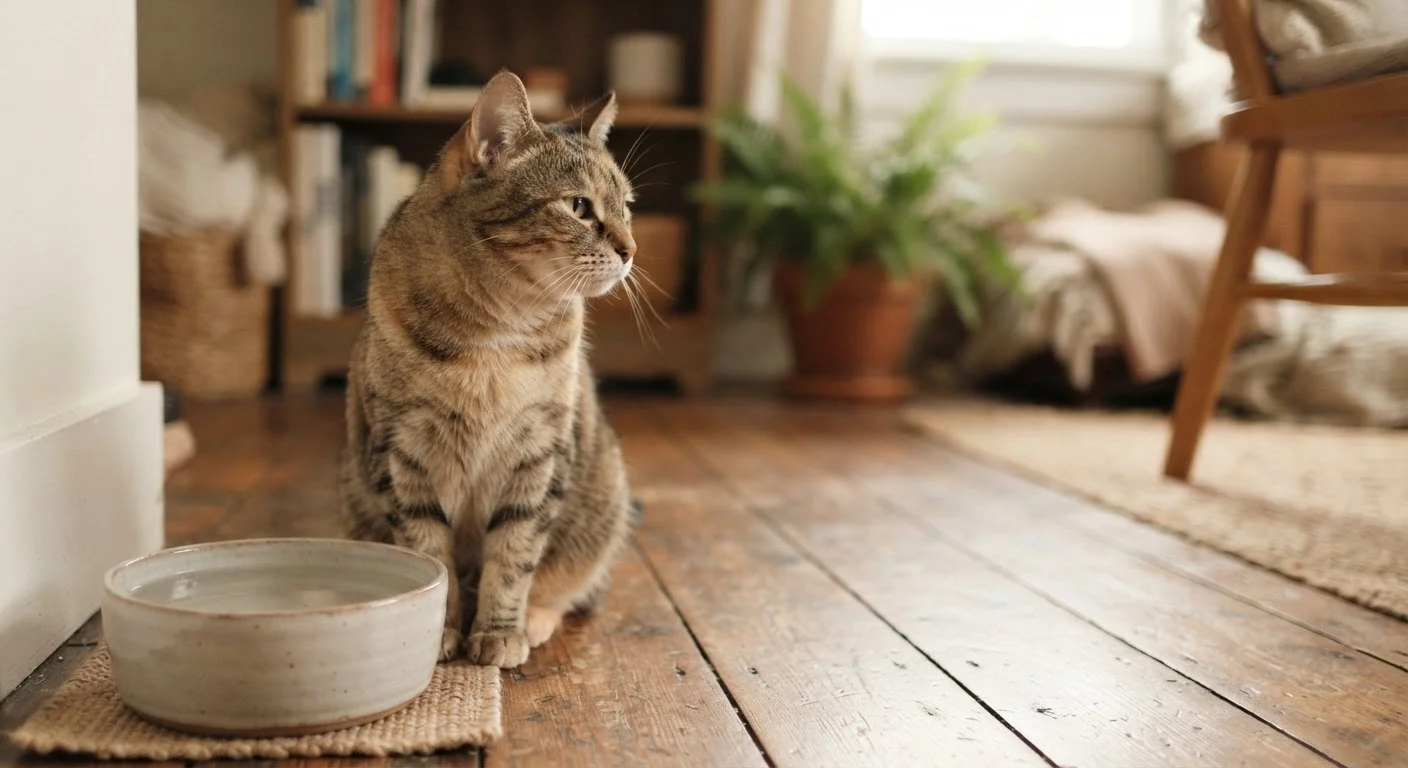
Why Cats Are Prone to Low Water Intake
Cats are descended from desert-dwelling ancestors, and their physiology reflects that origin. Unlike dogs, cats have a relatively low thirst drive — their kidneys are capable of producing highly concentrated urine, which historically allowed them to extract enough water from the prey they ate. In a domestic setting, however, particularly one centered on dry commercial food, this adaptation becomes a vulnerability.
When a cat's fluid intake is consistently too low, the kidneys must work harder to maintain function. Over time, this is associated with an increased risk of urinary tract disease — including the formation of crystals or stones — and is considered a contributing factor in the high prevalence of chronic kidney disease (CKD) in domestic cats. CKD is one of the most common conditions diagnosed in middle-aged and older cats.
It's worth noting that cats often don't show obvious signs of mild dehydration, which means the problem can go unaddressed for extended periods. The way kidney disease presents in cats differs from other species, and early signs are frequently subtle.
What you will need
How to Encourage Better Hydration: Step-by-Step
Improving a cat's hydration involves adjusting the diet, the environment, and the water sources available. The steps below are practical, low-effort changes that can make a meaningful cumulative difference. None of them require special equipment, though some optional tools can help.
Ceramic or stainless steel water bowl
Provides a neutral-tasting, easy-to-clean surface that many cats prefer over plastic.
Pet water fountain
Circulates and filters water continuously, which can attract cats that prefer moving water.
Wet or canned cat food
Adds significant moisture to the diet, reducing dependence on active drinking.
Multiple water stations
Placing water bowls in several locations encourages opportunistic drinking throughout the day.
Assess your cat's current hydration sources
Start by identifying how your cat currently receives fluids. Is the diet primarily dry kibble, wet food, or a mix? A cat eating mostly dry food has a much higher demand for drinking water than one on a wet food diet. Note how often you observe your cat at the water bowl and whether the water level in the bowl drops meaningfully between refills.
Introduce or increase wet food in the diet
Transitioning even part of the diet to wet or canned food is one of the most effective ways to increase total fluid intake. Wet food typically contains 70–80% moisture, compared to roughly 10% in dry kibble. Even replacing one dry meal per day with a wet option can make a measurable difference. Transition gradually over several days to avoid digestive upset.
For more on structuring a complete and balanced feline diet, see our guide to cat nutrition fundamentals.
Optimize water bowl placement and number
Place water bowls in multiple locations around the home — not just next to the food bowl. In the wild, cats instinctively avoid drinking near where they eat, as prey carcasses can contaminate nearby water sources. A bowl in a quiet corner of a different room may get more use than one directly beside the food dish.
Try a pet water fountain
Many cats are attracted to moving water — a behavior that likely evolved because flowing water signals freshness in the wild. A pet water fountain circulates and filters water continuously, which can increase a cat's interest in drinking. Fountains require regular cleaning and filter replacement to remain effective and hygienic.
Ensure water is always fresh and bowls are clean
Change water at least once daily — twice if possible. Wash bowls with mild soap and rinse thoroughly every day. Cats have a strong sensitivity to taste and odor and may refuse water that smells of chlorine, soap residue, or the bowl material itself. Some cats prefer filtered water; if your tap water is heavily chlorinated, this may be worth testing.
Monitor and track changes over time
Observe drinking behavior over one to two weeks after making changes. Improvements are often gradual. If you notice your cat drinking substantially more than usual without a dietary change, that is equally important to note — increased thirst can be a symptom of conditions such as diabetes or kidney disease. Report any significant changes in drinking or urination patterns to your veterinarian.
Don't Assume Dry Food Is Adequate
Dry kibble contains roughly 10% moisture, while a cat's natural prey diet contains around 70%. A cat eating only dry food must compensate entirely through drinking — something their biology is not well-designed to do consistently. This gap is a recognized contributing factor in feline urinary and kidney disease.
Test Different Bowl Materials
Many cats avoid plastic bowls due to sensitivity to odors or the taste plastic can impart to water. Try ceramic or stainless steel bowls and observe whether your cat's drinking frequency improves. Keep bowls scrupulously clean — even slight biofilm buildup can deter a cat from drinking.
Recognizing When Hydration Is a Medical Issue
Not all hydration problems are simply a matter of habit or bowl placement. Cats with kidney disease, hyperthyroidism, or diabetes may drink markedly more or less water than usual. If adjustments to diet and environment don't seem to make a difference, or if you observe other symptoms — weight loss, vomiting, lethargy, changes in coat quality — a veterinary evaluation is warranted.
Owners of indoor-only cats should be aware that the controlled environment, while safer in many respects, also means the cat relies entirely on what's provided at home. Our article on indoor versus outdoor cat health discusses how environment shapes overall wellbeing.
When to See a Vet Immediately
If your cat has not urinated in 24 hours, is straining in the litter box, vocalizing in pain, or showing signs of extreme lethargy, seek emergency veterinary care right away. These can be signs of a urinary blockage, which is life-threatening — especially in male cats. Do not attempt home management in these situations.
This article provides general educational information about feline hydration and is not a substitute for veterinary advice. If you have concerns about your cat's health or water intake, consult a licensed veterinarian.
The content on this site is for informational purposes only and is not a substitute for professional advice. Always consult a qualified professional for guidance specific to your situation.