

Why Protein Terminology Matters
Walk down any pet food aisle and you'll encounter a parade of protein-related terms: chicken, chicken meal, poultry by-product, meat digest, hydrolyzed salmon. These words aren't interchangeable, but marketing language often blurs the differences. Understanding what each term actually means — as defined by regulatory bodies like AAFCO — helps owners evaluate formulas on nutritional grounds rather than packaging appeal.
Protein quality, digestibility, and source all influence how well a food serves your pet's needs. The terminology on the label is the first place to look, but it requires some decoding. For context on how these definitions become enforceable standards, see how pet food regulations work in the United States.
Named protein
A protein ingredient identified by its specific species and tissue type, such as 'chicken' or 'beef.' AAFCO requires that the animal source be clearly stated, giving consumers a precise idea of what they're buying.
Meal (as in chicken meal)
A rendered product made by cooking animal tissue to remove moisture and fat, leaving a concentrated protein powder. Meal ingredients are not inferior by nature — they often deliver more protein by weight than fresh meat in the same formula.
By-product
Secondary parts of the animal that are not skeletal muscle meat, such as organs, lungs, or feet. By-products can be nutritionally rich — liver, for example, is high in vitamins — though quality varies widely by processor and sourcing.
Digest
A palatability enhancer made from enzymatically or chemically treated animal tissue. It is typically used as a coating on dry kibble to improve taste rather than as a primary protein source.
Hydrolyzed protein
Protein that has been broken into smaller peptide fragments through chemical or enzymatic processing. It is commonly used in hypoallergenic or limited-ingredient diets because smaller fragments may reduce allergic immune responses.
AAFCO
The Association of American Feed Control Officials — a nonprofit body of regulatory officials that sets ingredient definitions and nutrient profile standards widely adopted by U.S. states for pet food labeling.
Crude protein
A guaranteed analysis measurement calculated from nitrogen content, not a direct measure of protein quality or digestibility. It reflects how much protein-like nitrogen is present, including some non-protein nitrogen sources.
Rendering
An industrial process that cooks animal tissues at high heat to separate fat from protein solids. The resulting protein concentrate (meal) is shelf-stable and calorie-dense.
Breaking Down the Most Common Protein Terms
Named whole proteins (e.g., chicken, beef, lamb) refer to the clean flesh of a named species, with or without bone, but free of added feathers, heads, feet, or entrails beyond what naturally accompanies the carcass. Because these ingredients contain substantial water weight before cooking, their position at the top of an ingredient list can be misleading — see the note below.
Ingredient Lists Show Pre-Cooked Weight
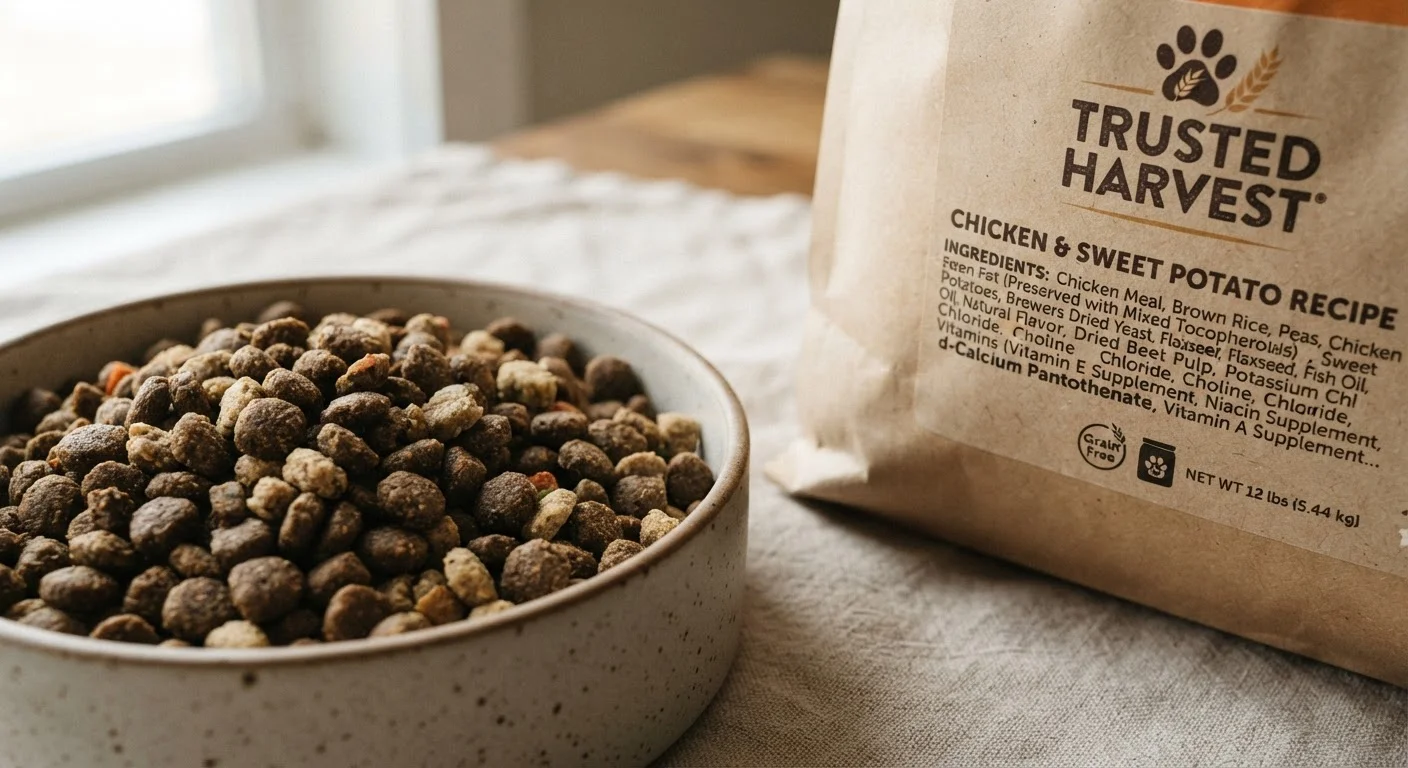
U.S. pet food regulations require ingredients to be listed by their weight before processing. This means a fresh protein like 'chicken' listed first may actually contribute less final protein than a dried ingredient like 'chicken meal' listed further down. Reading ingredient lists alongside the guaranteed analysis panel gives a more complete picture. For a fuller explanation, see our guide to decoding pet food labels.
Meal ingredients (e.g., chicken meal, salmon meal) are rendered, dried concentrates. The moisture has been removed, leaving behind a protein-dense powder. A formula listing 'chicken meal' third may actually deliver more protein per serving than one listing 'fresh chicken' first. Meal is not a lower-quality choice by definition — it is simply a different processing form.
By-products and by-product meal are secondary animal tissues beyond skeletal muscle. AAFCO's definition explicitly excludes hair, horns, hooves, hide, manure, and rumen contents. What remains — organs, lungs, spleen, feet in some cases — can be nutrient-dense. Liver, for instance, is rich in vitamins A and B12. Quality varies by supplier and rendering conditions, which is why sourcing transparency matters.
Unnamed or generic proteins — 'meat meal,' 'poultry by-product meal' — are similar in composition to named counterparts, but the species is unspecified. This makes it harder to verify sourcing or anticipate issues for pets with known protein sensitivities. Reading ingredient labels honestly covers this topic in greater depth.
Hydrolyzed proteins are enzymatically broken into small peptide chains. They appear primarily in veterinary hypoallergenic formulas. The smaller fragments are less likely to trigger an immune response in sensitized animals, though a veterinarian should guide any use in a suspected allergy case.
Digest is a palatability coating, not a protein staple. 'Chicken digest' sprayed on kibble improves taste but contributes minimally to overall protein content.
~70%
Water content in fresh meat before processing
Because ingredients are listed by pre-cooking weight, fresh chicken listed first may contribute less protein than chicken meal listed third or fourth.
60–70%
Typical crude protein in chicken meal (dry weight)
Rendering removes moisture and fat, concentrating protein significantly compared to whole fresh meat.
50+ years
AAFCO ingredient definition history
AAFCO has been developing and updating standardized pet food ingredient definitions since the 1960s, providing a regulatory baseline used by most U.S. states.
Putting It All Together
No single ingredient term is a reliable proxy for overall diet quality. A formula with 'chicken' listed first and three grain ingredients following may provide less digestible protein than one with 'chicken meal' leading a shorter ingredient list. The guaranteed analysis panel — specifically crude protein percentage — and information about digestibility testing give a more complete picture than label order alone.
Marketing terms like 'human-grade,' 'holistic,' or 'premium' carry no standardized regulatory meaning. For a thorough breakdown of those claims, see how marketing language shapes what pet owners believe about food. If your pet has a diagnosed condition, known protein intolerance, or specific life-stage requirements, a veterinarian or board-certified veterinary nutritionist is the appropriate resource for diet guidance — general label literacy is a useful starting point, not a substitute for professional input.
| Regulatory body for pet food ingredient definitions | AAFCO (Association of American Feed Control Officials) |
| Moisture content of fresh chicken vs. chicken meal | Fresh chicken ~70–75% water; chicken meal ~10% water (General industry figures) |
| Protein content by dry weight, chicken meal | Approximately 60–70% crude protein (General industry figures) |
| Common hydrolyzed protein use case | Veterinary hypoallergenic and elimination diets |
| AAFCO definition of 'by-product meal' | Rendered product from mammal tissues, excluding blood, hair, horn, hoof, hide, manure, stomach, and rumen contents (AAFCO Official Publication) |
| Ingredient list ordering rule | Listed by pre-cooking weight, heaviest first (U.S. FDA pet food labeling regulations) |
This article is for general informational purposes only and does not constitute veterinary or nutritional advice. Always consult a licensed veterinarian for questions specific to your pet's health and diet.
The content on this site is for informational purposes only and is not a substitute for professional advice. Always consult a qualified professional for guidance specific to your situation.