

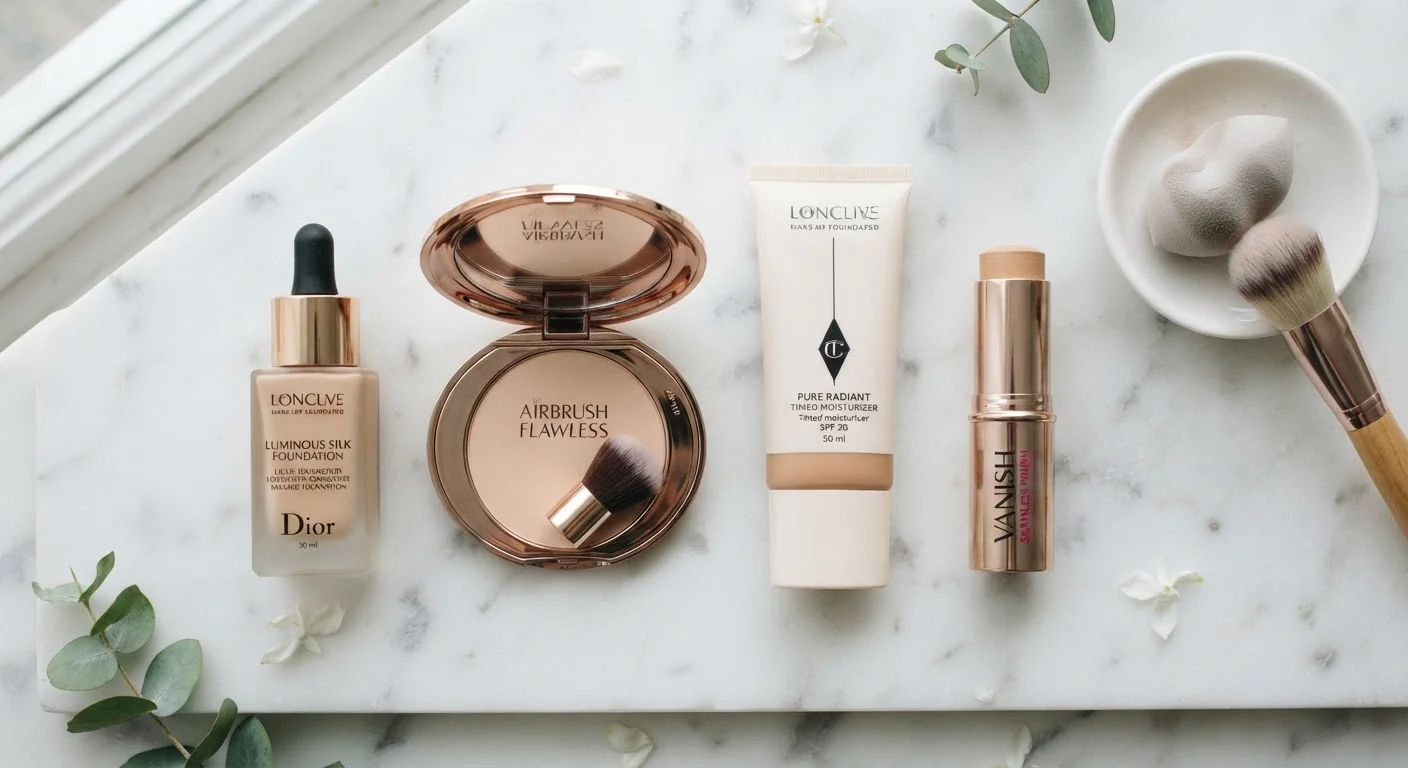
Our Verdict
No single foundation format is universally superior — the right pick depends almost entirely on your skin type, coverage needs, and lifestyle. Liquid formulas offer the most versatility, while powders, tinted moisturizers, and sticks each shine in specific scenarios. Matching the format to your skin's actual behavior on a given day will always beat loyalty to one product category.
| Best for | Recommended |
|---|---|
| Those who want buildable, versatile coverage for most occasions | Liquid Foundation |
| Oily or combination skin types needing shine control | Powder Foundation |
| Dry skin or low-makeup days when hydration matters most | Tinted Moisturizer |
| Busy lifestyles requiring a portable, quick-application base | Stick Foundation |
Why Format Matters as Much as Shade
Choosing a foundation shade gets a lot of attention, but the format — liquid, powder, tinted moisturizer, stick, or serum — often determines whether a base product actually works for your skin. Each formula interacts differently with skin texture, oil production, and hydration levels. Understanding what your skin type really means is the essential first step before committing to any format.
The good news: there's no wrong answer, just better and worse matches. This comparison breaks down how each format performs day-to-day so you can choose with real confidence rather than guesswork.
| Liquid | Powder | Tinted Moisturizer | Stick | |
|---|---|---|---|---|
| Coverage range | Sheer to full | Light to medium | Sheer | Medium to full |
| Best skin type | Most skin types | Oily / combination | Dry / normal | Dry / normal |
| Finish options | Matte, satin, dewy | Matte to natural | Natural / dewy | Satin to matte |
| Portability | Moderate | High | Moderate | Very high |
| Ease of application | Moderate | Easy | Very easy | Easy |
| Longevity on oily skin | Good (matte formulas) | Very good | Fair | Fair |
| Hydration level | Varies by formula | Low | High | Moderate to high |
Liquid Foundation: The All-Rounder
Liquid foundation is the most widely available format and covers the broadest range of coverage levels — from sheer to full. Formulas can be water-based, oil-based, or silicone-based, and they come with finishes ranging from dewy to matte, making this the most adaptable option across skin types.
- Oily skin: Look for oil-free or matte-finish liquids that won't amplify shine.
- Dry skin: Hydrating or serum-based liquids with a luminous finish tend to look the most natural.
- Combination skin: A satin or natural finish liquid applied selectively works well — heavier on dry patches, lighter on the T-zone.
Application method matters too. Brushes give more coverage; sponges tend to blend more seamlessly and look more skin-like. If you're layering skincare before your base, check out the right order for layering skincare products to make sure your foundation sits properly.
Match Your Application Tool to Your Finish Goal
For liquid foundations, a damp beauty sponge pressed (not dragged) into skin tends to produce the most natural, skin-like result. A dense flat brush builds more coverage, while a fluffy brush sheers things out. Experimenting with the tool rather than the formula is often a quicker fix than buying a new product entirely.
Powder Foundation: Shine Control Champion
Pressed and loose powder foundations skip the liquid step entirely, applying pigment and coverage in one move. They're particularly effective for oily or combination skin because the powder formula actively absorbs excess sebum throughout the day.
The trade-off is finish and feel. Powders can settle into fine lines or dry patches, making them less flattering on mature or dry skin without a good moisturizing base underneath. Loose powders tend to feel lighter; pressed compacts travel better and allow for touch-ups. Either way, a light hand during application prevents the cakey look that gives powder formulas a bad reputation.
Powder is also a practical choice for sensitive skin types, as many formulas are fragrance-free and mineral-based — though it's worth patch testing any new product if your skin reacts easily. For more on that, see introducing new products safely for sensitive skin.
Tinted Moisturizer and BB Cream: Skin-First Coverage
Tinted moisturizers and BB creams (beauty balms) are designed to hydrate while adding a wash of color. Coverage is typically sheer to light, making them ideal for days when you want an even, natural-looking complexion without a noticeable base.
These formulas are particularly well-suited to dry or normal skin because the moisturizing ingredients — often including hyaluronic acid or glycerin — prevent the base from looking patchy or flaky. Many also include SPF, which adds functional value to a simple step.
SPF in Tinted Moisturizers Has Limits
Many tinted moisturizers and BB creams advertise SPF, but the level of sun protection you actually get depends on applying a generous, even layer — which most people don't do with a base product. Dermatologists generally recommend wearing a dedicated sunscreen underneath rather than relying solely on foundation-level SPF for meaningful UV protection.
For combination or oily skin, a tinted moisturizer can work in cooler months when oil production slows, but may not hold up through the day in heat or humidity without a setting powder on top. BB creams typically sit between a tinted moisturizer and a light liquid foundation in terms of coverage, making them a useful middle-ground option.
If you're curious about ingredient terminology — hyaluronic acid, humectants, and the like — our skincare terms glossary is a handy reference.
Stick Foundation: Portable and Precise
Stick foundations offer convenience that liquid and powder formats can't match — no brush required, no spills, and they pack easily for travel or touch-ups. They typically deliver medium to full coverage and work well for spot-concealing as well as all-over application.
The formula tends to be creamier and richer, which suits normal to dry skin but can feel occlusive on oily or acne-prone skin. Stick foundations often contain emollients that may not play nicely with breakout-prone areas, so applying with a damp sponge rather than dragging the stick directly across skin can improve blending and reduce pore-clogging risk.
Stick foundations pair naturally with a put-together everyday look — much like having reliable outfit formulas that work across most occasions, a well-chosen stick foundation can become a dependable, effort-light staple in your routine.
~60%
Foundation buyers prioritizing skin type fit
Consumer surveys from beauty industry research consistently show skin type compatibility ranks among the top purchase criteria for complexion products.
3–5 years
Typical shelf life before formula degradation
Most opened foundation formulas are recommended for use within 12–24 months; unopened products may remain stable for several years depending on storage conditions.
The content on this site is for informational purposes only and is not a substitute for professional advice. Always consult a qualified professional for guidance specific to your situation.