

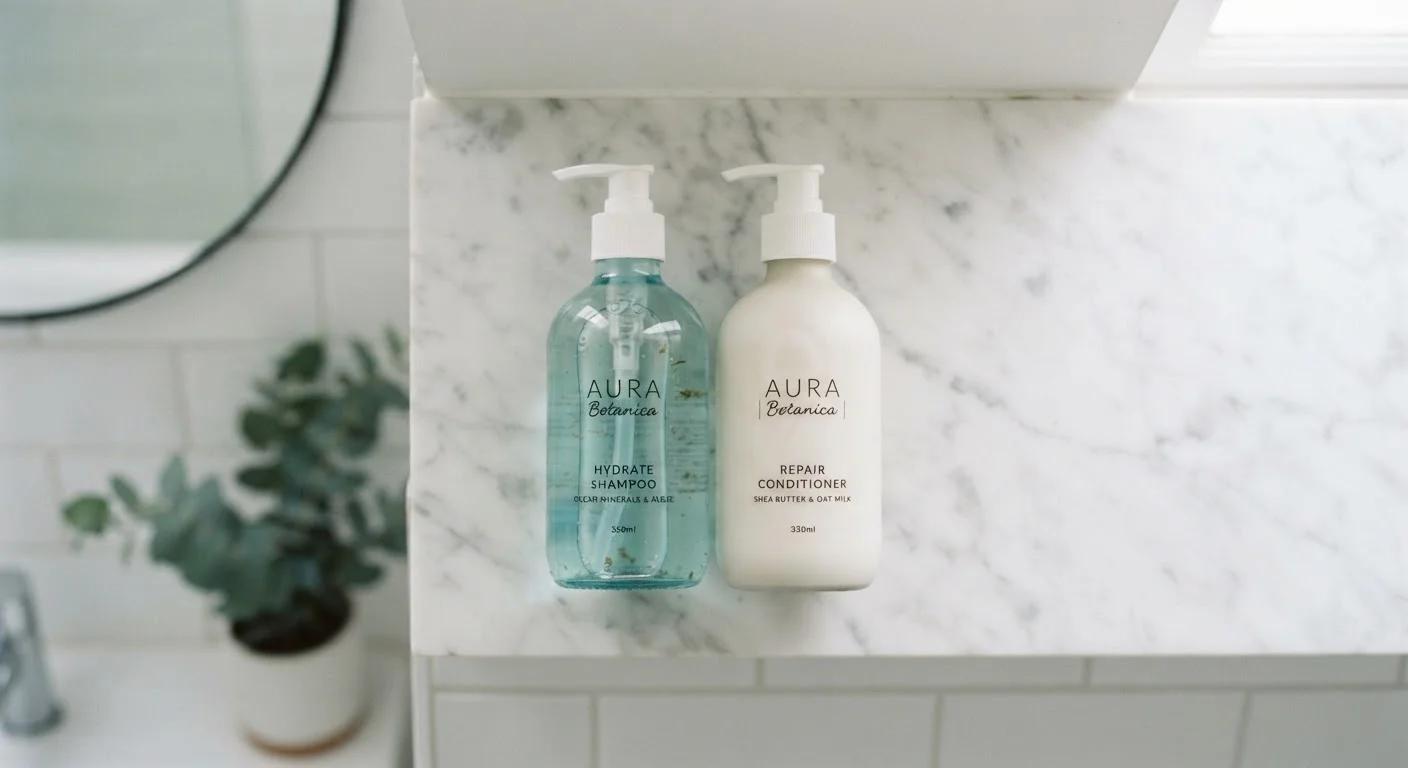
Option A
Clarifying Shampoo
The deep-reset cleanser for scalp and strand buildup.
Best for: Anyone dealing with product buildup, excess oil, or dull, weighed-down hair who needs a periodic deep cleanse.
Option B
Moisturizing Shampoo
The everyday nourisher that cleanses without stripping.
Best for: Those with dry, color-treated, chemically processed, or naturally coarse hair who need hydration maintained at every wash.
What Each Shampoo Is Actually Doing
At their core, both shampoo types clean hair — but they approach that goal with very different priorities and formulas.
Clarifying shampoos use stronger surfactants (the cleansing agents that attract and lift oil and dirt) to remove what regular washing leaves behind: dry shampoo residue, silicone buildup from conditioners and styling products, hard-water mineral deposits, and excess sebum from the scalp. Think of a clarifying wash as a reset button. It strips the slate clean so your other products can actually penetrate the hair shaft and do their job. Because of that stripping power, these shampoos aren't designed for daily use — they can remove the natural oils your scalp and strands need to stay balanced.
Moisturizing shampoos, by contrast, use milder surfactants paired with humectants (ingredients that draw water into the hair shaft), emollients, and sometimes proteins. They cleanse well enough to remove everyday dirt and light oil but leave behind — or actively deposit — ingredients that maintain softness and hydration. This makes them a gentler, more sustainable option for frequent use, especially for dry or textured hair types. If you want to understand why your hair responds differently to each formula, our guide on hair porosity and moisture absorption explains the underlying science.
| Criterion | Clarifying Shampoo | Moisturizing Shampoo |
|---|---|---|
| Primary purpose | Remove buildup and residue | Cleanse while maintaining hydration |
| Surfactant strength | Strong — strips thoroughly | Mild — gentler on strands |
| Ideal use frequency | Once every 1–4 weeks | Each regular wash day |
| Best hair types | All types (used periodically) | Dry, textured, color-treated |
| Effect on natural oils | Removes them along with buildup | Preserves or supplements them |
| Key added ingredients | Strong surfactants, chelating agents | Humectants, emollients, sometimes proteins |
| Risk of overuse | Dryness, breakage, scalp irritation | Potential residue if very heavy formula |
Signs Your Hair Is Calling for a Clarifying Wash
Your hair usually sends clear signals when buildup is an issue. Common indicators include:
- Dullness that doesn't lift after conditioning — often a sign that product residue is blocking light reflection and moisture uptake.
- A greasy or heavy feeling that returns quickly after washing, which can indicate product or silicone accumulation rather than just natural oil production.
- Scalp itchiness or flakiness that isn't related to a skin condition — sometimes a clogged scalp just needs a thorough reset.
- Conditioner or treatments that seem to stop working — buildup can create a barrier that prevents active ingredients from reaching the hair cortex.
A useful rule of thumb: if you use dry shampoo, heavy styling creams, or silicone-based conditioners regularly, a clarifying wash every one to three weeks is reasonable for most hair types. For those with very dry or textured hair, once a month may be more appropriate to avoid stripping essential moisture. Our article on the tradeoffs of going sulfate-free breaks down how surfactant strength factors into cleansing power.
~70%
Of styling products contain silicones
Industry formulation surveys consistently find silicones among the most common ingredients in leave-in conditioners and styling creams, contributing to gradual buildup over multiple wash cycles.
2–4 weeks
Typical clarifying wash interval for textured hair
Hair care educators and trichologists generally recommend this range for naturally coily and curly hair types to balance cleansing thoroughness with moisture retention.
How to Rotate Both into One Routine
The most effective approach for most people isn't choosing one shampoo permanently — it's using both strategically. Here's a simple rotation framework:
- Make moisturizing shampoo your default. Use it on your regular wash days to maintain hydration and scalp health without disrupting your hair's natural oil balance.
- Schedule clarifying washes based on your product use. If you style heavily through the week, plan a clarifying wash every one to two weeks. If your routine is minimal, once a month may be plenty.
- Always follow a clarifying wash with a deeper conditioning treatment. Because clarifying shampoos remove oils aggressively, your strands will benefit from a rich conditioner or brief deep conditioning mask afterward to restore moisture.
If you're building out a more complete wash day routine, particularly for curly or textured hair, this curly hair wash day guide walks through how to sequence your products for best results. And for those exploring gentler cleansing methods, co-washing versus shampooing is worth reading alongside this comparison.
Color-Treated Hair Needs Extra Care
If your hair is color-treated, use clarifying shampoos sparingly and with caution. Their stronger surfactants can accelerate color fade by opening the cuticle and lifting pigment molecules. Many colorists suggest limiting clarifying washes to once every four to six weeks for dyed hair and prioritizing a deeply hydrating treatment immediately after. When in doubt, ask your colorist what they recommend for your specific formula and hair condition.
The content on this site is for informational purposes only and is not a substitute for professional advice. Always consult a qualified professional for guidance specific to your situation.