

What Heat Actually Does to a Hair Strand
Every hair strand has a layered architecture. The outermost layer — the cuticle — is made up of overlapping scale-like cells that protect the inner cortex, where the hair's strength and elasticity live. When heat is applied, those cuticle scales lift and separate, allowing moisture to escape rapidly. If heat is high enough or held long enough, the cortex itself is affected: proteins begin to denature, and the disulfide and hydrogen bonds that give hair its shape and resilience start to weaken or break.
The result isn't just dryness. Structurally compromised hair loses elasticity, meaning it snaps instead of stretching when pulled. It also becomes porous — absorbing and releasing moisture unevenly, which contributes to frizz, dullness, and difficulty holding styles. This is the foundation of what people casually call "damaged" hair.
Hair Damage Is Cumulative, Not Instant
A single blow-dry session at a moderate temperature rarely causes dramatic visible damage. Heat damage typically builds over weeks or months of repeated exposure, which is why it can be hard to notice until it's already significant. Checking in on your hair's elasticity — whether it stretches slightly before snapping — is a useful ongoing indicator of structural health.
How Different Tools Create Different Damage
Not all heat tools stress hair in the same way, and understanding those differences helps you make more informed decisions.
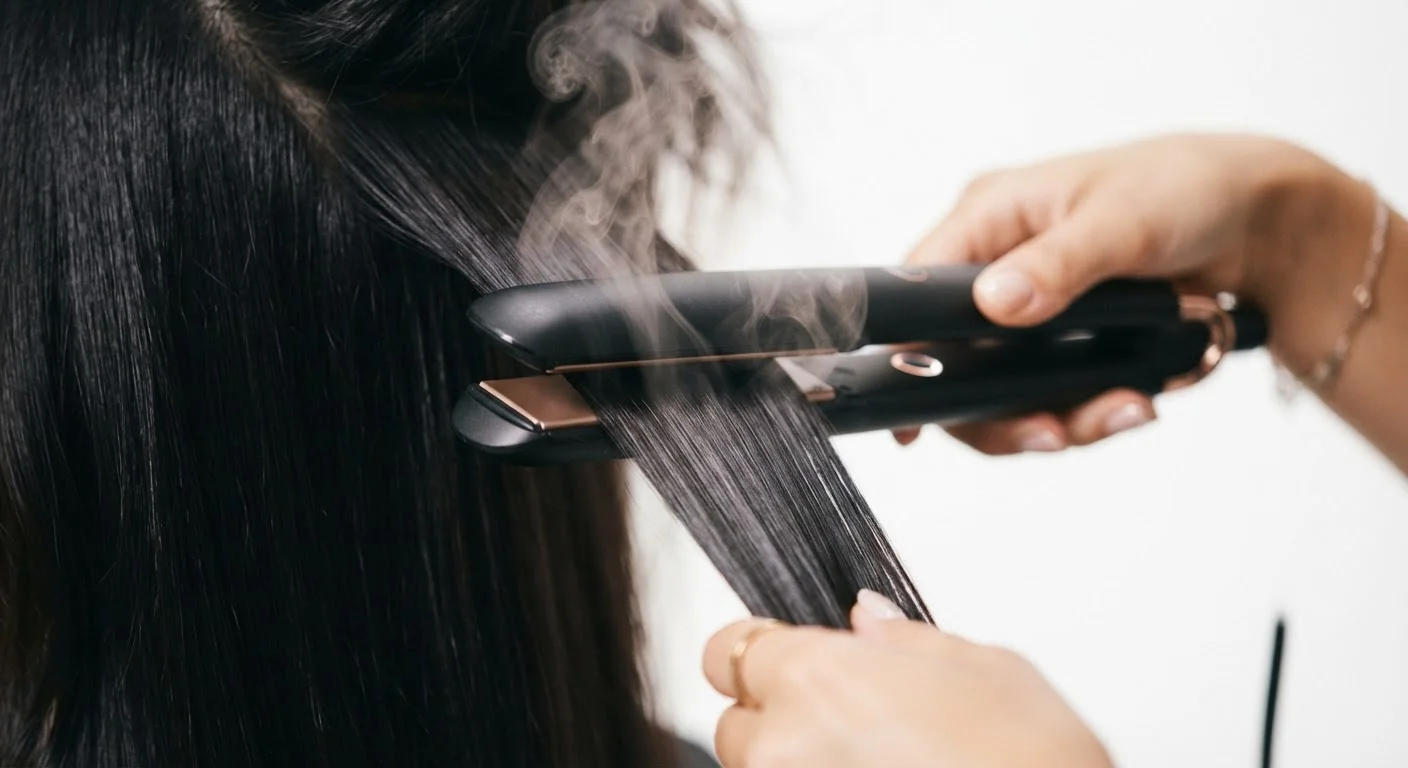
- Flat irons apply direct, clamped heat to both sides of a strand simultaneously. The pressure combined with high temperatures can crush and deform the cuticle, especially when the iron is dragged slowly or multiple passes are made over the same section.
- Curling wands and curling irons wrap hair around a heated barrel, exposing the outer strand to more heat than the inner layer. The tighter the barrel, the higher the tension on the strand — which, combined with heat, increases the risk of breakage. This is a common contributor to the issue explored in our article on why ends keep breaking off.
- Blow dryers work differently — they deliver dispersed heat and airflow rather than direct contact. The risk here is hygral fatigue: repeatedly swelling hair with water and then rapidly drying it stresses the cuticle over time. Using too-high heat settings or holding the dryer too close amplifies this.
~300°F
Temperature at which keratin proteins begin to denature
Research into thermal damage to hair keratin indicates measurable structural change begins around 150°C (300°F), with more significant breakdown at higher temperatures.
Up to 18%
Moisture loss from a single flat iron pass
Studies on thermal styling have documented that a single pass of a high-heat flat iron can reduce the water content of a hair strand by a meaningful percentage, accelerating brittleness.
Who's Most at Risk for Heat Damage
Certain hair types and conditions make heat damage more likely or more severe. Fine hair has a smaller diameter, meaning less cortex to absorb and buffer heat before structural change occurs. Chemically processed hair — whether colored, bleached, permed, or relaxed — has already experienced some disruption to its bond structure, leaving it more vulnerable to further thermal stress.
Naturally dry hair textures, including many curly and coily patterns, often have gaps in the cuticle that make moisture retention harder to begin with. Adding heat accelerates moisture loss further. If you're curious about how structural health connects to growth and retention, everything that affects how fast your hair grows offers useful context on the broader picture.
Test Your Tool Temperature Before Styling
Many heat tools display a temperature setting but vary in accuracy. If your tool has a digital display, use it to choose a specific temperature rather than relying on vague settings like "medium" or "high." Starting at the lower end and working up only if needed is a practical way to limit unnecessary thermal stress on each styling session.
Managing Heat Use Without Giving It Up Entirely
Avoiding heat styling altogether isn't realistic for most people — nor is it necessary. What matters is reducing unnecessary thermal stress. Using a heat protectant before styling creates a partial barrier that distributes heat and slows cuticle moisture loss. Keeping tool temperatures at the lowest effective setting limits the degree of protein disruption per session.
Spacing out heat styling sessions allows the hair time to rehydrate and recover some flexibility. Deep conditioning treatments help replenish lipids and temporarily smooth the cuticle, improving the hair's apparent health even when some structural damage is already present. Protective styles like braids and updos can reduce the frequency of heat styling altogether — though as our piece on protective styling explains, these styles need to be done correctly to genuinely reduce strain rather than add it.
It's also worth re-examining assumptions about heat styling. Some popular ideas about hair care don't hold up to scrutiny — our overview of hair care myths worth letting go covers a number of them. Knowledge is the most practical tool you have.
This article is for general informational purposes only and is not a substitute for professional hair care advice. Consult a licensed cosmetologist or trichologist if you have concerns about significant hair loss or scalp health.
Frequently Asked Questions
Heat damage to the hair shaft itself is permanent because hair is not living tissue above the scalp. However, conditioning treatments and protective habits can improve the look and feel of damaged strands. Full recovery requires waiting for healthy new growth and trimming away the compromised sections over time.
Most hair professionals suggest using the lowest temperature that achieves your desired result. For fine or fragile hair, that's generally under 300°F (150°C); for coarser hair, up to 365–380°F (185–195°C) is more common. Avoid exceeding 450°F (230°C), which can cause immediate structural breakdown regardless of hair type.
Yes — heat protectants create a barrier that distributes heat more evenly and slows moisture loss from the strand. They reduce damage but don't eliminate it entirely, so pairing them with controlled temperature settings is still important.
Flat irons and curling wands tend to deliver more concentrated, direct heat than blow dryers, making them more likely to cause acute damage in a single pass. However, aggressive blow drying — especially on very wet hair with high heat — can cause hygral fatigue and surface cuticle damage over time.
There's no universal threshold, since frequency depends on hair type, tool temperature, and whether protectants are used. As a general principle, minimizing sessions and allowing recovery time between them reduces cumulative damage. Heavily styled hair benefits from regular deep conditioning to offset thermal stress.
The content on this site is for informational purposes only and is not a substitute for professional advice. Always consult a qualified professional for guidance specific to your situation.