

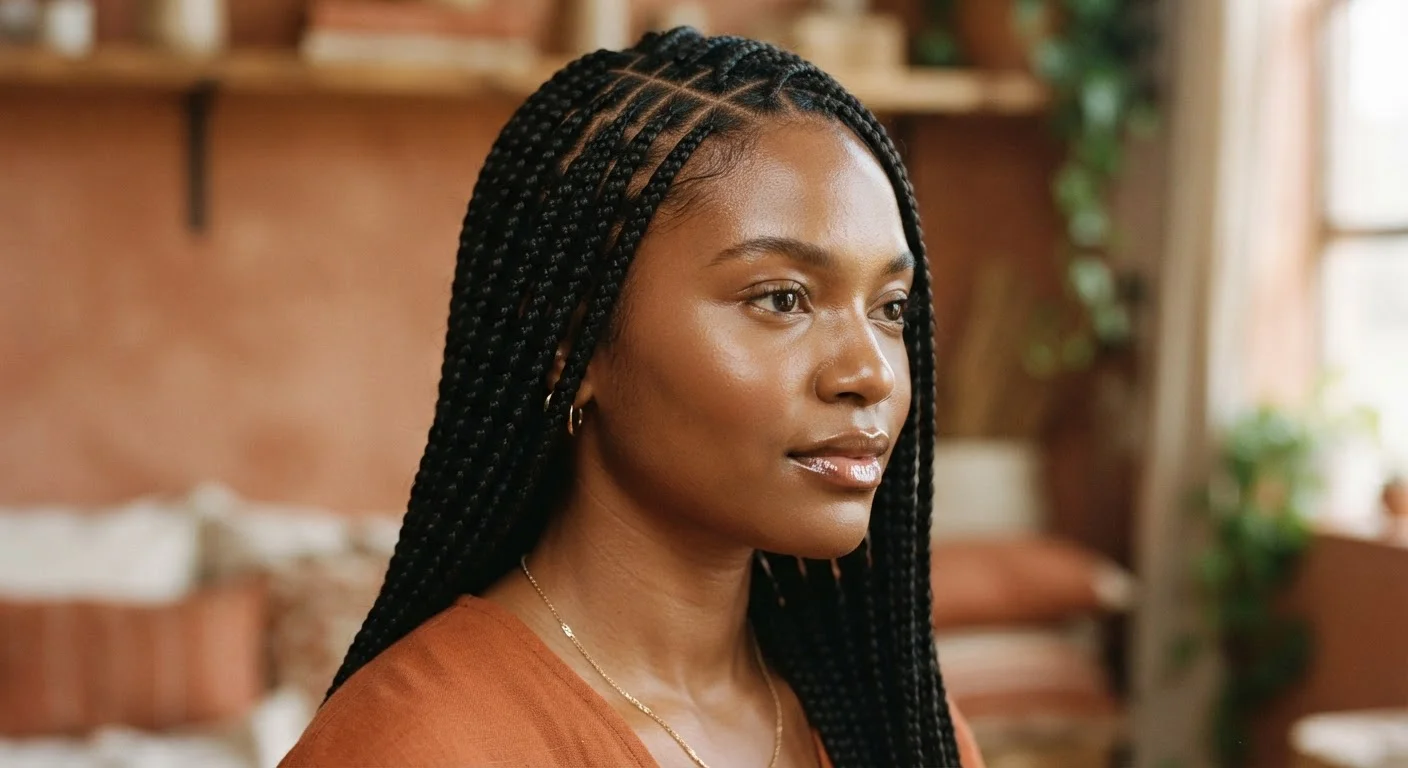
What Protective Styling Actually Does
The appeal of protective styling is straightforward: hair ends are the oldest, driest, and most structurally compromised part of each strand. Every time hair is combed, rubbed against a pillowcase, or exposed to wind and dry air, those ends take the hit. Protective styles — braids, twists, flat twists, cornrows, tucked updos — physically shield those ends from that constant friction.
The result, when done well, is length retention. Hair is always growing from the scalp at roughly the same rate (influenced by genetics, nutrition, and health — see what affects hair growth rate for the full picture). But if the ends are breaking off at a similar pace, visible length never accumulates. Protective styling interrupts that cycle by reducing the breakage side of the equation.
It also dramatically cuts down on manipulation — the daily detangling, heat styling, and restyling that cause cumulative mechanical damage. For anyone whose routine involves frequent heat tools, reviewing what heat styling does to strands can clarify why periodic rest through protective styling makes sense.
~½ inch
Average monthly hair growth for most adults
Hair biology research consistently places average scalp hair growth at roughly 0.5 inches (about 1.25 cm) per month, though this varies by individual, age, and health factors.
2–8 weeks
Recommended protective style duration
Most professional stylists and trichologists suggest this window as the range that balances retention benefits against risks of matting, buildup, and tension damage.
Up to 50%
Of breakage that can occur during take-down
Hair care educators frequently note that improper removal of braids or twists is one of the highest-risk moments for mechanical breakage, underscoring the importance of careful detangling technique.
The Conditions That Make a Style Genuinely Protective
Not every braid or updo earns the label. A protective style only delivers on its promise when several conditions are met simultaneously.
Installation Tension
This is the most critical factor. A style installed too tightly — especially near the hairline and nape — places sustained mechanical stress on the follicles. Over time, that stress leads to traction alopecia, a progressive form of hair loss. Early signs include tenderness, small bumps along the hairline, and thin edges. If the tension isn't relieved, damage can become permanent. A style should never cause pain or visible skin puckering at the roots.
Scalp and Moisture Maintenance
Hair doesn't hibernate inside a protective style. The scalp still produces sebum, accumulates product buildup, and needs circulation and hydration. Neglecting this for weeks at a time can lead to clogged follicles, dandruff flare-ups, and dry, brittle strands underneath the style. Light oils or diluted leave-in sprays applied along the parts are a simple, non-disruptive way to maintain scalp health. For a deeper look at what healthy scalp care involves, this scalp health guide is a useful starting point.
Duration
Most stylists recommend keeping a protective style for no longer than six to eight weeks. Extensions left in beyond that point begin to tangle with new growth, and removing them becomes increasingly damaging. Shorter styles without extensions may need refreshing sooner — around two to four weeks — before lint, buildup, or frizz compromises the integrity of the look and the hair underneath.
Protect Your Edges From Day One
The hairline is the most vulnerable area during any protective style installation. Ask your stylist to leave the edges slightly looser than the rest of the style, and avoid pulling them into the braid pattern tightly. Edges that are repeatedly stressed take significantly longer to recover — and in some cases, they don't fully recover at all. A few millimeters of slack at the hairline makes a real difference over time.
Common Mistakes That Undercut the Benefit
Protective styling has genuine value, but a few recurring mistakes tend to undo it.
- Skipping the pre-style prep: Installing braids or twists on dry, unconditioned hair sets up breakage before the style even settles. Hair should be clean, well-conditioned, and thoroughly detangled before installation.
- Relying on extensions that are too heavy: Excessive weight from thick extension hair pulls on follicles continuously, compounding tension damage over weeks. Lighter attachment and smaller sections distribute weight more safely.
- Removing the style without care: Take-down is where a significant amount of breakage happens. Rushing, ripping, or using the wrong tools can destroy weeks of retention in minutes. Detangling with fingers first, then a wide-tooth comb, with generous conditioner or detangling product, reduces loss considerably.
- Installing another protective style immediately: Transitioning directly from one tight style to another without a rest period doesn't give the hairline or scalp time to recover. A week or two of loose styles or wash-and-go wear allows tension to release before the next installation.
Understanding which hair care habits are evidence-based and which are folklore can sharpen your whole routine — common hair care myths worth questioning is a solid companion read.
Building Protective Styling Into a Sustainable Routine
Protective styling works best as one component of a broader hair health routine rather than a standalone fix. The habits built around and between styles matter just as much as the styles themselves. Consistent, low-effort grooming habits are what accumulate real results over months and years.
Between styles, prioritizing deep conditioning, gentle detangling, and protective sleep habits (a satin or silk pillowcase or bonnet reduces overnight friction significantly) maintains the baseline hair health that protective styling is meant to build on. Scalp massage during wash days can also support circulation — though with realistic expectations, as this guide on scalp massage explains clearly.
The goal isn't to keep hair permanently hidden in a style. It's to give hair periods of low-stress recovery that, over time, allow it to reach and hold onto its potential length and health. When installation is gentle, maintenance is consistent, and removal is careful, protective styling earns its reputation.
“The ends of your hair are the oldest part — they've been through everything. Protecting them isn't about fashion. It's about giving the most fragile part of your hair a rest from everything it faces every single day.”
— A licensed trichologist speaking on hair retention practices, Trichologist and hair health educator
This article is for general informational purposes only and does not constitute professional medical or dermatological advice. If you are experiencing hair loss or scalp conditions, consult a qualified healthcare provider or dermatologist.
Frequently Asked Questions
No — hair growth rate is determined at the follicle and is largely genetic. Protective styling helps retain the length that already grows by reducing breakage at the ends. The result can look like faster growth because less hair is being lost.
Most hair care professionals suggest a window of two to eight weeks depending on the style, your hair type, and how well you're maintaining scalp moisture. Leaving styles in longer than recommended increases the risk of matting, buildup, and traction damage.
Yes, if installed incorrectly. Styles that are too tight along the hairline or roots can cause traction alopecia — hair loss from sustained tension. Neglecting moisture while styled can also lead to dryness and breakage that outweighs any protective benefit.
Protective styles are especially popular among people with natural, textured, or chemically treated hair, which tends to be more prone to dryness and mechanical breakage. However, anyone whose hair is prone to friction damage or split ends may benefit from occasional protective styling.
Absolutely. Scalp health and hair hydration don't pause because the hair is braided or twisted. Light oils or leave-in sprays can be applied to the scalp and visible hair without disturbing the style, and are important for preventing dryness and flaking.
A loose bun can qualify as a low-manipulation style that offers some protective benefit by reducing daily handling. However, buns secured with tight elastic bands or worn in exactly the same position every day can cause tension and breakage, so variation and gentle accessories matter.
The content on this site is for informational purposes only and is not a substitute for professional advice. Always consult a qualified professional for guidance specific to your situation.