

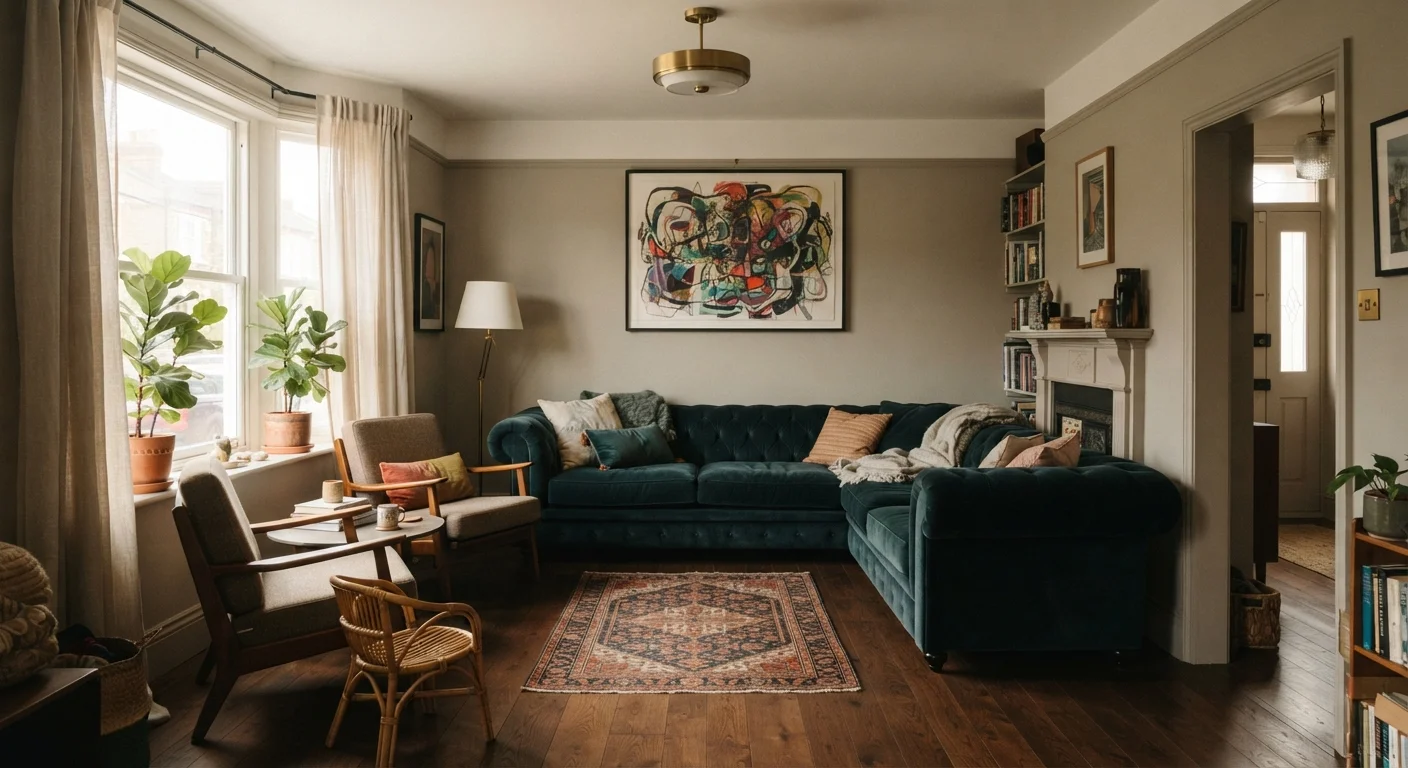
Why Rooms Feel Wrong Even When Everything Looks Fine
You've furnished the room, added some art, and picked colors you genuinely like — yet something still feels off. This experience is more common than most people realize, and it's rarely about taste or budget. The culprit is almost always a small number of structural decorating missteps that compound quietly over time.
These errors are easy to overlook precisely because they happen incrementally. A rug gets purchased before you measure. Curtains go up at window height out of convenience. Furniture gets pushed to the walls because it seems to make sense. None of these decisions feels obviously wrong in the moment, but together they create a room that resists comfort no matter how much you rearrange.
The good news: most of these issues are correctable without replacing anything major. Understanding why they happen is the first step. If you're planning a broader decorating effort, it's also worth working through a room planning checklist before making any purchases.
Hanging artwork too high on the wall.
Why it happens: People instinctively hang art at eye level while standing, which places it far above comfortable viewing height when seated — where most living time actually occurs.
Choosing a rug that is too small for the seating area.
Why it happens: Smaller rugs are less expensive, and shoppers often underestimate how much floor space a seating arrangement actually covers when viewed from above.
Relying on a single overhead light source for the entire room.
Why it happens: Overhead fixtures feel complete and sufficient during the day or when lights are at full brightness, masking the flatness they create in the evening.
Pushing all furniture against the walls.
Why it happens: It feels logical — clearing the center creates the impression of more open floor space — but it actually makes rooms feel hollow and disconnected.
Mixing too many competing patterns or finishes without a unifying element.
Why it happens: Individual pieces look attractive in isolation, but without a deliberate framework, rooms accumulate visual noise over time as items are added piecemeal.
Ignoring the impact of window treatment length and placement.
Why it happens: Ready-made curtain panels in standard lengths are convenient, but they rarely hang at the right position for a given room's ceiling height.
Putting It All Together: From Missteps to Intentional Design
Fixing a room that feels off rarely requires starting over. More often it means identifying the one or two foundational errors — furniture floating away from conversation range, art marooned near the ceiling, a rug that only anchors two chair legs — and correcting those first before adjusting anything else.
Scale Errors Are Costly to Reverse
Purchasing furniture or rugs without measuring your room first is the single most expensive decorating misstep. Before buying any large piece, sketch your floor plan, note exact dimensions, and test the footprint with painter's tape on the floor. Returning oversized sofas or undersized rugs is often difficult and sometimes impossible.
It also helps to understand the difference between decorating rules that hold up and those that mislead. For a grounded look at commonly repeated advice that actually steers rooms in the wrong direction, see decorating myths worth questioning. If you're working with limited square footage, the same principles apply — scale, proportion, and layered lighting matter even more in tight rooms. Small-space decorating principles that actually hold up are a useful companion read.
Don't Rely Only on Product Photos
Retailer images are staged in large studios or digitally manipulated to make items appear proportional. Always cross-reference listed dimensions against your actual room measurements — never judge scale from a photograph alone. What looks balanced on screen can overwhelm or disappear in your specific space.
Approach the room systematically: measure before buying, layer your lighting, hang art at seated eye level, and let furniture float. Those four adjustments alone will resolve the majority of rooms that feel inexplicably unsettled.
57–60"
Ideal center height for wall art
Interior design professionals consistently recommend this range as it aligns with average human eye level and gallery hanging standards.
3 sources
Minimum lighting layers per room
Lighting designers generally advise ambient, task, and accent sources in every occupied room to support both function and mood.
The content on this site is for informational purposes only and is not a substitute for professional advice. Always consult a qualified professional for guidance specific to your situation.