

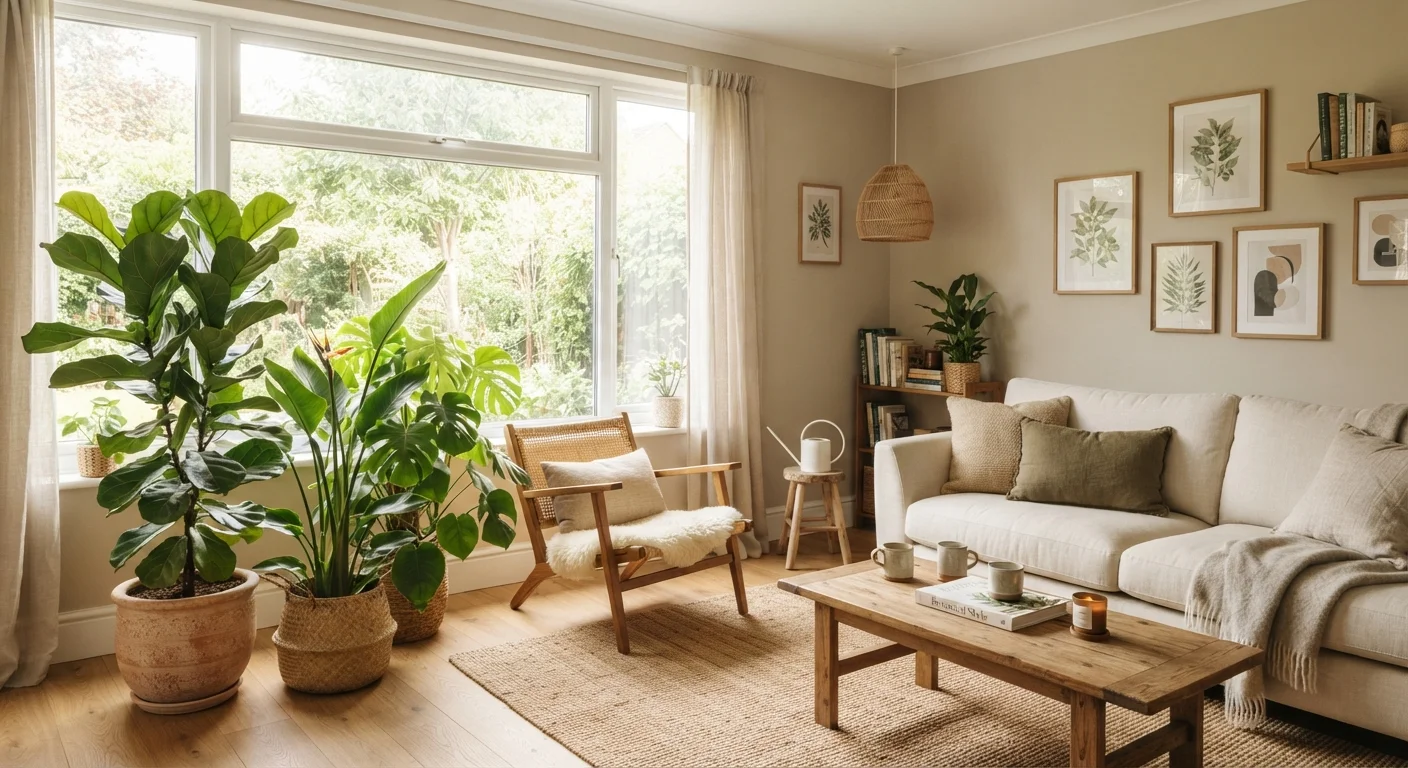
Plants Are a Decorating Tool, Not Just a Trend
Houseplants have cycled in and out of interior design trends for decades, but their influence on a room goes far beyond whether they happen to be fashionable. They alter scale, soften edges, introduce color temperature, and create movement in spaces that would otherwise feel static. When used deliberately — rather than placed wherever there's leftover floor space — plants become one of the most versatile and budget-friendly decorating tools available.
Understanding how plants affect a room lets you make intentional choices rather than intuitive ones. Whether you're decorating a 400-square-foot apartment or a sprawling open-plan home, the same principles apply. The list below breaks down the specific ways houseplants shape interior spaces, so you can put each effect to work for you.
They Adjust the Perceived Height of a Room
Tall, upright plants — think floor-standing fiddle-leaf figs, dracaenas, or bamboo palms — draw the eye upward in the same way vertical stripes or floor-to-ceiling curtains do. Placed in corners, they bridge the gap between furniture and ceiling, making the vertical dimension of a room feel more fully used. In rooms with low ceilings, this vertical pull can meaningfully reduce the feeling of compression. Conversely, in a lofty space that feels cavernous, lower trailing or spreading plants at furniture level help bring the eye back down, creating a cozier human scale.
Tall upright plants draw the eye upward, making low ceilings feel less compressed and more open.
They Introduce Organic Texture Against Hard Surfaces
Most interior surfaces — walls, floors, furniture frames — are flat, smooth, or geometrically regular. Plants break that uniformity. The irregular edges of a monstera leaf, the feathery fronds of a parlor palm, or the spiky silhouette of an agave introduce what designers call organic texture: visual complexity that reads as natural rather than constructed. This contrast is especially valuable in rooms that lean heavily on hard materials like tile, concrete, glass, or high-gloss paint. Textiles do similar work in the softness department, but plants add a three-dimensional quality that fabric alone cannot replicate.
Organic plant texture breaks the visual monotony of flat, geometric surfaces in any interior.
They Create Natural Focal Points
A focal point is simply something the eye moves toward first when entering a room. Plants can establish or reinforce these points without the permanence of architectural changes. A statement plant in an oversized pot — positioned against a blank wall or in a bare corner — gives the eye a destination. This is particularly useful in open-plan spaces, where the absence of walls can leave rooms feeling undefined. A large specimen plant clusters visual weight in a specific zone, helping to establish a sense of place within a larger, more fluid layout.
A statement plant in the right spot gives an open-plan room a sense of defined, deliberate place.
They Soften Architectural Lines and Transitions
Hard corners — where walls meet, where a bookshelf ends, where a kitchen transitions to a dining area — can make a room feel abrupt or choppy. Plants placed at these junctions soften the transition, blurring the hard edge with foliage. This is a technique used frequently in commercial interior design and works just as well at home. Trailing plants on high shelves, for instance, create a cascading visual bridge between an upper zone and the space below it, making the room feel more continuous rather than segmented.
Plants placed at architectural junctions soften hard transitions and make a room feel more cohesive.
They Affect the Color Temperature of a Space
Green is a mid-spectrum color that reads as neither warm nor cool in isolation — but its effect changes significantly based on what surrounds it. In a room built around warm tones (terracotta, amber, warm wood), green foliage adds freshness without introducing visual competition. In a cool-toned room (gray, navy, white), plants warm the palette slightly and prevent the space from feeling clinical. The pot material matters too: terracotta pots push warmth; white ceramic reads clean and contemporary; woven rattan adds natural warmth. Thinking about plants as color contributors — rather than color-neutral additions — gives you more precise control over a room's overall atmosphere.
Plant foliage and pot materials both contribute to a room's color temperature — plan them accordingly.
They Add a Sense of Living Movement
Unlike any other decorating element, plants move. Leaves shift in air currents, stems grow gradually toward light, and trailing varieties extend over time. This quality — sometimes called biophilic presence — is difficult to replicate with static objects. Research in environmental psychology has explored how natural elements in indoor spaces may contribute to a sense of calm and comfort, though the mechanisms are still studied and individual responses vary. What designers observe more practically is that rooms with plants rarely feel inert. There's a sense that the space is alive and tended, which is a different quality than simply being well-decorated.
Plants are the only common décor element that introduces genuine movement and living presence to a room.
Putting It All Together
None of these effects requires a green thumb or a significant budget. A single well-chosen plant in the right spot can resolve a compositional problem that furniture rearrangement hasn't fixed. If your room reads as flat, sparse, or somehow off despite looking reasonable on paper, plants are frequently the missing layer — see common decorating missteps for more on why rooms can feel wrong even when they look right in theory.
For smaller rooms, plants work hand-in-hand with other spatial strategies — small-space decorating principles can help you figure out which plant sizes and placements will expand rather than crowd a tight room. And if you're thinking about how plants interact with your broader color palette, warm vs. cool color palette choices is worth reviewing — the green of foliage reads differently against warm ochres than against cool grays.
Vary Height and Pot Material for Depth
Avoid placing all plants at the same level — floor, shelf, and hanging or wall-mounted placements together create visual layering that reads as deliberate and curated. Mixing pot materials (ceramic, terracotta, woven fiber) adds tactile variety that mirrors the organic irregularity of the plants themselves. You don't need many plants to achieve this effect; three plants at different heights often reads as more considered than six plants lined up at floor level.
Start with one or two placements where you know you want to create a specific effect — height, softness, or a focal anchor — rather than distributing plants randomly. Intentional placement almost always outperforms abundance alone.
The content on this site is for informational purposes only and is not a substitute for professional advice. Always consult a qualified professional for guidance specific to your situation.