

Our Verdict
No single pantry system works best for every household. Zone-based organization excels in larger kitchens with varied cooking routines, category-based suits methodical shoppers who want clear inventory, and frequency-based is ideal for small spaces or households with limited pantry depth. Many home organizers find that blending two approaches — such as zone plus frequency — delivers the most practical day-to-day results.
| Best for | Recommended |
|---|---|
| Households with diverse cooking routines and ample shelf space | Zone-based system |
| Methodical shoppers who track grocery inventory closely | Category-based system |
| Small apartments or pantries with limited shelving depth | Frequency-based system |
| Families managing multiple cooks or varied meal schedules | Zone + frequency hybrid |
What Each System Actually Means
Before comparing trade-offs, it helps to understand what each pantry method does at its core.
Zone-based organization divides shelf space by cooking purpose — a baking zone, a pasta-and-grains zone, a snack zone, a breakfast zone, and so on. Items aren't grouped simply because they're similar; they're grouped because they're used together. Think of it as organizing by task rather than by taxonomy.
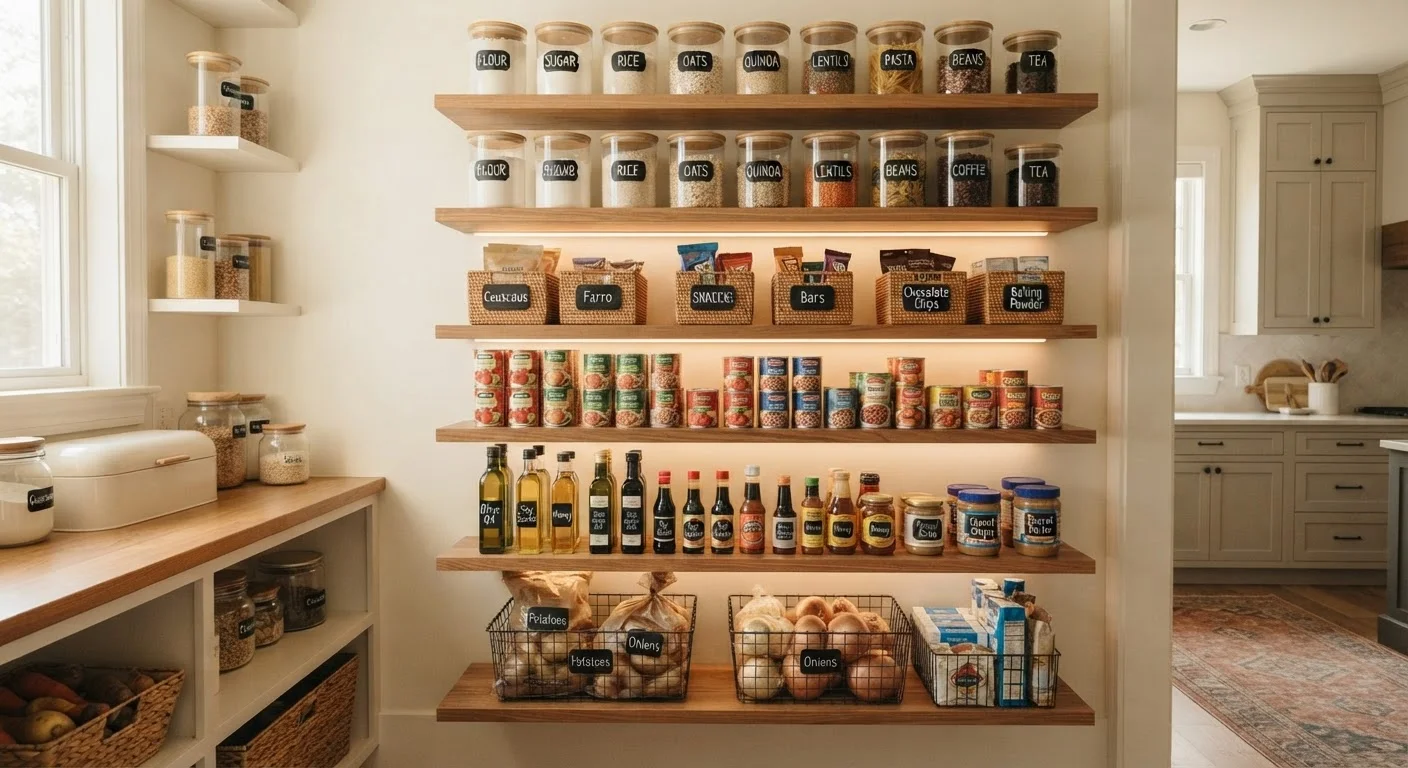
Category-based organization groups items by what they are: all canned goods together, all dry pasta together, all oils and vinegars together. This mirrors how most grocery stores are laid out and makes it easy to see at a glance how much of any given item you have on hand.
Frequency-based organization prioritizes shelf placement based on how often an item is used. Daily-use items live at eye level and within easy reach; weekly items go on middle shelves; rarely used pantry staples move to high or low shelves. The logic is ergonomic rather than thematic.
For a broader look at how similar organizational trade-offs play out elsewhere in the home, open shelving vs. closed cabinets explores a related set of storage decisions worth considering alongside your pantry layout.
Comparing the Three Systems Side by Side
Each system has meaningful strengths and genuine weaknesses depending on your household's habits, pantry size, and cooking style.
| Zone-Based | Category-Based | Frequency-Based | |
|---|---|---|---|
| Core logic | Group by cooking task | Group by item type | Group by how often used |
| Best pantry size | Medium to large | Any size | Small to medium |
| Meal prep efficiency | High — ingredients co-located | Moderate — items spread out | High for daily items |
| Inventory tracking | Moderate | Excellent | Moderate |
| Initial setup effort | High | Low to moderate | Low |
| Maintenance difficulty | Moderate | Low | Low |
| Works well for | Active home cooks | Methodical grocery shoppers | Small spaces, minimal cooks |
| Main weakness | Multi-zone items cause confusion | Slower for meal prep | Rarely used items get forgotten |
Zone-based setups reward households that cook regularly from scratch, because all ingredients for a given task are co-located. The friction comes when an item belongs to multiple zones — olive oil works in both baking and savory cooking, for example — and when the system needs updating as your cooking habits evolve.
Category-based systems shine for grocery management. Running low on canned tomatoes? You'll know immediately because everything canned lives in one place. The drawback is that meal prep can require more movement: you may pull items from several different areas to assemble a single dish.
Frequency-based organization is the most ergonomic of the three and works especially well in compact spaces. Small-space household management covers complementary strategies that pair naturally with this approach. Its weakness is that infrequently used items can become buried and forgotten, leading to expired goods and duplicate purchases.
Start With a Pantry Audit
Before reorganizing, pull everything out and check expiration dates. Discard anything expired and donate duplicates you won't realistically use. Starting with only items you actually need makes whichever system you choose far easier to implement — and much easier to maintain long-term.
Choosing or Combining Systems for Your Household
The right system is less about which method is objectively superior and more about which one your household will actually maintain. A few questions help narrow this down.
- How large is your pantry? Zone-based systems need enough shelf space to dedicate whole sections to tasks. Frequency-based systems work in any size but deliver the most value when space is tight.
- Who uses the pantry? Multi-cook households often benefit from zone organization because tasks are intuitive to anyone prepping a meal. Solo cooks with precise shopping habits may prefer category-based clarity.
- How do you shop? If you shop from a list organized by grocery-store aisle, category-based mirrors that workflow. If you meal-plan weekly and pull everything needed for each recipe at once, zone-based aligns better.
Many home organizers recommend a hybrid: use zones as the primary structure, then apply frequency logic within each zone (most-used items at eye level, lesser-used items higher or lower). This preserves the task-based efficiency of zones while reducing the ergonomic friction of reaching for rarely-needed items.
Before committing to any system, consider clearing the pantry entirely and decluttering first — a room-by-room decluttering framework can help you work through what to keep before you decide where things should live. Starting with a clean slate makes any organizational method easier to implement and sustain.
Whatever approach you choose, the goal is a system that reduces daily friction — not one that looks tidy in a photo but demands constant upkeep to maintain.
The content on this site is for informational purposes only and is not a substitute for professional advice. Always consult a qualified professional for guidance specific to your situation.